

Missing teeth can affect far more than the way you look. With the right care, dental implants can help you eat comfortably, speak clearly and feel more relaxed in everyday situations.
If you are unsure where to begin, the practice currently offers new patient check-ups for £65, including an X-ray. This is a practical first step if you want to understand your oral health.
To discuss missing teeth and find out whether implants may be suitable for you, we offer a half price £45 dental implant consultation with our expert implantologist Gerry. You will then have a clearer picture of the benefits and costs.
How smile dental care connects dental implants with everyday wellbeing
Dental implants replace missing tooth roots with small posts, usually made from titanium, that support a crown, bridge or denture. Unlike a removable denture that rests on the gums, an implant is designed to become stable within the jawbone through a healing process called osseointegration.
That stability is what makes implants feel different for many patients. They are not only about filling a gap. They can make meals easier, reduce embarrassment, protect neighbouring teeth and support a natural-looking smile.
1. Dental implants make eating more comfortable
One of the biggest quality of life changes is being able to chew with confidence again. A missing tooth can push you towards softer foods or make you avoid chewing on one side. Loose dentures can also move when you bite, especially with foods such as apples, crusty bread or steak.
A well-planned implant restoration can restore a stronger, more stable bite. For many people, dental care becomes less about hiding a gap and more about enjoying normal meals without constantly thinking about their teeth.
2. They can improve speech and social confidence
Teeth help shape sounds. Gaps, unstable dentures or missing front teeth can affect pronunciation, especially with “s”, “f” and “th” sounds. Even when speech changes are subtle, the worry that others will notice can make patients hold back in conversation.
Dental implants can support crowns, bridges or dentures that stay more securely in place. This can help you speak more naturally, smile in photos and feel less self-conscious at work or with friends. At West Malling Dental & Implant Centre, the focus is on results that suit your face, your bite and your confidence, not a one-size-fits-all look.
3. They help protect jawbone and facial support
When a tooth is lost, the jawbone in that area no longer receives the same stimulation from biting and chewing. Over time, this can contribute to bone shrinkage. Traditional bridges and dentures can replace the visible part of the tooth, but they do not replace the root in the same way.
Implants are different because they sit within the jawbone. This does not make them suitable for everyone, but when there is enough healthy bone and gum support, they can help preserve structure around the missing tooth area. If you are weighing up treatment choices, it may also help to compare dental implants and bridges before your consultation.
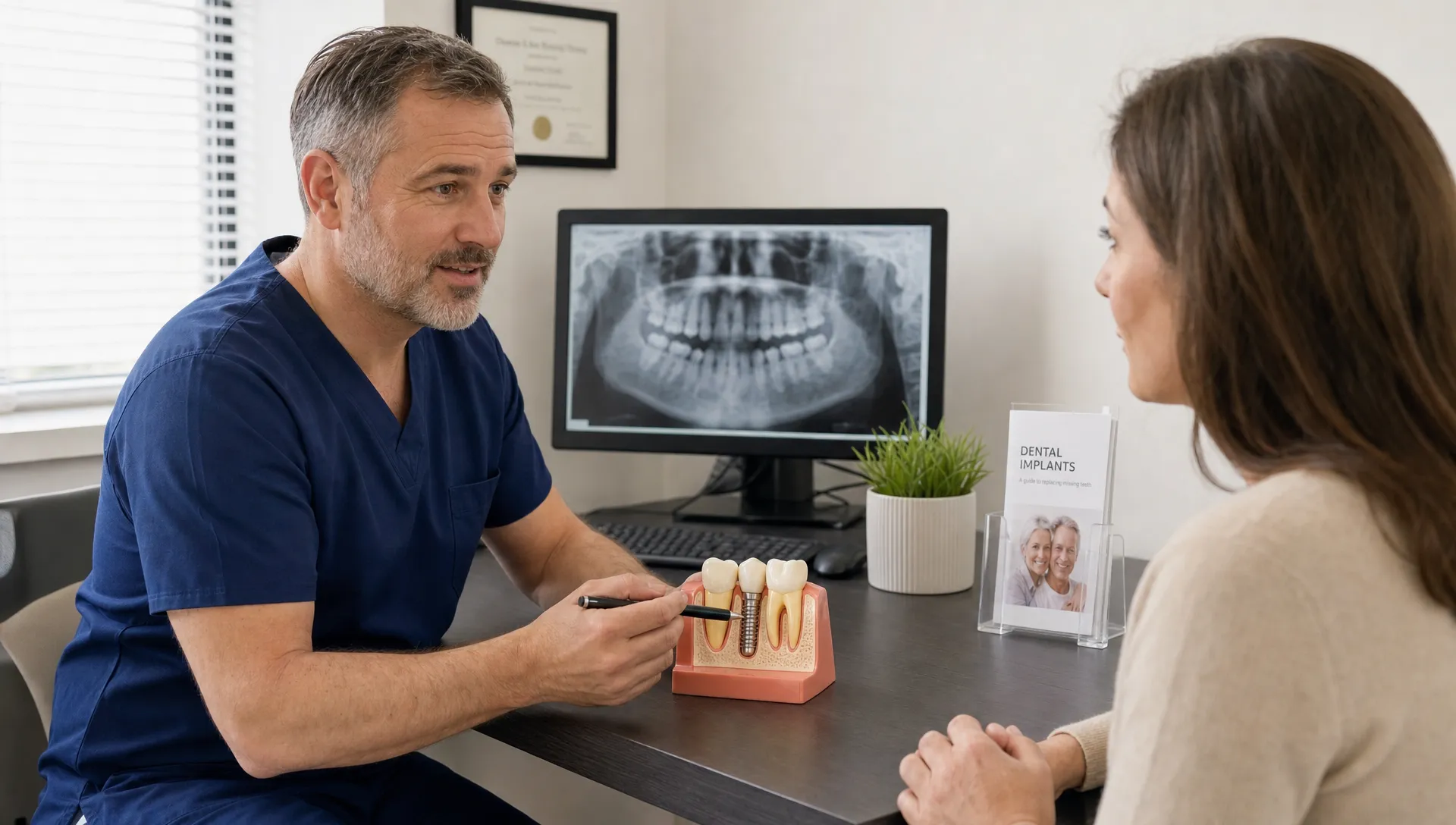
4. There are implant options for different needs
Dental implants are not a single treatment. The best option depends on how many teeth are missing, your gum health, bone volume, bite and aesthetic goals. Your dentist will examine your mouth and explain what is realistic before creating a treatment plan.
| Implant option | What it may be used for | Typical benefit |
|---|---|---|
| Single tooth implant | One missing tooth | Replaces a gap without preparing neighbouring teeth |
| Implant-supported bridge | Several missing teeth in a row | Restores multiple teeth with fewer implant posts than one per tooth |
| Implant-retained denture | Loose or uncomfortable dentures | Helps dentures feel more secure |
| Full arch implant restoration | Most or all teeth missing in one jaw | Can provide a fixed or more stable full-smile solution |
Most implants are titanium, although ceramic zirconia implants may be discussed in specific cases. The material, size and position of the implant all need careful planning. Care is needed choosing the option that fits your health, not simply the quickest or most cosmetic route.
5. They can be easier to live with long term
Removable dentures can work well for many people, but they may need adhesives, relining or regular adjustment as the mouth changes. Dental implants are cared for much like natural teeth, with daily brushing, interdental cleaning and regular hygienist visits.
West Malling Dental & Implant Centre provides hygienist care, including Airflow, to help patients maintain healthy gums around teeth and implants. This matters because implants rely on strong surrounding tissues. You can read more about maintenance and longevity in the practice’s guide to how long dental implants last.
Preparing for successful dental implant placement
Successful implant treatment starts before the implant is placed. Your dentist will assess your medical history, current medications, gum health, bite, oral hygiene and bone levels. X-rays and imaging are usually part of this assessment so the implant position can be planned accurately.
Preparation may include treating gum disease, removing a failing tooth, improving oral hygiene or discussing habits such as smoking or teeth grinding. Some patients need bone grafting before an implant can be placed, although not everyone does. Your dentist will also discuss healing time, temporary tooth options and what to expect after placement.
Frequently Asked Questions
Are dental implants painful? Implant placement is usually carried out with local anaesthetic, so you should not feel pain during the procedure. Some soreness, swelling or bruising afterwards is normal and your dentist will explain how to manage this.
Is smile dental care with implants suitable for everyone? Not always. You need healthy gums, enough bone support and good daily cleaning habits. Medical conditions, smoking or certain medications may affect suitability, which is why a proper consultation is essential.
How long does implant treatment take? It varies. Some cases take a few months from planning to final tooth, while more complex cases involving extractions, healing or bone grafting can take longer.
Can implants replace several missing teeth? Yes. Implants can support a single crown, a bridge or a more stable denture. Your dentist will recommend an option based on the number of missing teeth and the condition of your mouth.
Take the first step towards a stronger smile
If missing teeth are affecting how you eat, speak or smile, dental implants may offer a stable and natural-looking solution. West Malling Dental & Implant Centre combines private dental care with implant, Invisalign, cosmetic and emergency treatments in a relaxed setting for patients in West Malling, Kings Hill and nearby areas. We are there for your dental implant treatment journey
Book a consultation or new patient check-up to discuss your options and receive personalised guidance from the team.