
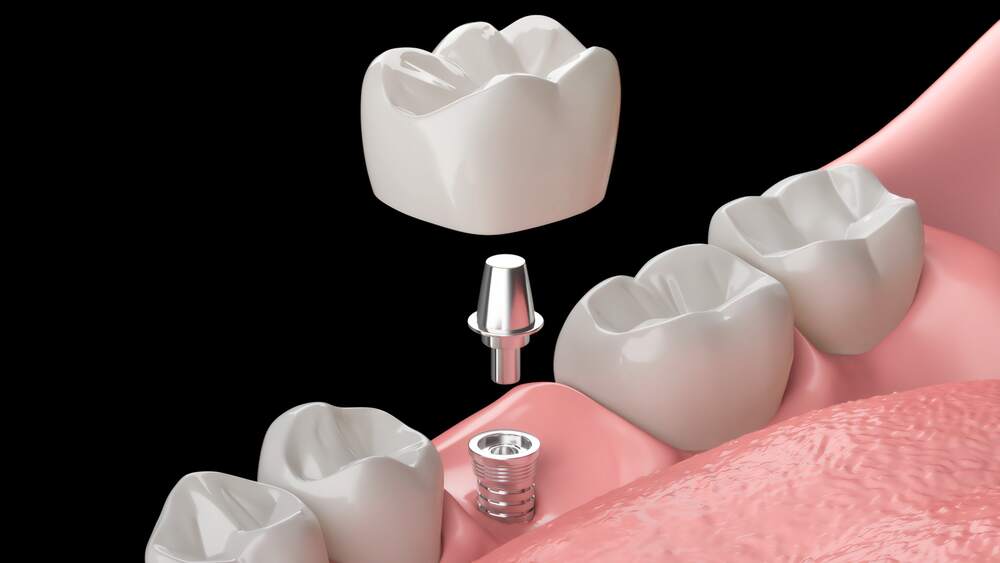
If you are searching for a dental hygienist to help care for dental implants, look for more than a routine clean. Implants need ongoing checks of the surrounding gums and bone, alongside professional cleaning and effective home care. At West Malling Dental & Implant Centre, dental implant treatment and hygienist care are available within the same practice, helping you plan both treatment and aftercare.
What is peri-implantitis?
Peri-implantitis is inflammation around a dental implant accompanied by loss of the bone supporting it. Bacterial plaque is a major contributor, although factors such as previous gum disease, smoking and poorly controlled diabetes can increase risk.
An earlier condition, peri-implant mucositis, affects the soft tissues without the progressive supporting bone loss that defines peri-implantitis. Mucositis can often resolve with effective plaque control and professional treatment. Once bone has been lost, treatment becomes more complex.
Implant problems can develop without pain. Bleeding during cleaning should therefore prompt advice rather than waiting for discomfort. Although implants cannot develop tooth decay, the tissues supporting them still need protection.
What a hygienist looks for in with implant aftercare
Your dentist checks the implant and supporting tissues
Your dentist assesses gum inflammation, changes in probing measurements, the implant restoration and your bite. X-rays may be needed to compare bone levels with previous records, but they are not automatically required at every appointment.
Baseline measurements after treatment help the team identify later changes. If disease is suspected, your dentist can arrange treatment or referral rather than simply repeating routine cleaning.
Your hygienist helps control plaque
A hygienist removes deposits using equipment suitable for implant surfaces and demonstrates how to clean difficult areas. They can help you choose interdental brush sizes and techniques for bridges or other restorations.
West Malling Dental offers hygienist appointments with Airflow. Its suitability around an implant depends on the equipment, powder and clinical situation. You can explore how Airflow removes surface deposits and stains, but stain removal alone does not treat established peri-implantitis.
Prevention starts before implant placement
Before choosing implant treatment, arrange a thorough consultation. Preparation should cover existing gum disease, medical history, smoking, diabetes control and your ability to maintain the planned restoration.
Your dentist also assesses available bone and the proposed implant position. Additional imaging or bone grafting may be appropriate, depending on your circumstances. Treating active gum disease and establishing manageable cleaning habits are important before surgery.
The European Federation of Periodontology’s clinical guideline supports prevention before implant placement and structured supportive care afterwards.
Different implant arrangements need different cleaning plans
Most implants are root-shaped fixtures placed in the jawbone. The replacement teeth they support can take several forms:
| Implant arrangement | What it replaces | Cleaning consideration |
|---|---|---|
| Single implant crown | One missing tooth | Access around the crown and gumline |
| Implant-supported bridge | Several missing teeth | Cleaning beneath the bridge and around supporting implants |
| Fixed full-arch restoration | A complete arch of teeth | Access beneath the restoration with suitable cleaning aids |
| Implant-retained removable denture | Multiple or all missing teeth in an arch | Removing the denture to clean it and the attachments |
These are general treatment plan, they may not suit every patient. Your dentist should explain availability, suitability and cleaning access. Our guide to preparing for an implant-supported bridge explains the assessment in more detail.
A daily routine that protects implant health
Brush twice daily, paying attention to the gum line around each implant restoration. Fluoride toothpaste also protects your remaining natural teeth. Clean between teeth and around implants daily using the aids your dental team has demonstrated, without forcing a brush into a tight space.
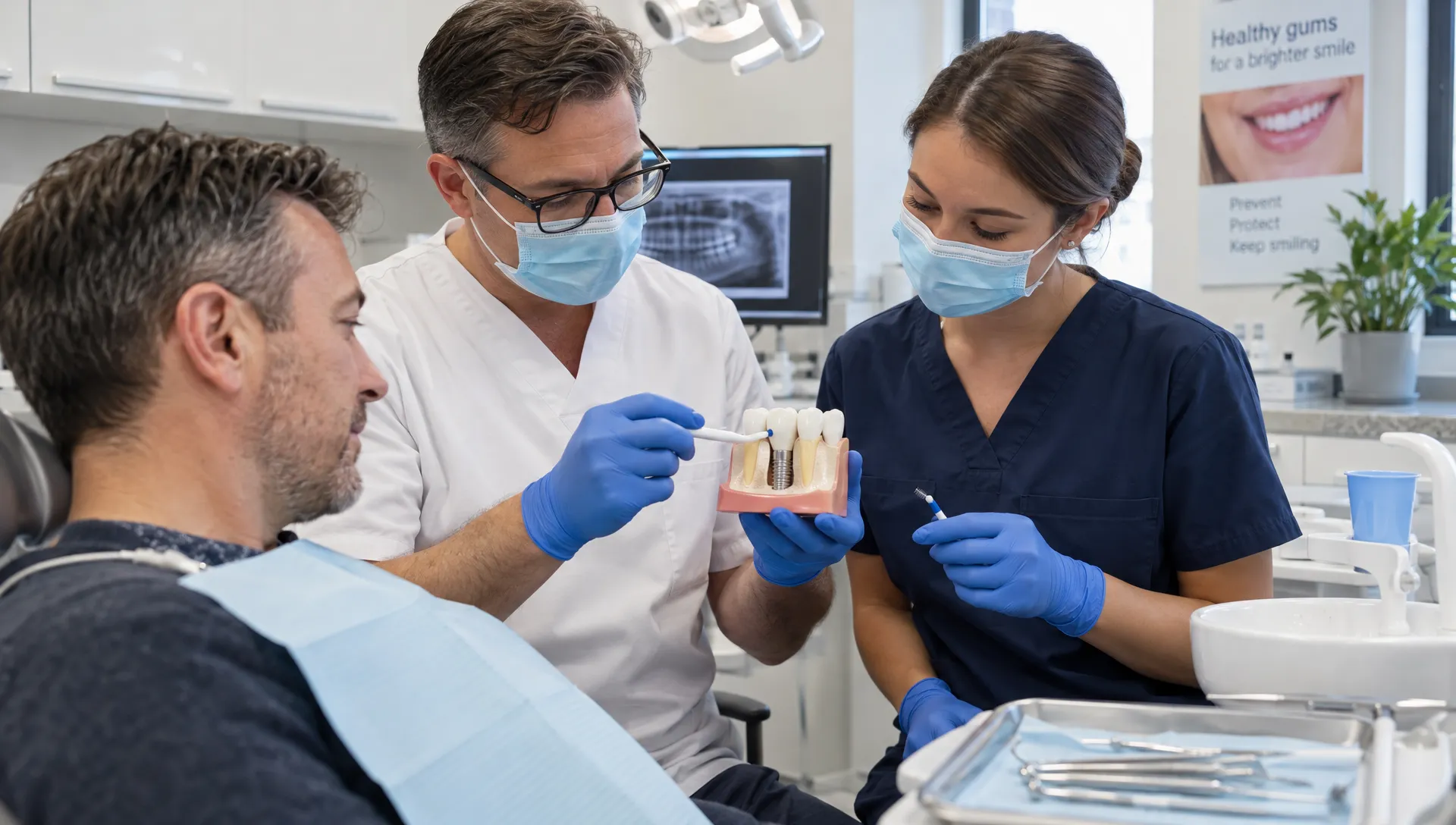
For bridges, cleaning underneath the replacement teeth matters as well as cleaning the visible surfaces. Ask your hygienist to watch your technique so they can identify missed areas or suggest a more manageable approach.
Avoid scraping implants with household tools or buying sharp instruments for home use. Mouthwash does not replace mechanical plaque removal and should be used according to professional advice. If cleaning repeatedly causes bleeding, arrange an assessment rather than abandoning the area.
Warning signs that need a dental appointment
Contact the dental practice if you notice persistent bleeding, redness, swelling, discharge, an unpleasant taste or gum recession around an implant. Movement in the replacement tooth also needs prompt investigation: it may involve a component rather than the implant itself, but you cannot reliably distinguish this at home.
Do not wait for pain before seeking help. Established peri-implantitis may require treatment beyond a hygiene appointment, sometimes including surgery. West Malling Dental offers same-day emergency care; contact the practice promptly if you have swelling, significant pain or a loose implant restoration.
Frequently asked questions
How often should implants be checked and cleaned? Your team should recommend an interval based on gum health, previous periodontitis, plaque control and other risks. Do not assume a standard annual appointment is enough for every implant patient.
Can professional cleaning guarantee that peri-implantitis will not develop? No. Professional maintenance reduces risk but cannot eliminate it. Consistent home care, risk-factor management and early assessment of changes all matter.
Plan your implant care in West Malling
Whether you are considering implants or already have them, ask West Malling Dental & Implant Centre for an assessment and a personalised maintenance plan.
A Comprehensive new-patient exam including X-ray’s cost £65. An implant consultation with Gerry costs £45 where implant treatment, costs and aftercare are discussed.