
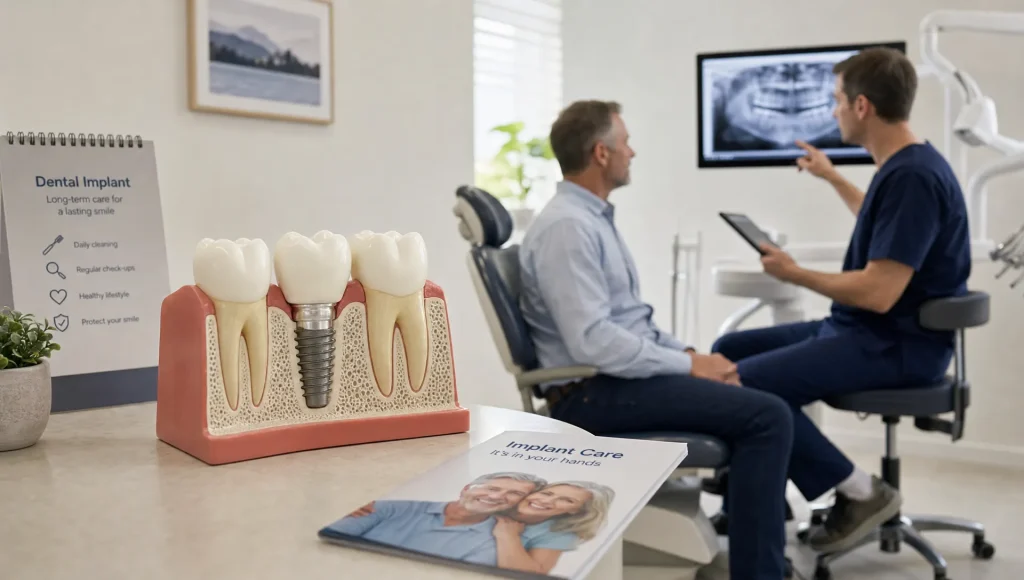
If you are considering dental implants, the lifespan of treatment is likely to be one of your biggest questions. Dental implants are often described as a long-term solution for missing teeth, but that does not mean every part of the treatment lasts forever without maintenance.
The reassuring answer is that a well planned, well maintained dental implant can last for many years. In many cases, the implant itself can last over 20 years or longer, and some last a lifetime. The less simple answer is that longevity depends on your gum health, cleaning habits, bite, medical history, smoking status, and the quality of planning and aftercare.
This guide explains what our Kent patients should realistically expect, what can shorten an implants lifespan, and how to give your treatment the best chance of lasting as long as possible.
The short answer: how long do dental implants last?
A dental implant is designed to be a durable replacement for a missing tooth root. Once it has healed and fused with the jawbone, it can provide a stable foundation for a crown, bridge, or denture.
West Malling Dental’s own guidance is that most dental implants last at least 15 years, with many expected to last much longer when they are properly cared for. However, it is important to separate the implant from the visible tooth attached to it.
The implant fixture fused in the bone will last a lot longer than the crown or bridge it supports. The visible restoration is exposed to daily chewing forces, temperature changes, staining, and wear. It may need repair or replacement before the implant itself has any problem.
| Implant component | What it does | Typical expectation |
|---|---|---|
| Implant fixture | Replaces the tooth root and sits in the jawbone | +20 years or longer with good care |
| Abutment | Connects the implant to the crown or bridge | Can last many years, but may need servicing |
| Crown or bridge | The visible tooth or teeth used for chewing and smiling | May need repair or replacement over time |
| Implant denture attachments | Help secure a removable denture | May need periodic maintenance as parts wear |
No ethical dentist should promise that an implant will last forever. The better question is: what can be done before, during, and after treatment to maximise its lifespan?
Why implant lifespan varies from person to person
Two patients can have the same implant system placed at the same practice and still have different long-term outcomes. That is because dental implants are not just mechanical parts. They rely on living bone, healthy gums, a stable bite, and daily care.
For one patient, an implant may sit in strong bone, be easy to clean, and carry light biting forces. For another, the implant may be replacing a tooth lost through gum disease, be placed in an area of limited bone, and be exposed to heavy grinding at night. Both can be successful, but they need different planning and maintenance.
This is why a thorough assessment matters. A dentist should look at your mouth as a whole, not only the gap. Your remaining teeth, gums, bite, jawbone, smile line, and medical background all influence the long-term plan.
Why local aftercare matters for Kent patients
Dental implant treatment does not end when the crown is fitted. Follow-up appointments, hygiene support, bite checks, and prompt help if something feels wrong all play a part in long-term success.
For Kent patients, choosing a local implant dentist can make maintenance more convenient. If you notice soreness, bleeding, looseness, or a chipped crown, it is much easier to arrange a review close to home than to rely on a clinic far away or overseas.
This is one reason it is worth understanding common dental implant pitfalls before committing to treatment. Low advertised fees can look attractive, but implant dentistry depends heavily on assessment, planning, materials, and long-term aftercare. A smooth healing phase is important, but the years after treatment matter just as much.
The main factors that affect how long dental implants last
Gum health and plaque control
Implants cannot get tooth decay, but the gum and bone around them can still become inflamed. Plaque bacteria can irritate the tissues around an implant, just as they can around natural teeth.
Early inflammation around an implant may be reversible if it is caught quickly. If it is ignored, it can progress and lead to bone loss around the implant. This is one of the most important reasons to attend regular dental and hygienist visits after implant treatment.
Smoking and vaping
Smoking is associated with poorer healing and a higher risk of gum and implant complications. It can reduce blood flow to the tissues, affect immune response, and make inflammation harder to detect because gums may bleed less readily.
If you smoke and are considering implants, your dentist may recommend stopping or reducing smoking before treatment. This is not about judgement. It is about improving healing and protecting your investment.
Bite forces and teeth grinding
Implants are strong, but they do not have the same shock-absorbing ligament as natural teeth. Heavy bite forces, clenching, or grinding can put extra pressure on the implant crown, abutment, and surrounding bone.
If you grind your teeth, your dentist may recommend a night guard after treatment. They may also adjust the shape of the crown carefully so that biting forces are distributed as safely as possible.
Bone quality and implant position
Long-lasting implants need enough healthy bone in the right place. If bone has shrunk after tooth loss, your dentist may discuss grafting or alternative treatment designs. The goal is to place the implant in a position that is stable, cleanable, and suitable for the final tooth.
A crown that looks good but is difficult to clean can create problems later. Good implant planning considers both aesthetics and maintenance.
General health and medication
Medical conditions such as diabetes can affect healing, especially if they are not well controlled. Some medications can also influence bone health or healing. Your dentist will ask about your medical history so they can assess risks and plan appropriately.
| Factor | Why it matters | What helps |
|---|---|---|
| Gum health | Inflammation can lead to bone loss around an implant | Regular hygiene visits and daily cleaning |
| Smoking | Can affect healing and long-term tissue health | Stopping or reducing before and after treatment |
| Grinding | Excess force can damage restorations and components | Bite assessment and a night guard if advised |
| Bone volume | Implants need stable bone support | Careful scans, planning, and grafting where needed |
| Medical history | Some conditions affect healing | Honest medical disclosure and well managed health |
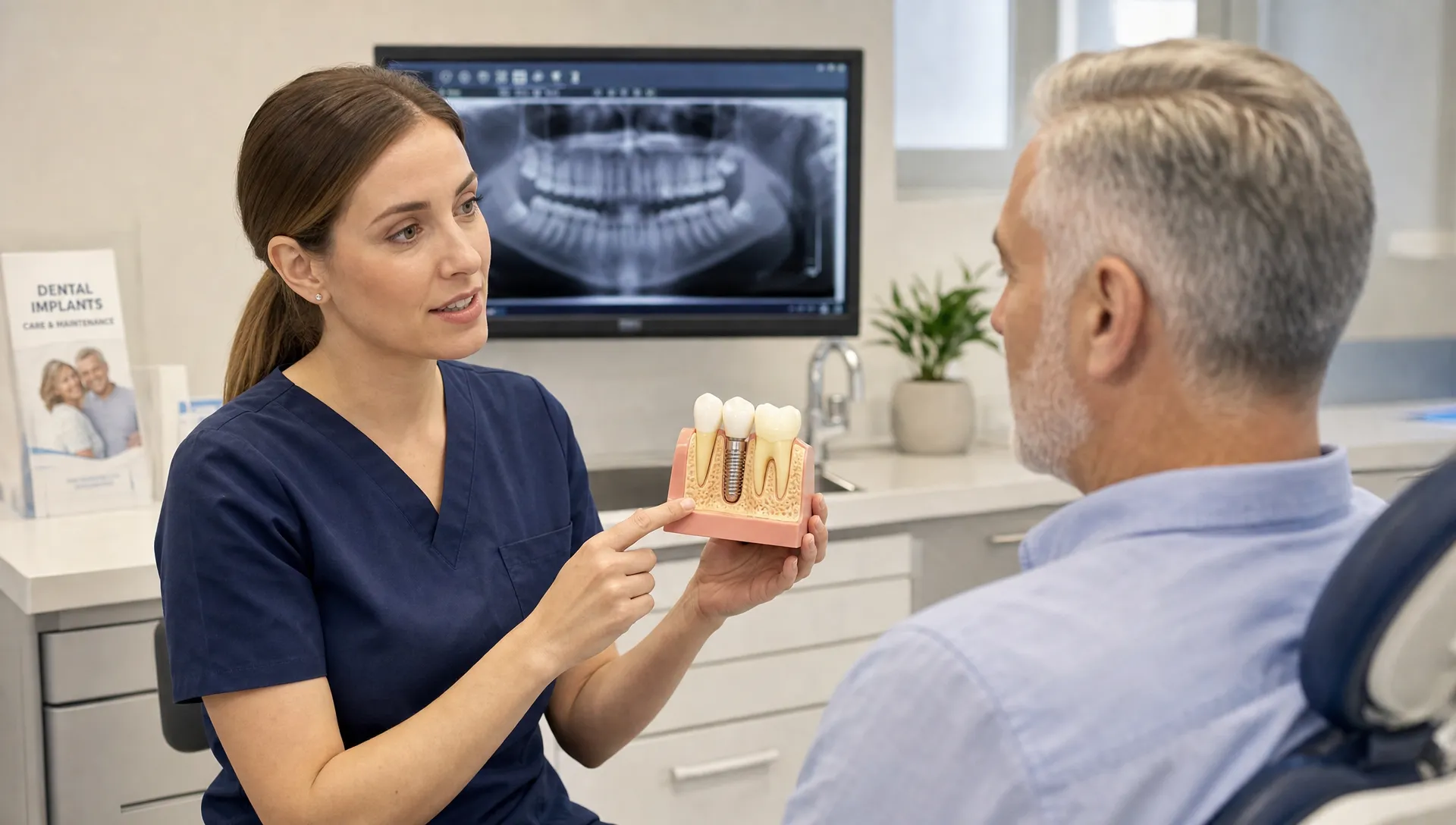
How to help your dental implants last longer
Dental implants need consistent care. The good news is that most of the habits that protect implants also protect your natural teeth.
- Brush twice a day with a fluoride toothpaste, paying close attention to the gumline around the implant.
- Clean between teeth and around the implant every day using the tools your dentist or hygienist recommends.
- Attend routine dental reviews so your dentist can check the implant, crown, bite, and surrounding tissues.
- See the hygienist as advised, even if the implant feels fine.
- Wear a night guard if you have been told you clench or grind your teeth.
- Avoid smoking, or ask for support to reduce your risk before and after treatment.
- Report bleeding, swelling, looseness, or discomfort promptly rather than waiting for your next routine appointment.
A hygienist can also help you clean areas that are difficult to reach at home. At West Malling Dental & Implant Centre, hygienist care includes Airflow, which may be used where appropriate to support professional cleaning and stain removal.
Signs your implant needs checking
A healthy implant should feel stable and comfortable. It should not wobble, cause persistent pain, or bleed regularly when cleaned. Some minor tenderness can be normal shortly after treatment, but new symptoms months or years later should be checked.
Contact your dentist if you notice:
- Bleeding when brushing around the implant
- Swelling, redness, or soreness in the gum
- A bad taste or discharge near the implant
- A crown that feels loose or clicks
- Pain when biting
- Food trapping that was not happening before
- A chipped or cracked implant crown
- A change in the way your teeth meet
Not every problem means the implant is failing. Sometimes a screw needs tightening, a crown needs repair, or the gum needs professional cleaning. The earlier you ask for advice, the more options your dentist usually has.
Dental implants compared with other missing tooth options
If you are weighing up dental implants against bridges or dentures, lifespan is only one part of the decision. Comfort, appearance, cleaning, cost, and the health of neighbouring teeth all matter.
| Option | Longevity considerations | Maintenance considerations |
|---|---|---|
| Dental implant | The implant may last 15 years or longer, while the crown may need future repair or replacement | Needs excellent cleaning and regular reviews |
| Dental bridge | Can last many years, but relies on the supporting teeth staying healthy | Supporting teeth must be kept very clean |
| Removable denture | Can replace several missing teeth, but may need adjustments as gums and bone change | Must be removed and cleaned daily |
Dental implants are often chosen because they do not require neighbouring teeth to be cut down in the way some traditional bridges do. They can also feel more stable than removable dentures. However, they are not the only option, and the best choice depends on your mouth and priorities.
Is implant lifespan connected to cost?
Cost is understandably important, especially for patients comparing dental implants in Kent. A higher fee does not automatically guarantee a better result, but very low fees can sometimes reflect compromises in assessment, time, components, or aftercare.
When comparing quotes, ask what is included. Important details include consultations, X-rays or scans, the implant system, temporary teeth, the final crown or bridge, follow-up visits, and maintenance advice. You may also need preparatory treatment such as hygiene care, gum treatment, or bone grafting.
If you are planning your budget, West Malling Dental has a useful guide to dental implant costs in Kent that explains common treatment types and the factors that influence fees.
Speech, chewing, and confidence also matter
The value of an implant is not only measured in years. Missing teeth can affect how you chew, smile, and speak. Front teeth in particular help shape certain sounds, while back teeth support efficient chewing and help maintain bite stability.
For some people, missing teeth are part of a wider oral function or rehabilitation picture. In those cases, dental care may sit alongside support from other clinicians, such as speech and language therapy services for communication, feeding, or broader functional needs. For most adult implant patients, the dental goal is straightforward: a stable replacement tooth that looks natural, feels comfortable, and can be maintained confidently.
Frequently Asked Questions
How long do dental implants last on average? Many dental implants last 15 years or longer when they are well planned and well maintained. Some last a lifetime, but no dentist can guarantee this for every patient.
Does the implant crown last as long as the implant? Not always. The implant in the bone may last longer than the crown attached to it. Crowns can chip, wear, stain, or need replacement over time, especially if you grind your teeth.
Can dental implants fail after several years? Yes. Late problems can happen if gum inflammation, bone loss, heavy bite forces, smoking, or cleaning difficulties develop. Regular reviews help detect issues early.
Are dental implants suitable for older patients? Age alone is usually not the deciding factor. Gum health, bone support, medical history, healing ability, and motivation to maintain the implant are more important.
How often should implants be checked? Your dentist will recommend a review schedule based on your risk level. Many patients benefit from routine dental checks and regular hygienist appointments to monitor gum health and cleaning.
What should I do if my dental implant feels loose? Arrange a dental appointment as soon as possible. Sometimes the crown or abutment is loose rather than the implant itself, but it needs professional assessment.
Considering dental implants in Kent?
A long-lasting implant starts with careful assessment, honest advice, and a maintenance plan you can realistically follow. If you have a missing tooth, failing tooth, loose denture, or old bridge, West Malling Dental & Implant Centre can help you understand your options in a calm private dental setting.
New patient check-ups are available for £65 including an X-ray, giving you a practical starting point before deciding on treatment. If dental implants are suitable, your dentist can explain the likely stages, timescales, costs, and aftercare needed to protect your result for the long term.