
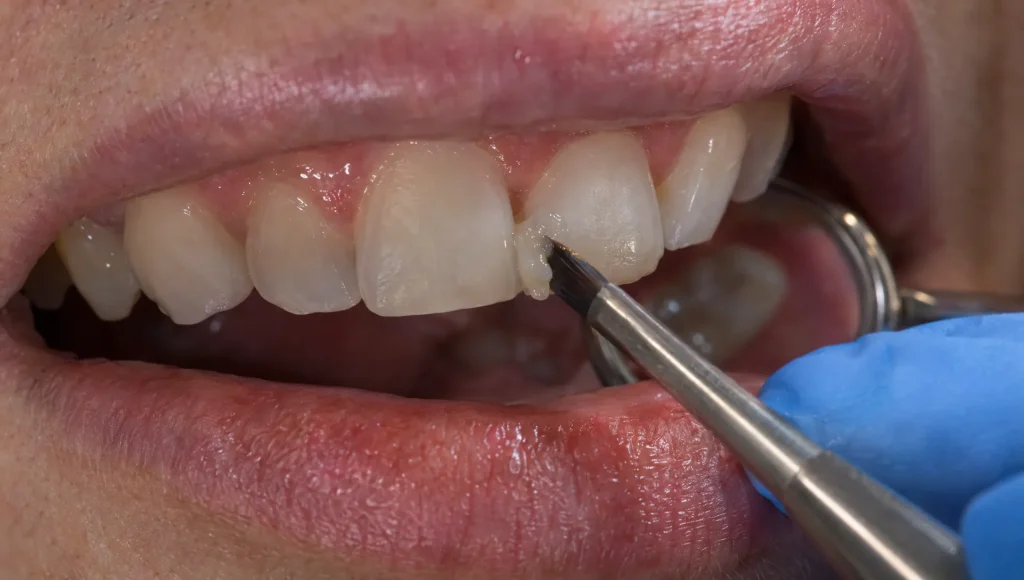
Composite veneers can create confident smiles without drilling in suitable cases, by adding tooth-coloured resin rather than cutting away healthy enamel. They can improve small chips, uneven edges and some gaps, but a genuinely no-preparation approach depends on your teeth, bite and the changes you want.
At West Malling Dental & Implant Centre, composite bonding and veneers are among the cosmetic treatments available. An assessment helps establish whether adding material alone could achieve a natural-looking result without making teeth feel bulky.
What does “no drilling” actually mean?
A composite veneer covers much of the visible front surface of a tooth with tooth-coloured resin. Edge bonding uses the same type of material over a smaller area. Both can sometimes be carried out without removing healthy tooth tissue.
For an additive veneer, the dentist prepares the surface with an etching gel and adhesive, shapes the resin and hardens it with a curing light. Etching creates microscopic texture for bonding; it is not the same as drilling the tooth down.
However, rotating instruments may be used for finishing and polishing. Removing composite later also requires care and may alter the enamel surface, so completely reversible treatment is not a given.
Who might suit an additive approach?
The strongest starting point is healthy teeth and gums, enough suitable enamel for bonding and space to add resin without creating an oversized appearance. Composite veneers may help create confident smiles when relatively small changes are needed.
| Starting concern | Could no-preparation composite help? | What needs checking? |
|---|---|---|
| Small chips or uneven edges | Often worth considering | Bite forces and the cause of the damage |
| Small spaces between teeth | Sometimes | Tooth proportions and gum health |
| Teeth that look slightly too small | Sometimes | Available space and the desired shape |
| Prominent or crowded teeth | Adding resin may increase bulk | Whether orthodontics would be more appropriate |
| Marked discolouration | Coverage may be challenging | How much material is needed to mask the colour |
Decay and gum disease need attention before cosmetic treatment. If you grind or clench, the dentist should also assess the risk of chipping or wear. The NHS guidance on teeth grinding explains how grinding can damage teeth and when to seek advice.
When might preparation or another treatment be better?
Adding material cannot solve every concern. A tooth that already projects forwards may look more prominent with a veneer on top. Strong discolouration may need enough resin to affect thickness and shape.
Existing fillings, decay or damaged tooth tissue may also require treatment involving drilling. That is different from removing healthy enamel solely to make room for a cosmetic veneer.
For some patients, whitening or Invisalign may address the original concern with less restorative work. West Malling Dental offers both, allowing you to discuss alternatives rather than assume veneers are the only route to confident smiles.
Ask the dentist to distinguish between no preparation, minimal preparation and replacement of existing restorations. If any enamel removal is proposed, you should understand where, why and what alternatives are available before consenting.
What happens during treatment?
Planning starts with examining your teeth, gums and bite, then discussing the shape and shade you want. X-rays may be recommended when clinically justified. If whitening is part of your plan, its timing matters because composite does not whiten like natural enamel.
For direct composite veneers, the dentist applies and sculpts resin on the teeth, hardens it and refines the surface. The final checks include how your teeth meet and whether the edges and spaces are comfortable and cleanable.
Anaesthetic is often unnecessary when no sensitive tooth tissue is being treated, although this depends on the procedure and your comfort. Treatment time and the number of visits vary with complexity.
Our guide to what to expect from composite bonding explains the wider treatment process and its limitations.
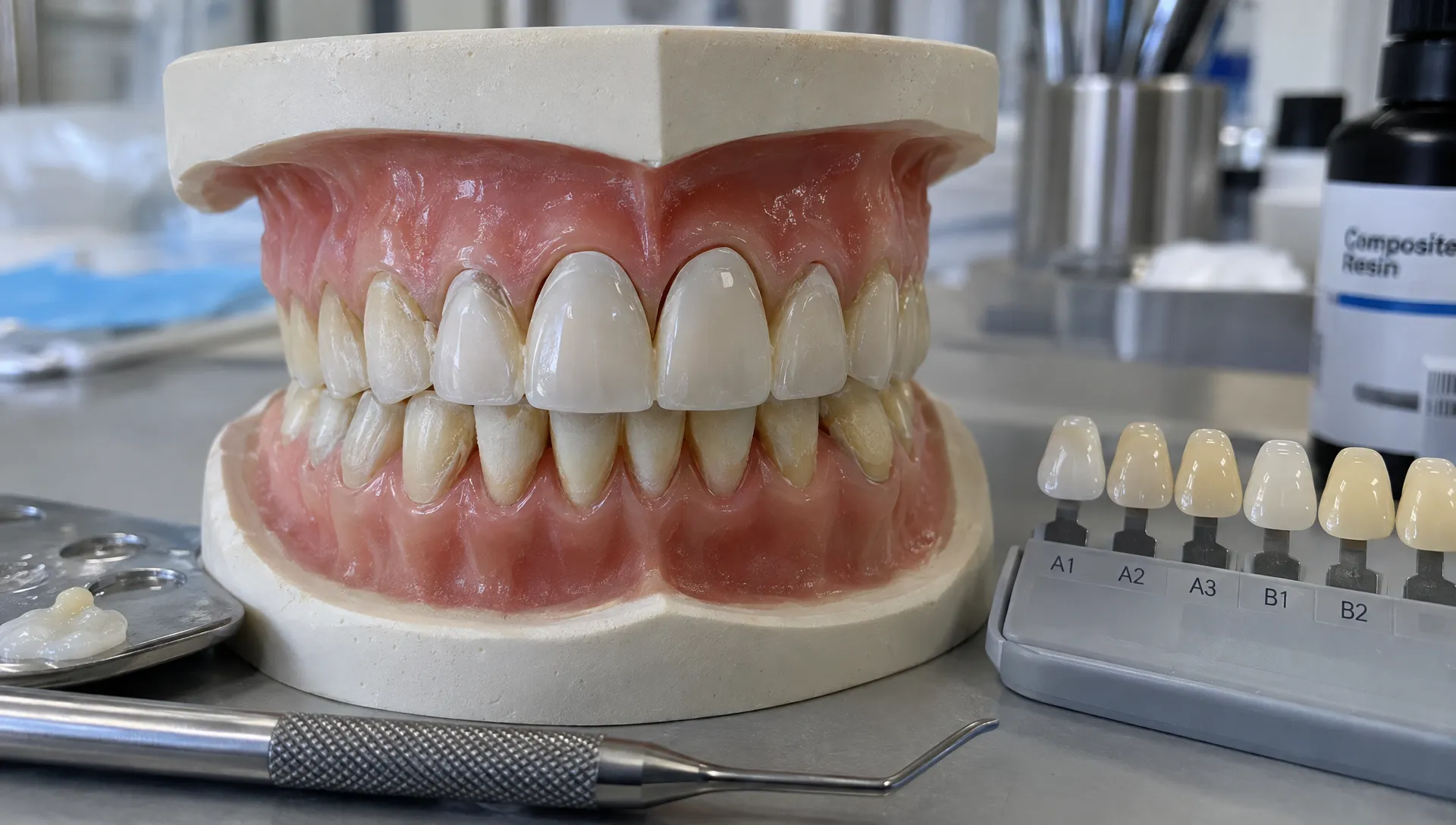
Maintaining composite veneers and confident smiles
Composite can stain, chip or lose its polish over time. Repairs are often possible, but maintenance and eventual replacement should form part of your decision from the outset.
Brush twice daily with fluoride toothpaste and clean between your teeth every day. Avoid biting nails, opening packaging with your teeth or repeatedly biting hard objects. If grinding is a concern, ask whether a protective appliance is appropriate.
Long-term confident smiles depend on healthy gums and manageable maintenance, not simply the appearance of freshly placed veneers. Ask how your proposed veneer shape will allow cleaning around the gumline and between teeth.
There is no single lifespan that applies to everyone. Your bite, habits, the amount of resin and ongoing care all influence how long the result lasts.
Fees and the West Malling Dental new-patient offer
A £65 new-patient check-up, including an X-ray, with imaging undertaken only when clinically appropriate. Confirm the offer’s availability and terms when booking. This is a check-up offer, not a composite veneer treatment price.
For current composite veneer fees and any treatment-specific offers, contact the practice directly. Request a written estimate explaining the teeth being treated, any preparatory care and likely maintenance costs.
Before committing, use these questions to ask before composite bonding to discuss enamel preservation, shade selection and aftercare.
Frequently asked questions
Can composite veneers always be fitted without drilling? No. Some teeth allow an entirely additive approach, while others need preparation or a different treatment. Your dentist should explain the proposed work before you agree.
Can no-preparation veneers be removed later? Composite can be removed, but returning teeth to exactly their original condition cannot be guaranteed. Adhesive preparation and resin removal may affect the enamel surface.
Will composite veneers look bulky? They can if too much material is added where there is insufficient space. Careful case selection, shaping and bite checks help reduce this risk.
Can I whiten composite veneers later? Whitening does not change composite colour in the same way as natural teeth. Discuss whitening before choosing the resin shade.
Explore a conservative approach to your smile
If you want to explore confident smiles without unnecessary enamel removal, book an assessment with West Malling Dental. The private Kent practice offers cosmetic dentistry alongside preventive care, helping you consider composite veneers in the context of your long-term oral health. Ask about the £65 new-patient offer and whether a no-preparation approach suits your teeth.