

The simple answer is no, you are not automatically too old for Invisalign. Adults can often straighten their teeth in their 50s, 60s, 70s and beyond, provided their teeth and supporting tissues are suitable for treatment.
At West Malling Dental & Implant Centre, we have many happy Invisalign patients from Kings Hill, Sevenoaks, Tonbridge and the surrounding area. Book a consultation to establish what is achievable before you commit to treatment.
Can Invisalign work later in life?
Teeth can move in adulthood because the tissues around their roots respond to controlled orthodontic forces. The NHS guidance on orthodontics explains that adult treatment can begin at any age.
You might be considering treatment because your lower teeth have become crowded, gaps have appeared or teeth have shifted after earlier braces. Wanting to feel more comfortable smiling is also a valid reason to seek advice.
Age alone does not determine suitability. Gum health, bone support, your bite and the movements required matter more. Invisalign is one option, rather than the right answer for every adult.
What would an Invisalign consultation assess first?
A proper assessment looks beyond how straight your front teeth appear. Your dentist needs to understand your oral health, existing dental work and expectations before recommending aligners.
Gum health and bone support
Active gum disease should be treated before orthodontic tooth movement begins. Teeth need adequate support, and inflammation can make treatment unsafe.
A history of gum disease does not necessarily rule out straightening, but it can require closer monitoring and a modified plan. Receding gums also deserve careful assessment, particularly if tooth movement could affect already vulnerable areas. Our explanation of why gum health is checked before Invisalign covers this preparation in more detail.
Crowns, implants and missing teeth
Having a crown or filling does not automatically exclude you. The dentist will assess the condition of the restoration and whether it affects aligner fit or the attachments used to guide movement.
Dental implants are different: they are fixed in the jaw and cannot move like natural teeth. Other teeth may still be straightened around them, but planning must account for their position. Missing teeth can also influence whether gaps should be maintained, reduced or prepared for replacement.
A clinic for cosmetic dentistry should explain how these existing treatments affect your options, rather than treating every smile as a straightforward alignment case.
Will aligners fit your everyday routine?
Invisalign aligners are removable, which can make eating and cleaning more convenient than with fixed braces. However, they only work as intended when worn consistently. Patients are generally advised to wear them for around 20 to 22 hours a day, following their clinician’s instructions.
You remove them for meals and drinks other than plain water, then clean your teeth before replacing them. Frequent snacking or sipping hot drinks can make this routine harder to maintain.
Dexterity matters too. If arthritis makes removing aligners difficult, discuss this during your assessment. Your dentist can also consider dry mouth, medicines and any health conditions relevant to treatment.
Fixed braces may be preferable for some movements or routines. Comparing Invisalign with traditional braces can help you identify questions to raise, without assuming that discreet aligners are always the best choice.
Does being older mean treatment takes longer?
Not necessarily. The amount and complexity of movement, gum health and consistent aligner wear all affect treatment time. Your age alone cannot provide a reliable estimate.
A clinic for cosmetic dentistry should give you an individual timescale after assessment and explain that additional aligners may sometimes be needed to refine the result.
Discuss risks as well as benefits. Orthodontic treatment can involve temporary discomfort, changes to gum levels and root shortening. Careful planning and monitoring help manage these risks, but no treatment is risk-free.
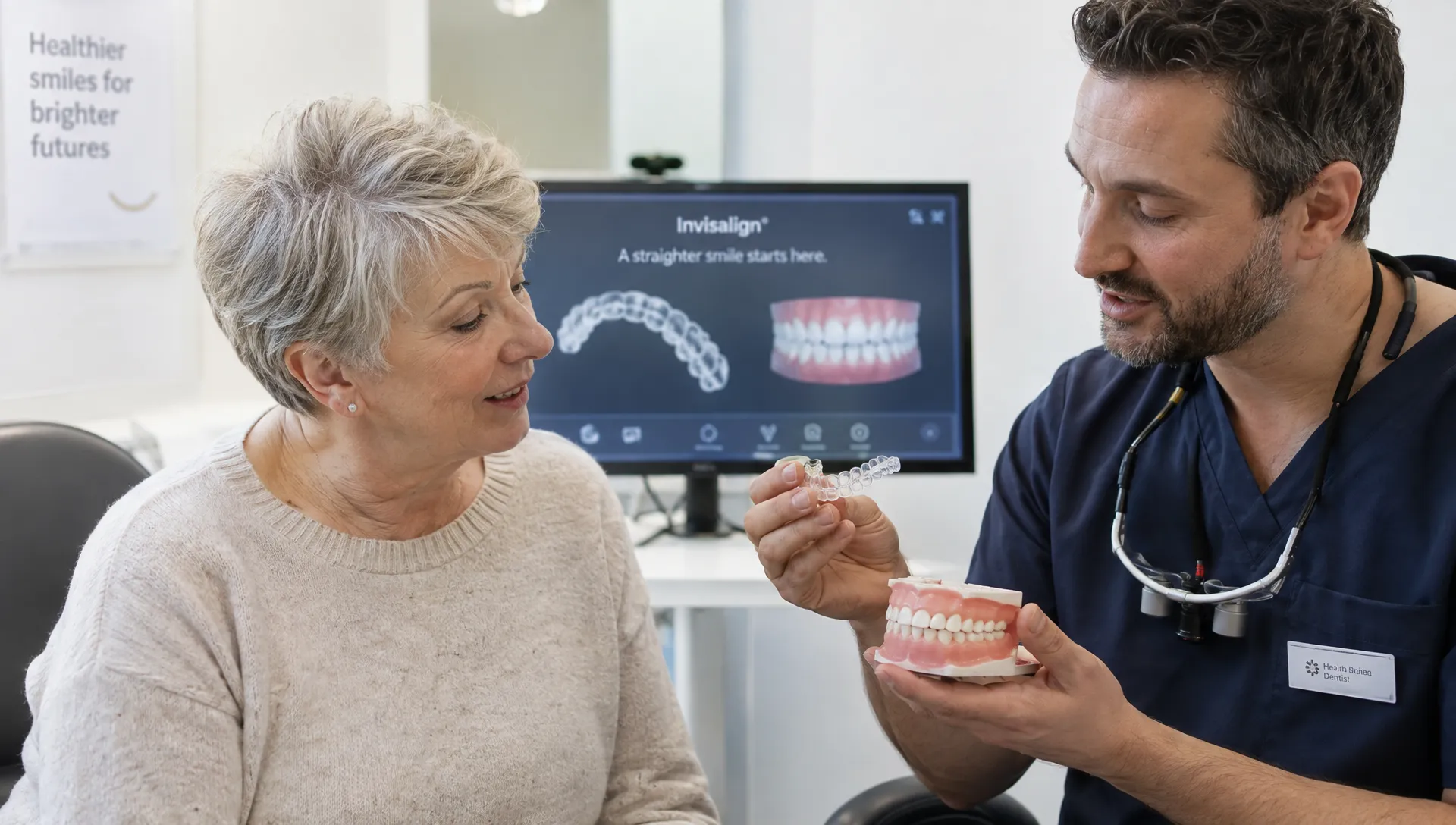
What should you ask at your consultation?
Bring details of previous orthodontic treatment, dental implants and your medicines. Explain whether your priority is easier cleaning, correcting crowding or improving the appearance of your smile.
Useful questions include:
- Is my gum health stable enough for tooth movement?
- How will my crowns, implants or missing teeth affect the plan?
- What improvement is realistic, and what are the alternatives?
- What does the quoted fee include, including reviews and retainers?
When choosing a clinic for cosmetic dentistry, look for a clear explanation of limitations as well as the proposed result. You should understand what treatment involves before deciding whether it suits you.
Explore Invisalign at West Malling Dental
If age has been holding you back, an assessment is a practical starting point. West Malling Dental & Implant Centre offers Invisalign within a private practice providing preventive, hygienist and restorative care, allowing your wider dental needs to be considered alongside straightening.
The practice currently offers a free consultation to patients. The new patient check up offer is £65. Book a consultation and ask the team about any current Invisalign offers and what your proposed treatment fee includes.
Explore Invisalign treatment at West Malling Dental and contact the practice to arrange an assessment of your suitability.