
Choosing between Invisalign and traditional braces is easier when you understand what each option asks of you. The best dental practices assess your bite, oral health and daily habits before recommending treatment, rather than choosing on appearance alone. Both approaches can straighten teeth, but their suitability depends on the movements needed and how consistently you can follow instructions.
For patients in West Malling and Kings Hill, West Malling Dental & Implant Centre offers Invisalign alongside preventive and cosmetic dentistry. Here is how clear aligners compare with fixed braces, and what to discuss before deciding.
Invisalign vs traditional braces at a glance
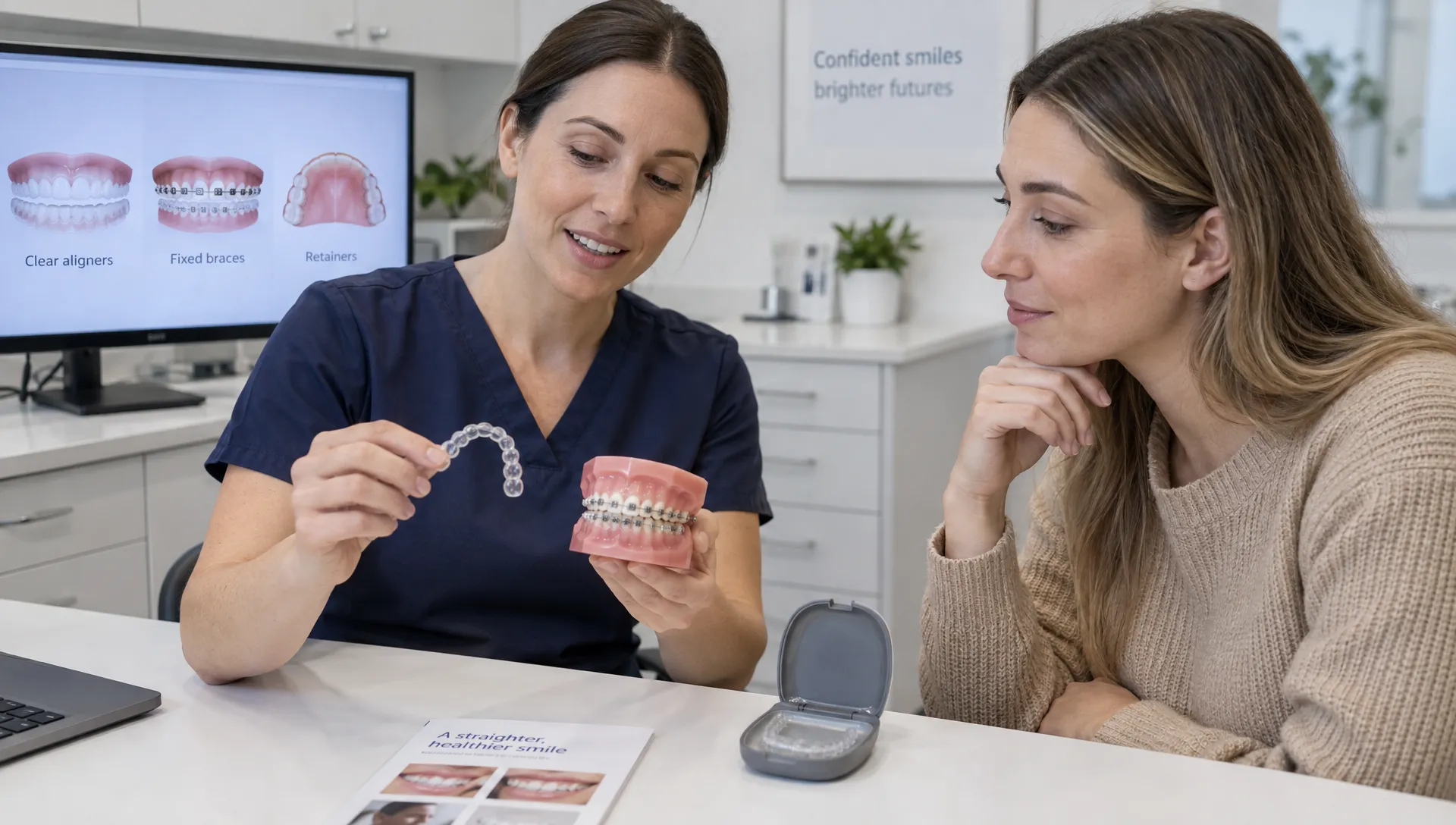
Invisalign uses a sequence of removable clear aligners to move teeth gradually. Traditional braces use brackets attached to the teeth, connected by wires that your clinician adjusts during treatment.
| Factor | Invisalign | Traditional fixed braces |
|---|---|---|
| Appearance | Clear trays, although attachments may be visible | Visible brackets and wires; some systems use tooth-coloured brackets |
| Removal | Removed for eating, drinking anything except plain water and cleaning | Remain attached throughout treatment |
| Daily commitment | Requires consistent prescribed wear | No trays to remember, but careful cleaning is essential |
| Eating | No bracket-related restrictions while trays are removed | Hard or sticky foods can damage the appliance |
| Tooth movement | Suitable for many cases, depending on complexity | May offer advantages for certain complex movements |
| Aftercare | Retainers are needed | Retainers are needed |
Neither option is automatically faster or more effective. The best dental practices explain which system can reliably achieve your particular treatment goals.
How each option fits into everyday life
Invisalign: discreet, but dependent on your routine
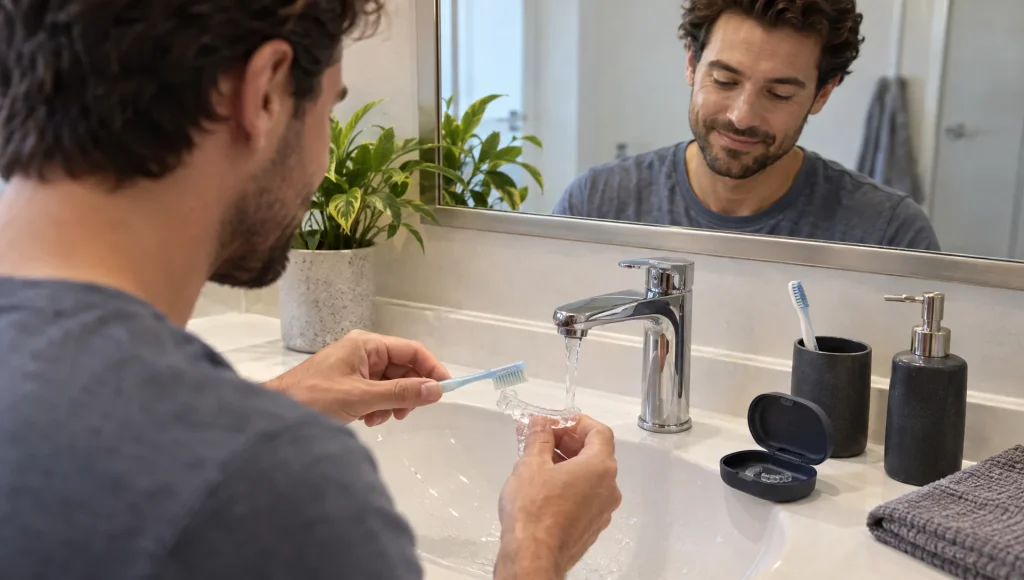
Invisalign aligners are generally prescribed for 20 to 22 hours a day, although you should follow your clinician’s instructions. Removing them frequently or leaving them out for long periods can affect progress.
You can eat without the trays in place, but you need to clean your teeth before putting them back. Frequent snacking, long lunches or a habit of sipping sugary drinks can make the routine harder to maintain.
Small tooth-coloured attachments may help the aligners grip and guide teeth. Some patients also need elastics or carefully planned reshaping between teeth, called interproximal reduction. Your dentist should explain any proposed additional steps before treatment starts.
Fixed braces: continuous treatment, more careful cleaning
Fixed braces keep working without you having to remember to insert an appliance. However, plaque can collect around brackets and wires, so brushing and interdental cleaning need particular attention.
Hard or sticky foods can loosen brackets or damage wires. Both braces and aligners can cause temporary pressure or tenderness as teeth move. Aligners avoid metal brackets, but they are not discomfort-free.
Which option suits your teeth and bite?
The best dental practices distinguish between making front teeth look straighter and correcting how the upper and lower teeth meet. Crowding, spacing, tooth rotations and bite problems can require different treatment approaches.
Invisalign can treat many alignment concerns, but more complex tooth movements may favour fixed braces. Significant jaw discrepancies may require specialist assessment and, in some cases, treatment beyond braces alone.
An examination also checks for decay, gum disease and the condition of supporting tissues. These problems may need treatment before teeth can safely move. Our explanation of why gum health is checked before Invisalign covers this aspect in more detail.
If fixed braces appear more suitable, ask whether treatment is available at the practice or whether an orthodontic referral is recommended.
What the best dental practices explain before you commit
A useful consultation should give you a clear treatment goal, not simply a promise of a straighter smile. Ask which bite changes are achievable, whether attachments or elastics are needed and what limitations apply.
Treatment duration depends on complexity, your response to tooth movement and how well you follow the plan. A shorter advertised treatment is not necessarily appropriate for your teeth. You should also understand how appointments, unexpected problems and refinements will be managed.
Retention matters just as much as active treatment. The NHS guidance on orthodontics explains that retainers help prevent teeth moving back after treatment. Your clinician should set out the recommended schedule and cleaning routine.
The best dental practices also discuss long-term retainer wear and replacement costs before you agree to treatment, so the quoted price is easier to interpret.
Invisalign costs and offers at West Malling Dental
If you have a consultation and pricing, ask whether the fee includes, additional aligners where appropriate and retainers. These inclusions can affect the overall cost.
If you are a new patient West Malling Dental currently offers (Oct. 26) a checkup for £45. Confirm the current availability and inclusions when booking. This is a new-patient assessment offer, not an Invisalign treatment price or a guarantee of suitability.
For treatment information, visit the practice’s Invisalign treatment and cost page, then ask the team about current Invisalign offers and what any package includes. No specific Invisalign discount is confirmed here.
Current offer (Oct. 26)
Free Consultation to discuss in person*
£1000 off treatment
Free Teeth Whitening valued at £295
PLUS up to 30% OFF composite bonding and veneers
The practice’s hygienist services can also support oral hygiene before and during orthodontic treatment.
Frequently asked questions
Is Invisalign quicker than braces? Not necessarily. Treatment time depends on the tooth movements required, treatment planning and adherence. Compare estimates for your own case rather than general claims.
Can adults have traditional braces? Yes. Adults can have fixed braces when their teeth and supporting tissues are suitable. Age alone does not determine which appliance is right.
Will Invisalign be completely invisible? No. Clear trays are less noticeable than metal braces, but trays, attachments and elastics may still be visible at close range.
Will I need retainers afterwards? Yes, whichever system you choose. The best dental practices explain that teeth can move after treatment and provide a long-term retention plan to help maintain the result.
Discuss your options at West Malling Dental
If you want straighter teeth but are unsure which approach fits your life, arrange an assessment with West Malling Dental. We are not far away from Kings Hill, Tonbridge and Maidstone. A personalised assessment can establish whether clear aligners are appropriate or whether another orthodontic approach deserves consideration.