Choosing between All-on-4 and All-on-6 dental implants is about more than counting implant posts. Both approaches can support a fixed replacement for a full arch of missing teeth, but the right choice depends on your jawbone, bite, oral health and the design of the finished bridge.
For patients in West Malling and Kings Hill, West Malling Dental & Implant Centre offers implant care and a starting point for discussing replacement options. Before committing to either approach, you need an individual assessment and a clear explanation of the alternatives.
All-on-4 vs All-on-6 dental implants: the main differences
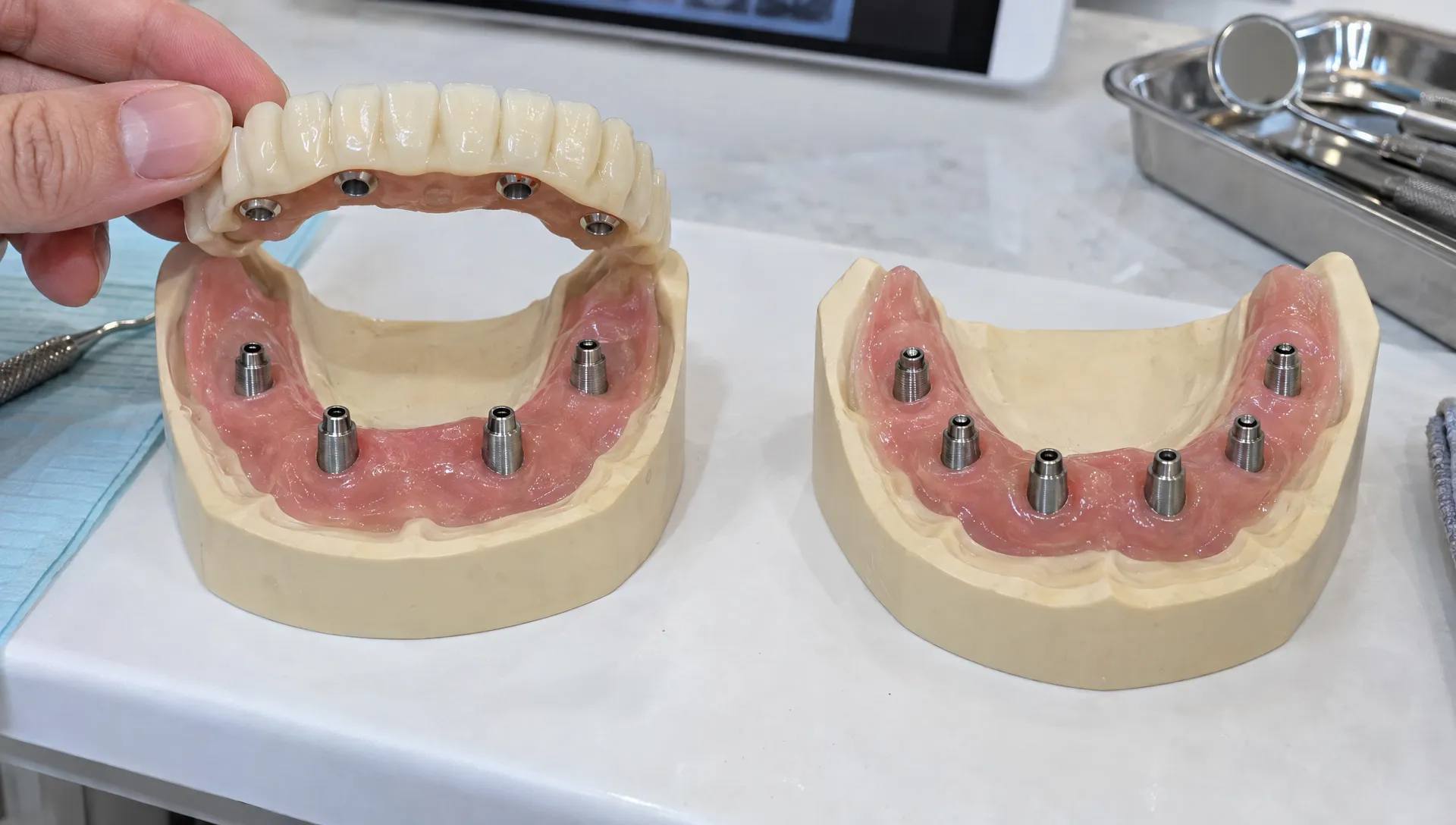
Both approaches use implants placed in the jawbone to support a full-arch bridge. The bridge stays in place during everyday use and is removed by a dental professional when necessary. This differs from an implant-retained removable denture, which you take out for cleaning.
| Feature | All-on-4 | All-on-6 |
|---|---|---|
| Implants per arch | Four | Six |
| Typical arrangement | Two towards the front and two angled towards the back | Six distributed across the arch, with positioning tailored to the bone |
| Support | Four support points for a carefully designed bridge | Two additional support points, potentially spreading biting forces more widely |
| Bone requirements | Angled implants may help use available bone | Sufficient suitable bone is needed at six planned sites |
| Cost considerations | Fewer implant components | More components and surgical sites may increase costs |
Neither approach guarantees that bone grafting can be avoided. Six implants also do not automatically produce a better result: their position and the bridge design matter alongside the number used.
Which option might suit your mouth?
A four-implant approach may be considered where implant positioning can make effective use of the available bone. Angling the rear implants can sometimes help avoid nearby anatomical structures and reduce the need for grafting.
Six implants may be considered where there is suitable bone and the proposed bridge would benefit from additional support. However, placing more implants is not useful if their positions compromise cleaning or the final restoration.
The upper and lower jaws can require different plans. A recommendation should explain why the proposed number and positions suit your anatomy, rather than simply presenting six as an upgrade from four.
Essential checks before full-arch implant surgery
Remaining teeth and gum health
Your dentist should assess whether any remaining teeth can reasonably be maintained. Full-arch treatment should not mean removing restorable teeth without discussing their prognosis and alternatives.
Active gum disease and dental infections need attention before surgery. A history of periodontitis also matters because it increases the risk of problems around implants. The NHS guidance on gum disease explains why bleeding gums, swelling and loose teeth warrant assessment.
Bone volume and nearby structures
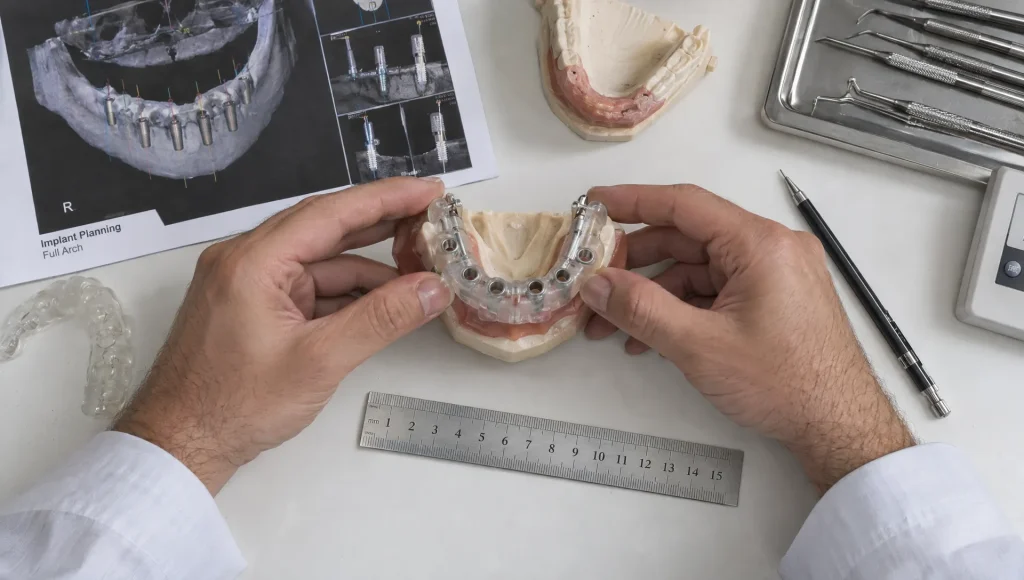
Planning commonly involves a cone beam CT scan, or CBCT, when clinically justified. This gives a three-dimensional view of bone height and width, helping the clinician assess implant positions in relation to nerves and the sinuses.
This article explains why a jaw CT scan may be needed before implants. The findings help determine whether four or six implants are feasible, whether grafting is needed and whether another treatment would be more appropriate.
Medical history, medicines and smoking
Tell your dentist about diabetes, previous radiotherapy to the jaws, smoking and any difficulties with healing. Bring an up-to-date medication list, including osteoporosis medicines such as bisphosphonates or denosumab, blood thinners and non-prescription products.
These factors may change the risks, timing or preparation required for dental implants. Do not stop prescribed medication yourself. Your dentist may need to coordinate with your medical team. Support with stopping smoking and improving diabetes control may form part of preparation.
Bite, bridge design and cleaning access
Your assessment should also consider tooth grinding, the opposing teeth, the space available for the bridge and how it will support your lips and speech. In some cases, a removable option may better meet a patient's needs.
You should be shown how to clean beneath the proposed bridge. An attractive result that you cannot maintain comfortably is not a complete treatment plan. Ask about suitable cleaning aids and the expected professional maintenance schedule.
Preparing for treatment and comparing quotations
Before surgery, complete any recommended gum treatment, infection management or extractions. If grafting is needed, establish whether it will happen before implant placement or during the same procedure. Healing stages vary between patients.
Request a written plan covering the proposed implant positions, temporary and final teeth, likely timescales, risks and alternatives. Check whether the quotation includes scans, extractions, grafting, sedation where applicable and follow-up appointments. Ask separately about ongoing hygiene and maintenance costs.
If sedation is planned, follow the team's instructions about eating, drinking, transport and supervision afterwards. Arrange suitable food and time to recover, using your clinician's advice rather than a fixed online timetable.
Frequently asked questions
Can I have fixed teeth on the day of surgery? Sometimes. Immediate loading depends on achieving adequate initial implant stability and meeting other clinical requirements. Same-day teeth are generally provisional, not the final bridge. If conditions are unsuitable, a different temporary replacement may be needed while healing takes place.
Does All-on-6 last longer than All-on-4? Implant count alone cannot predict longevity. Bone support, positioning, bridge construction, smoking, cleaning and maintenance all influence outcomes. Neither approach should be presented as a lifetime guarantee.
How long does healing take? Bone healing and integration generally take several months, although the schedule varies. The practice's guide to dental implant recovery explains the stages to discuss with your treating clinician.
Discuss your options at West Malling Dental
West Malling Dental & Implant Centre provides dental implants alongside preventive care and hygienist services, supporting both treatment planning and ongoing oral health.
Currently a new patient check-up including an X-ray costs £65. Confirm the current offer and its scope when booking: this should not be assumed to include a dedicated implant assessment or CBCT scan.
Ask the team about current implant-specific offers (10% off all on 4), a personalised quotation and whether a four- or six-implant full-arch approach is available and suitable for you. The priority is a well-supported, maintainable replacement, not simply the highest implant count.