Dental implant recovery is usually more manageable than people expect, especially when treatment is carefully planned. At West Malling Dental & Implant Centre in Kent, patients are supported from the first assessment through healing, fitting of the final tooth and long-term maintenance, with emergency same-day care available if urgent advice is needed.
The exact timeline depends on your health, the number of implants, whether a tooth has been removed and whether bone grafting is needed. Still, most patients follow a fairly predictable pattern. If you are at the planning stage, West Malling Dental’s guide to what to expect from dental implants in Kent is a useful companion to this recovery timeline.
Before surgery: how a smile centre prepares your implant case
Successful healing starts before the implant is placed. Your dentist will assess your teeth, gums, bite, medical history and X-rays before recommending the safest approach. At West Malling Dental, current patients pay £45 for a time limited 30 minute dental implant consultation. The new patient offer is £65 for a check-up including an X-ray, which can be a helpful first step if you are exploring treatment for a missing tooth.
Preparation may include improving gum health, stabilising decay, removing a failing tooth or planning a bone graft where bone volume is low. A good implant centre will also talk through smoking, diabetes control, medications and oral hygiene, because these can affect healing and implant stability.
Types of dental implants and how recovery can differ
The recovery process is similar for most implant treatments, but the scale of treatment can change how long you feel tender and when your final teeth are fitted.
- Single tooth implant: One implant supports one crown. Recovery is often straightforward if the surrounding gum and bone are healthy.
- Implant-supported bridge: Two or more implants support several teeth. Mild swelling may last a little longer because a larger area is treated.
- Implant-retained denture: Implants help secure a removable denture, improving comfort and chewing stability.
- Full arch implant treatment: Several implants support a full set of teeth in one jaw. Planning and aftercare are more involved.
- Immediate implant placement: In selected cases, an implant can be placed soon after extraction, but this depends on bone quality and infection risk.
Your dentist will explain which option suits your mouth, lifestyle and long-term goals. West Malling Dental also offers cosmetic dentistry, whitening, composite bonding, Invisalign and hygienist care with Airflow, so your implant can be planned as part of your wider smile goals rather than treated in isolation.
Dental implant recovery timeline: week by week
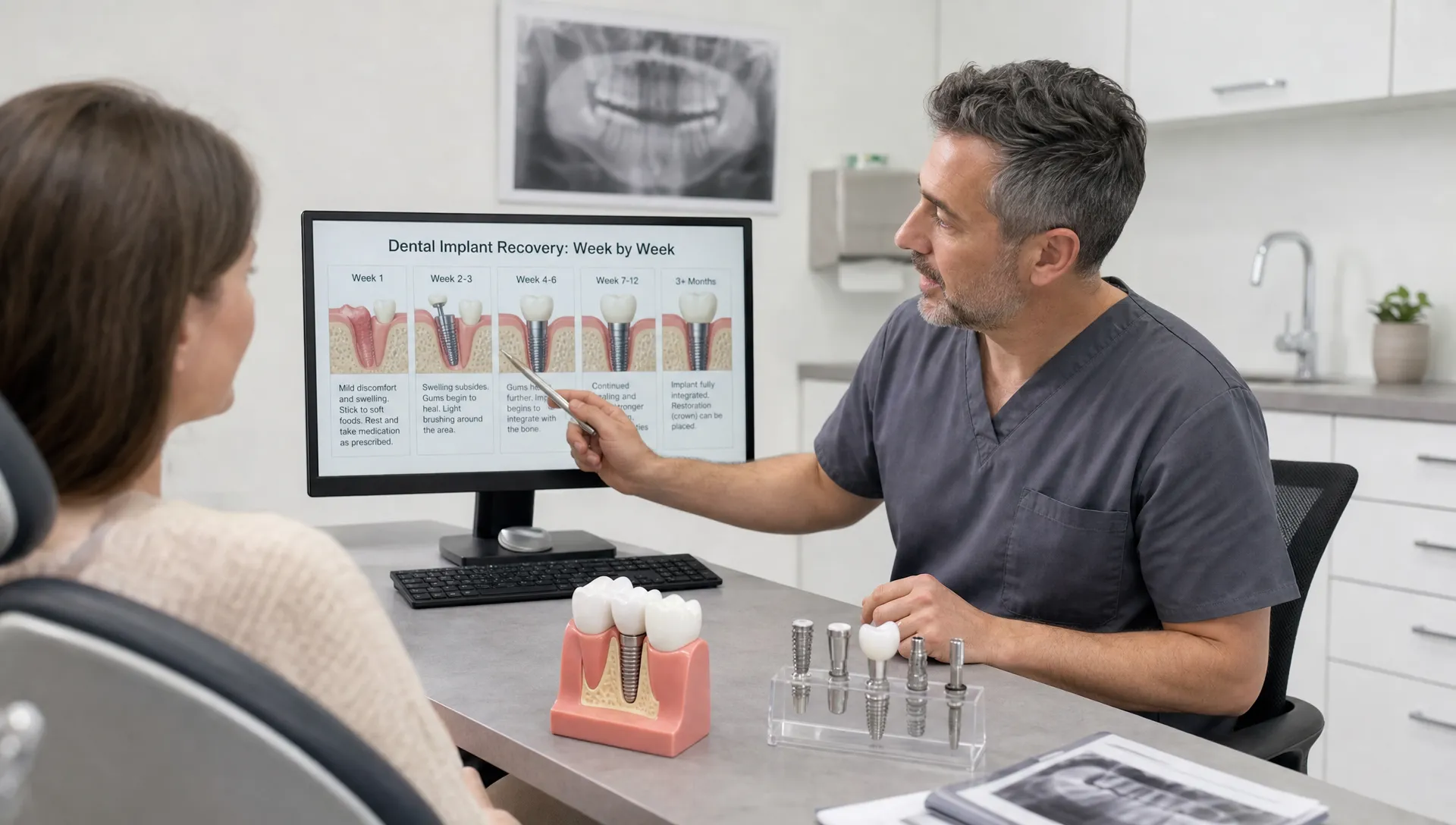
Every patient heals differently, but this week-by-week guide shows what is commonly expected after implant placement. The implant centre manages both the surgical and restorative stages can monitor progress and make timely adjustments if healing is slower than expected.
| Recovery stage | What you may notice | What to do |
|---|---|---|
| Day 1 to 2 | Mild bleeding, swelling, tenderness and numbness while anaesthetic wears off | Rest, use pain relief as advised and avoid hot drinks until normal feeling returns |
| Days 3 to 7 | Swelling usually peaks then begins to settle | Eat soft foods, clean gently and avoid smoking |
| Week 2 | Stitches may dissolve or be removed, gum soreness reduces | Attend your review if arranged and keep the area clean |
| Weeks 3 to 4 | The gum usually feels more comfortable | Gradually return to normal eating unless told otherwise |
| Weeks 6 to 12 | Bone healing continues beneath the gum | Keep review appointments and avoid heavy pressure on the implant |
| Months 3 to 6 | Osseointegration, where bone bonds to the implant, continues | Your dentist checks when the implant is ready for the final crown, bridge or denture |
Week 1: swelling, tenderness and soft foods
The first week is when you are most likely to notice swelling, bruising or discomfort. This is normal after minor oral surgery and should gradually improve after the first few days. Many patients manage well with standard pain relief, but you should follow the specific advice given by your dentist.
Stick to soft foods such as soup that is not too hot, yoghurt, scrambled eggs, pasta and mashed vegetables. Avoid chewing directly on the implant site. Alcohol and smoking can slow healing, so your dentist may advise avoiding them, particularly in the early stage.
If pain suddenly worsens, bleeding will not stop or swelling increases after initially improving, contact the practice. West Malling Dental offers emergency same-day care, which is reassuring if you are concerned during recovery.
Week 2: stitches, gum healing and getting back to normal
By the second week, the gum is usually much more comfortable. Some stitches dissolve by themselves, while others may be removed at a follow-up appointment. This is also when your dentist can check that the soft tissue is healing well and that there are no early signs of infection.
Gentle cleaning is important. You may be asked to use a specific mouth rinse or clean around the area carefully with a soft toothbrush. A well-run smile centre will give clear instructions that fit your surgery, because advice can vary depending on whether you had an extraction, graft or temporary tooth.
Weeks 3 to 12: the quiet healing phase
After the gum feels better, most healing is happening underneath the surface. The implant needs time to bond with the jawbone, a process called osseointegration. You may feel ready to forget about the implant at this stage, but follow-up appointments still matter.
Do not test the implant by chewing hard foods on it unless your dentist says it is ready. If you wear a denture or temporary tooth, it may need adjusting so it does not put too much pressure on the implant site. For a broader view of the complete process, you can read West Malling Dental’s guide to your dental implant treatment journey.
Months 3 to 6: preparing for your final tooth
Once the implant has integrated with the bone, your dentist can begin planning the final crown, bridge or denture attachment. For front teeth, shape, shade and gum contour are especially important. Some patients may need extra appointments to refine the appearance so the result looks natural when speaking and smiling.
This stage is one reason to choose a smile centre with experience in both health and aesthetics. The goal is not just to fill a gap, but to create a tooth that feels stable, supports your bite and blends with your smile.
Long-term recovery: protecting your implant
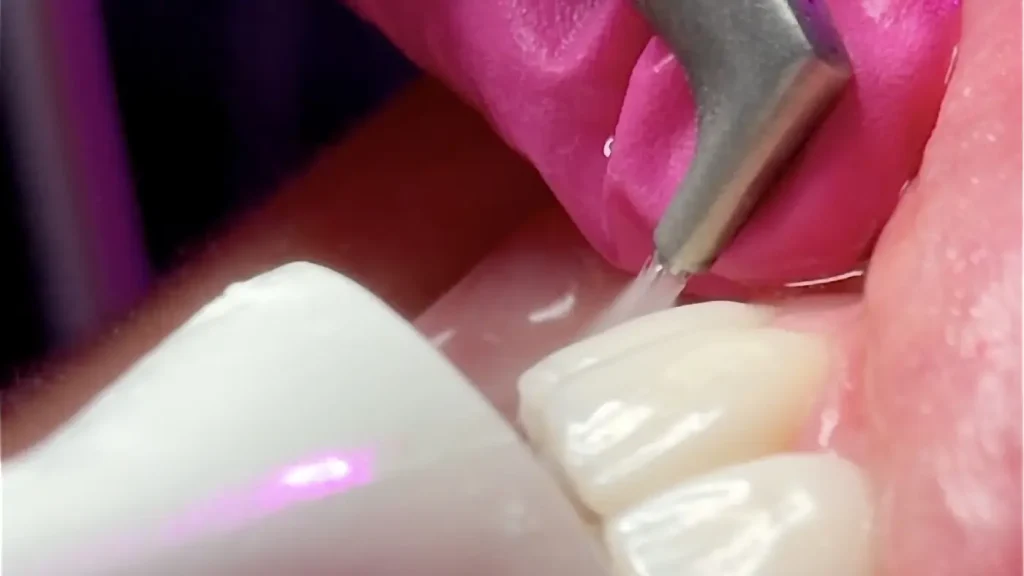
After the final restoration is fitted, your implant still needs maintenance. Brush twice daily, clean between the teeth and attend regular check-ups and hygienist appointments. Airflow hygiene visits can help remove staining and biofilm gently, supporting gum health around natural teeth and implants.
Dental implants can last many years with good care. If you want to understand maintenance and lifespan in more detail, West Malling Dental explains how long dental implants can last in a separate patient guide.
Frequently Asked Questions
How long does dental implant recovery take? Initial soreness often improves within 1 to 2 weeks, but bone healing usually takes several months before the final crown, bridge or denture is fitted.
Can I go back to work after implant surgery? Many patients return to work the next day, especially after a single implant. If your job is physically demanding or you are having multiple implants, you may need longer.
Is dental implant recovery painful? Most patients describe it as manageable discomfort rather than severe pain. Local anaesthetic is used during treatment and your dentist will explain pain relief for afterwards.
What is the current offer at West Malling Dental? New patients can book a check-up for £65 including an X-ray. If you are considering implants, this can help identify your starting point before a detailed treatment plan is created.
Ready to plan your implant recovery with confidence?
West Malling Dental & Implant Centre provides private dental care for patients in West Malling, Kings Hill and across Kent, including dental implants, emergency care, cosmetic dentistry and family dentistry. If you have a missing tooth, a failing tooth or loose dentures, the team can explain your options clearly and help you prepare for a smooth recovery.
Take advantage of our time limited £45 implant consultation offer and take the first step towards a healthier, more confident smile at a trusted local implant centre.