
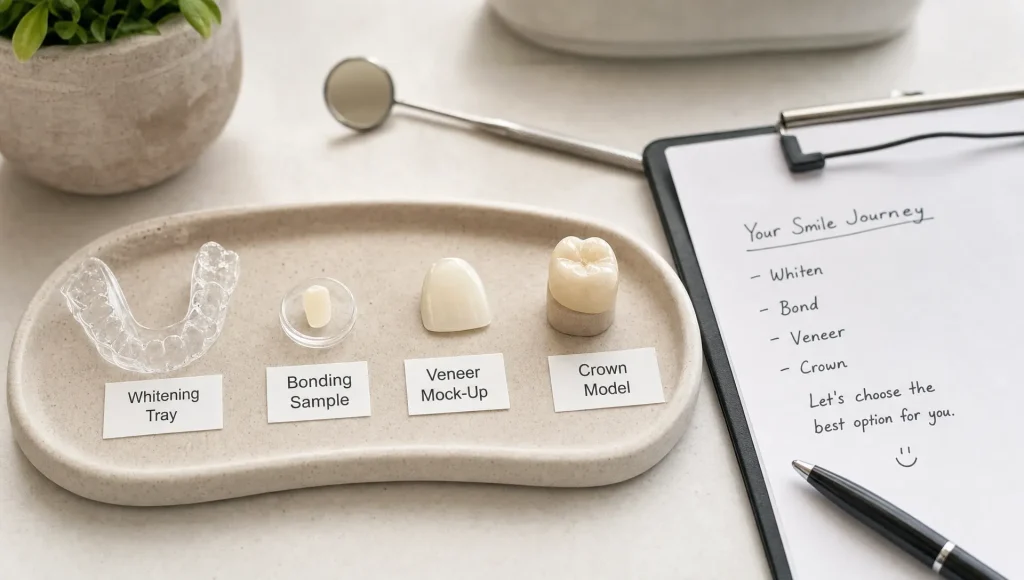
If you have been told you need more than a routine filling or scale and polish, it is natural to wonder what comes next. Specialist dental treatments can restore missing teeth, improve bite alignment, rebuild worn or damaged teeth and enhance the appearance of your smile, but the right choice depends on much more than the treatment name.
A good plan starts with diagnosis. Your dentist needs to understand your oral health, medical history, bite, gum condition, expectations and budget before recommending implants, Invisalign, whitening, bonding, veneers or crowns. This guide explains what the main options involve, when they may be suitable and what to ask before you commit.
What does specialist dental treatment mean?
In everyday conversation, specialist dental care usually means treatment that goes beyond a standard check-up, hygienist visit or simple repair. It may involve advanced planning, extra training, digital imaging, laboratory work or a staged approach over several appointments.
In the UK, there is also a formal meaning. The General Dental Council maintains specialist lists for certain areas of dentistry, such as orthodontics, periodontics and oral surgery. Some advanced treatments, including dental implants and clear aligners, may be provided by dentists with additional training and experience rather than a clinician on a formal specialist list.
That distinction matters. If a case is complex, a dentist should be clear about their qualifications, what they can provide in practice and when referral to another clinician is advisable. Transparency is part of safe care, not a sign of weakness.
Start with diagnosis, not the treatment menu
Many patients begin with a goal: a straighter smile, whiter teeth, a gap filled, a broken tooth repaired or a missing tooth replaced. The goal is important, but the clinical foundation decides which options are realistic.
Before recommending specialist dental treatment, a dentist may need to assess:
| Assessment area | Why it matters |
|---|---|
| Teeth and existing restorations | Decay, cracks, failing fillings and old crowns can affect which treatments are suitable. |
| Gum health | Inflamed or unstable gums can compromise implants, veneers, crowns and orthodontic treatment. |
| Bite and tooth wear | Grinding, clenching or an uneven bite may damage new dental work if not managed. |
| Bone levels | Implant treatment depends on the quality and quantity of supporting bone. |
| Smile goals | The best option depends on whether you want subtle improvement, major change or functional repair. |
| Medical history | Some health conditions and medicines can influence healing, infection risk and treatment planning. |
This is why a consultation is rarely just a quick look in the mirror. X-rays, clinical photographs, scans or impressions may be needed before the dentist can explain your options properly.
Dental implants for missing teeth
Dental implants are one of the best-known specialist dental treatments. An implant is a small titanium fixture placed in the jawbone to act as an artificial tooth root. Once healed, it can support a crown, bridge or denture.
Implants may be considered when one or more teeth are missing, when a denture feels unstable or when a failing tooth cannot be saved. They can look and feel very natural when carefully planned, but they are not a shortcut. Successful implant care depends on healthy gums, adequate bone, good oral hygiene and ongoing maintenance.
Planning often includes an assessment of the gum tissues, bite forces, bone volume and the space available for the final tooth. Some patients need preparatory care before implant placement, such as gum treatment, extraction healing time or bone grafting. Others may need advice about smoking, medical risk factors or tooth grinding.
The biggest mistake is treating implants as a product rather than a long-term clinical process. If you are considering this route, it is worth understanding the common dental implant pitfalls before comparing quotes or travelling for treatment.
Invisalign and clear aligner treatment
Clear aligners, including Invisalign, are designed to move teeth gradually using a series of removable trays. They are popular with adults because they are discreet, removable for eating and often easier to fit around work or social commitments than fixed braces.
Aligners may help with mild to moderate crowding, spacing, relapse after previous orthodontic treatment and certain bite concerns. They are not suitable for every case, and the result depends heavily on wearing the aligners as prescribed. Attachments, refinements and retainers may also be part of the process.
A good orthodontic assessment should look at more than whether the front teeth appear crowded. The dentist needs to consider the bite, gum condition, tooth shape, root position and whether moving the teeth could expose existing problems. If the main concern is cosmetic, aligners may still be the healthiest route because they can improve tooth position without cutting away enamel.
Cosmetic dentistry, from subtle changes to smile design
Cosmetic dentistry covers a wide range of treatments, from simple whitening to more involved work such as veneers, crowns and smile makeovers. It can be very effective, but the healthiest result is usually achieved by choosing the least invasive option that meets your goals.
Common cosmetic treatments include:
| Treatment | What it can help with | Key limitation |
|---|---|---|
| Teeth whitening | Brightening natural tooth colour | It does not whiten crowns, veneers or fillings. |
| Composite bonding | Repairing chips, reshaping edges or closing small gaps | It can stain or chip over time and may need maintenance. |
| Veneers | Changing tooth shape, colour and proportions | Some enamel may need to be removed, depending on the case. |
| Crowns | Restoring heavily weakened, broken or root-filled teeth | More tooth reduction is usually required than for bonding or veneers. |
| Orthodontics | Improving tooth position before cosmetic work | It takes time and requires retention afterwards. |
A careful cosmetic consultation should include a discussion about health, appearance, longevity and maintenance. For a broader comparison of whitening, bonding, veneers, crowns, orthodontics and implants, this independent guide to cosmetic dental treatment options is a useful starting point before speaking with your own dentist.
Cosmetic dentistry should not be separated from general dental health. If the gums bleed, decay is present or the bite is unstable, those issues usually need attention first. Otherwise, new cosmetic work may fail early or need more maintenance than expected.
Hygienist care and gum health treatment
Hygienist care may not sound like specialist dental treatment at first, but it is often the foundation for everything else. Gum disease is one of the main reasons adults lose teeth, and it can affect the success of implants, crowns, veneers and orthodontic treatment.
A hygienist can remove plaque and calculus that cannot be cleaned away at home, advise on brushing and interdental cleaning, and help control inflammation. Airflow polishing can also remove staining and biofilm gently, which may be helpful before whitening, bonding or a new smile assessment.
If gum disease is advanced, treatment may require deeper cleaning, repeated review appointments and careful monitoring. Stabilising gum health before cosmetic or implant treatment is not a delay for the sake of it. It is often what protects the final result.
Crowns, veneers and restorative treatment
Restorative dentistry sits between health and aesthetics. A crown, veneer, inlay or onlay may be recommended when a tooth is too weak, broken or heavily restored for a simple filling. These treatments can improve both function and appearance, but each one has a different level of invasiveness.
A veneer usually covers the front surface of a tooth and is often used for cosmetic improvement. A crown covers more of the tooth and is generally used when strength is the priority. An onlay can sometimes preserve more tooth structure than a full crown, depending on the damage.
The material matters too. Porcelain, ceramic, composite and metal-based restorations all have different strengths, appearance and maintenance requirements. Your dentist should explain why a material is being recommended, how long it may last and what could cause it to fail.
Emergency dental treatment when you need urgent help
Not all emergency dentistry is specialist care, but urgent dental problems can quickly become complex. Severe toothache, facial swelling, trauma, a knocked-out tooth, uncontrolled bleeding or a broken tooth with pain should be assessed promptly.
The aim of emergency dental treatment is to relieve pain, reduce risk and diagnose the cause. A definitive repair may happen at the same visit, or the dentist may need to stabilise the problem first and plan the next stage once the immediate issue is under control.
If you are unsure whether your symptoms need same-day attention, West Malling Dental has a practical guide on when to seek emergency dental care, including symptoms that may need urgent medical help rather than a routine dental appointment.
How to choose the right specialist dental option
The best treatment is not always the most advanced one. It is the option that solves the problem safely, fits your goals and gives you a result you can maintain.
Before agreeing to treatment, ask your dentist:
- What problem are we trying to solve first?
- Are there simpler or less invasive alternatives?
- What happens if I do nothing for now?
- How many appointments are likely to be needed?
- What maintenance will I need at home and in practice?
- What are the main risks, limitations and possible complications?
- Who will provide each stage of care, and what training do they have?
These questions are especially important if you are comparing private dental practices or considering treatment that involves several stages. A lower headline price may not include diagnostics, temporary restorations, hygiene treatment, laboratory work, follow-up appointments or long-term maintenance.
If you are still deciding where to begin, this guide to choosing a private dentist in Kent explains what to look for in communication, prevention, emergency access and treatment planning.
What to expect at a specialist dental consultation
A consultation should feel structured, not rushed. You should have the chance to explain what bothers you, what outcome you are hoping for and any concerns about cost, time, anxiety or previous dental experiences.
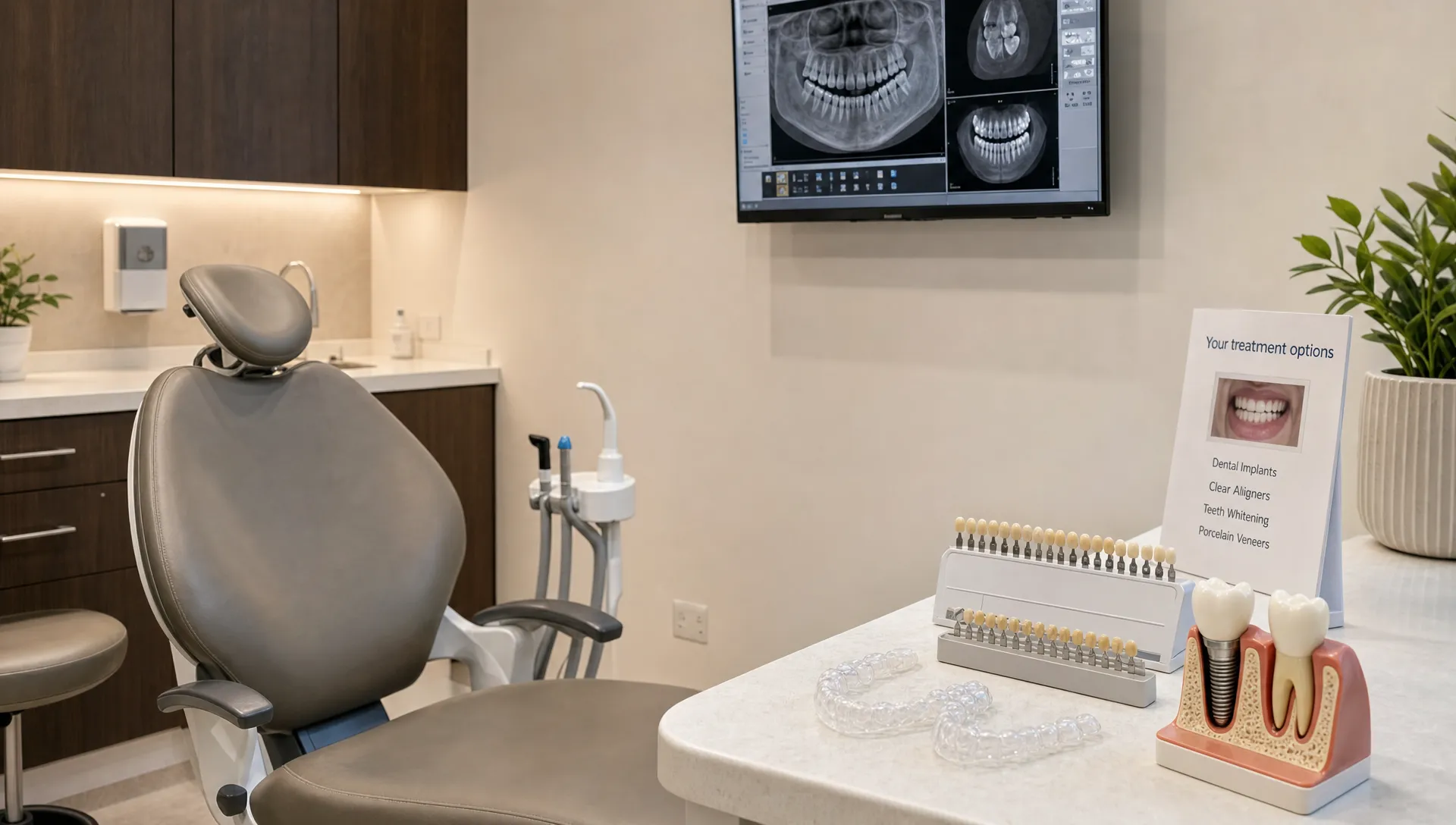
Depending on the treatment, the dentist may check your teeth and gums, take X-rays, discuss digital scans or photographs, examine your bite and explain the pros and cons of different options. For cosmetic treatment, shade matching and smile proportions may be discussed. For implants, bone and gum support are central. For Invisalign, tooth movement and retention are key.
A written treatment plan is useful because it helps you understand the sequence, fees, expected appointments and consent process. You should not feel pressured to decide immediately, particularly for irreversible treatments such as veneers, crowns or extractions.
Frequently asked questions
Are specialist dental treatments painful? Most treatments are planned with comfort in mind, and local anaesthetic is used where needed. You may feel pressure, vibration or mild soreness afterwards, depending on the procedure, but your dentist should explain what to expect and how to manage it.
Do I need a referral for specialist dental care? Not always. Many private dental practices can assess and provide treatments such as implants, Invisalign and cosmetic dentistry. If your case needs a clinician with a specific specialism, your dentist should explain the referral options.
Can I have cosmetic dentistry if my gums bleed? Bleeding gums usually need assessment before cosmetic treatment begins. Gum inflammation can affect the appearance, comfort and longevity of whitening, bonding, veneers, crowns and implants.
How do I know whether bonding, veneers or crowns are right for me? The choice depends on tooth health, enamel levels, bite forces, desired appearance and how much tooth structure needs to be repaired or changed. Bonding is often more conservative, while veneers and crowns may be better for certain structural or aesthetic cases.
How long do specialist dental treatments last? Longevity varies by treatment, material, oral hygiene, diet, bite forces and maintenance. Your dentist should give realistic expectations for your specific case rather than a general promise.
Take the next step with a proper assessment
Specialist dental treatment works best when it is planned around your health, not just your smile goals. If you live in West Malling, Kings Hill or the surrounding Kent area, West Malling Dental & Implant Centre offers private preventive, cosmetic, implant, Invisalign, hygienist and emergency dental care in a relaxed setting.
A new patient check-up is a sensible first step if you want clear advice before choosing treatment. It gives your dentist the chance to assess your mouth properly, explain your options and help you plan with confidence.