
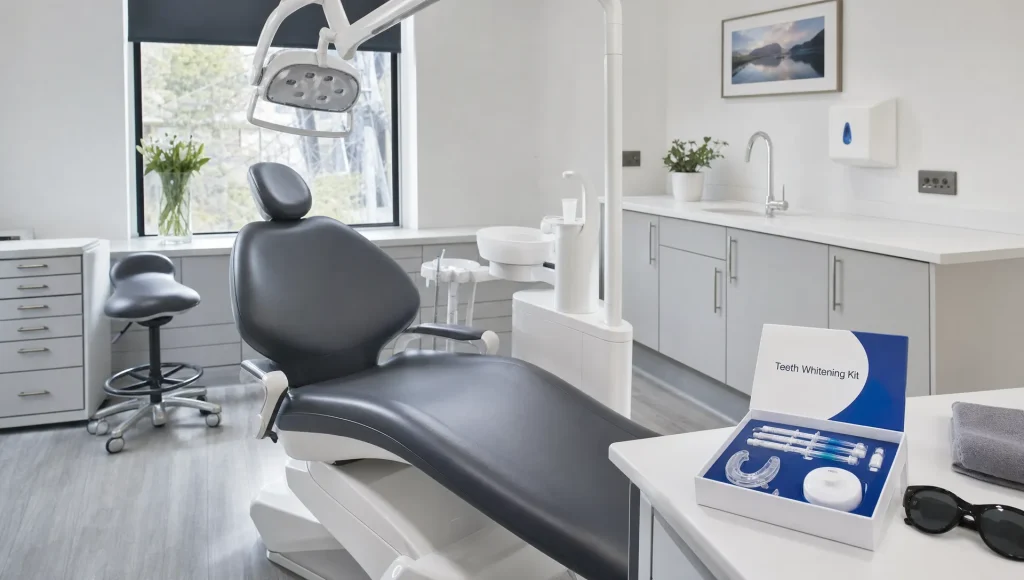
If you are considering teeth whitening in West Malling, you are probably looking for a brighter smile without guesswork, harsh products or an unnatural result. Professional whitening is one of the most popular cosmetic dental treatments because it can improve the shade of natural teeth while keeping the overall smile looking like your own.
The most useful thing to know before booking is this: whitening is not just a beauty treatment. In the UK, it is a dental treatment. That means your dentist should check your teeth and gums first, explain what kind of result is realistic and make sure whitening is suitable for your mouth before you begin.
This guide walks through what to expect at each stage, from your first consultation to aftercare, so you can approach treatment with confidence.
Why teeth become darker over time
Tooth colour changes for several reasons. Some are part of normal ageing, while others come from everyday habits. Tea, coffee, red wine, tobacco and strongly coloured foods can all leave surface stains. Over time, enamel can also become thinner, allowing more of the naturally yellow dentine beneath it to show through.
Not all discolouration is the same. External staining on the enamel often responds well to professional cleaning and whitening. Internal staining, which may be linked to trauma, certain medications or developmental changes in the tooth, can be more complex. This is one reason a dental assessment matters before you spend money on whitening products.
A dentist can also identify issues that may affect the final result, such as leaking fillings, tooth decay, gum inflammation, enamel wear or exposed roots. Whitening gel is designed for healthy natural teeth, so the safest starting point is always a clear picture of your oral health.
Your first appointment: what the dentist will check
At a whitening consultation, your dentist will usually look at more than just the shade of your teeth. They will want to understand what you dislike about your current smile, how white you would like your teeth to be and whether there is a particular event or deadline you are planning around.
The clinical check may include an assessment of your gums, enamel, existing fillings, crowns, veneers and signs of sensitivity. Whitening does not change the colour of restorations, so a white filling, crown or veneer that matches your teeth now may look darker after your natural teeth are whitened. Your dentist can help you plan the order of treatment if any restorations need replacing for a better match later.
If you are a new patient at West Malling Dental & Implant Centre, a check-up is also an opportunity to discuss broader oral health before cosmetic treatment. The practice offers private family, preventive, cosmetic and emergency care, so whitening can be considered in the context of your whole mouth rather than treated as an isolated quick fix.
Is teeth whitening safe?
Professional whitening is considered safe when it is prescribed and monitored by a dental professional. In the UK, the General Dental Council states that tooth whitening is the practice of dentistry. It should only be carried out by a dentist or by a registered dental professional, such as a hygienist or therapist, on a dentist’s prescription.
This matters because whitening products used incorrectly can irritate gums, worsen sensitivity or cause patchy results. Beauty salon whitening is not the same as dentist-led treatment and can be illegal if performed by someone who is not qualified to practise dentistry.
Over-the-counter whitening toothpastes and strips may help with surface staining, but they are not the same as a tailored professional system. Whitening toothpastes usually work by removing or reducing surface stains rather than changing the deeper shade of the tooth.
| Whitening option | What it usually involves | What to keep in mind |
|---|---|---|
| Dentist-prescribed whitening | A dental assessment, tailored instructions and professional whitening gel | Best option for safety, supervision and predictable planning |
| Whitening toothpaste | Abrasive or stain-removing ingredients used during brushing | May help surface stains but will not dramatically change tooth shade |
| Shop-bought strips or gels | Generic products with limited strength under UK rules | Fit and results can be less predictable |
| Non-dental salon whitening | Whitening offered outside a dental setting | May be unsafe or unlawful if not provided by a registered dental professional |
What happens during professional whitening?
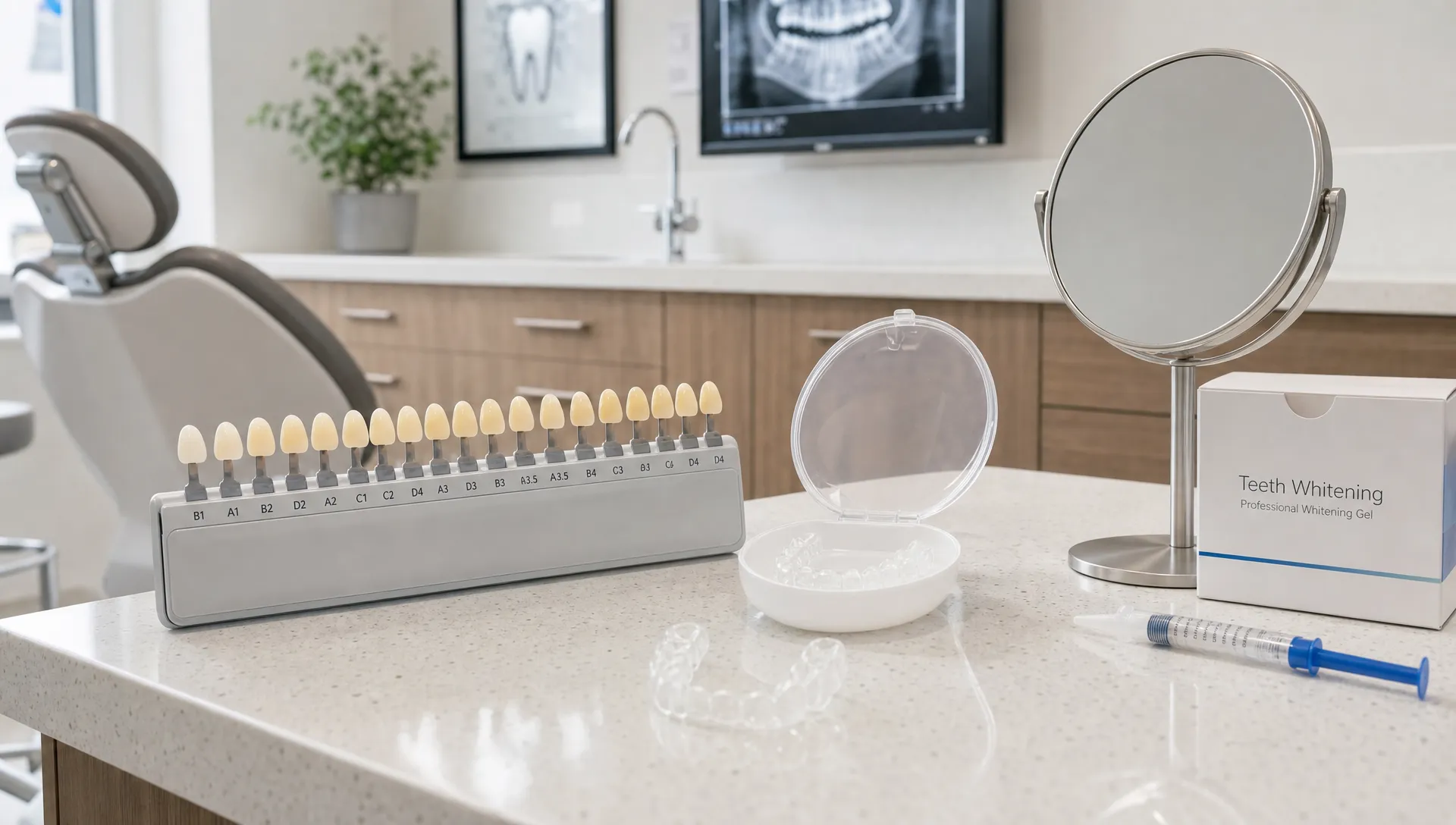
The exact process depends on the system your dentist recommends, but most professional whitening starts with a baseline shade assessment. Your dentist may record your starting shade so progress can be reviewed realistically. It is normal for canine teeth to look slightly darker than the front teeth, and natural teeth are rarely one flat colour from gumline to edge.
If take-home whitening is recommended, your dentist may arrange custom trays that fit closely over your teeth. These trays help keep whitening gel where it belongs, against the tooth surface and away from the gums as much as possible. You will be shown how much gel to use, how long to wear the trays and what to do if sensitivity occurs.
Some patients may be suitable for in-practice whitening, take-home whitening or a combined approach, depending on their goals and the dentist’s clinical judgement. The key point is that professional whitening is controlled. You should know what you are using, how to use it and who to contact if something does not feel right.
How white will your teeth get?
This is one of the most common questions, and the honest answer is that results vary. Natural tooth colour, the type of staining, enamel thickness and your whitening routine all influence the outcome. Some people see a noticeable change quickly, while others need more time to reach their best shade.
A good result is not always the brightest possible shade. It should suit your face, age, gumline and existing dental work. Very bright teeth can look artificial if they clash with crowns, fillings or the natural shape of the smile.
Your dentist may also explain when whitening is unlikely to solve the full problem. For example, if you have one dark tooth after trauma, general whitening may brighten the surrounding teeth but leave that tooth looking different. If the issue is tooth shape, chips, spacing or old restorations as well as colour, whitening may be only one part of a wider cosmetic plan.
Will whitening hurt or make teeth sensitive?
Temporary sensitivity is a known side effect of teeth whitening. It often feels like a short, sharp sensation when teeth are exposed to cold air, cold drinks or sometimes sweet foods. For most suitable patients, sensitivity settles after treatment stops or after the whitening schedule is adjusted.
Your dentist may suggest shorter wear times, rest days, sensitivity toothpaste or other measures depending on your situation. You should not push through severe discomfort or use more gel than instructed. More gel does not mean a better result, and it can increase gum irritation.
Patients who already have sensitivity, gum recession, enamel erosion or cracked teeth should mention this at the consultation. Whitening may still be possible for some people, but the plan should be adapted to reduce avoidable problems.
How long does teeth whitening take?
Many dentist-led take-home whitening plans run over a couple of weeks, though the length of treatment varies. Your starting shade, the whitening system and how your teeth respond all play a part. If you are whitening before a wedding, holiday, graduation or important work event, it is sensible to book well in advance rather than leaving it until the last minute.
You may also need a hygienist appointment before whitening if there is visible staining, plaque or calculus. A professional clean can make the mouth healthier and remove surface deposits that may affect how your smile looks. West Malling Dental offers hygienist care with Airflow, which can be useful for stain removal as part of a wider oral hygiene plan.
For long-term dental health, whitening should sit alongside the basics: regular check-ups, effective brushing, interdental cleaning and a sensible approach to sugar and acidic drinks. If your goal is to keep your smile healthy as well as bright, the practice’s advice on how to keep your teeth for your entire life is a helpful place to start.
How much does teeth whitening cost in West Malling?
The cost of teeth whitening depends on the type of treatment, whether custom trays are included, the whitening system used and whether any dental work is needed beforehand. It is difficult to compare fees fairly unless you know exactly what is included.
A lower price may not include a full dental assessment, custom trays, review appointments or professional support if sensitivity occurs. A dentist-led plan may cost more than a shop-bought product, but it also includes clinical judgement, safety checks and a treatment plan tailored to your mouth.
If you are comparing options, West Malling Dental has a separate guide to teeth whitening prices at a dentist that explains typical UK pricing and what those fees may cover. For personalised advice, a consultation is the best way to understand what is suitable for your teeth.
What if whitening is not enough?
Whitening improves the colour of natural teeth, but it does not change their shape, position or surface texture. If your concerns include chipped edges, uneven shapes, small gaps or worn teeth, your dentist may discuss other cosmetic options after whitening.
Composite bonding can sometimes improve small chips or edges. Veneers may be considered when there are more significant concerns about colour, shape or symmetry. The sequence matters because many dentists prefer whitening first, then matching any new restorations to the brighter shade once it has stabilised.
For patients with deeper staining or teeth that do not respond as expected, dental veneers may be one option to discuss. Veneers are not a substitute for healthy foundations, so your dentist will still check your gums, bite and enamel before recommending them.
If tooth position is the main issue, whitening may make teeth look fresher but will not straighten them. In that case, you may want to ask whether clear aligners are more appropriate before final cosmetic finishing. West Malling Dental provides Invisalign treatment for patients who want to explore discreet orthodontic options.
How to prepare for your whitening appointment
You do not need to do anything dramatic before your consultation, but a few simple steps can make the appointment more useful. Think about what you want to change and whether your priority is a subtle freshening or a more noticeable cosmetic improvement. If you have old photographs where you liked your tooth colour, they may help explain your goal.
It is also worth making a note of any sensitivity, bleeding gums, recent dental pain or existing dental work at the front of your mouth. If you have tried whitening products before, tell your dentist what you used and whether it caused discomfort.
Before and during whitening, these habits can help support your result:
- Brush twice daily with fluoride toothpaste, using a gentle technique rather than scrubbing hard.
- Clean between the teeth daily with floss or interdental brushes.
- Reduce frequent sipping of tea, coffee, red wine and dark fizzy drinks if they stain your teeth.
- Avoid smoking or vaping with nicotine if staining is a concern.
- Follow your dentist’s whitening instructions exactly, especially gel quantity and wear time.
The goal is not just to whiten your teeth once. It is to create a result you can maintain safely.
How long do whitening results last?
Whitening is not permanent. The result can last for months or longer, but this depends heavily on diet, oral hygiene, smoking habits and how porous or stain-prone your enamel is. People who drink coffee or red wine daily may notice staining return sooner than someone who rarely has dark-coloured drinks.
Your dentist may advise occasional top-ups with your custom trays if appropriate. You should only do this according to professional guidance, not whenever you feel like your teeth need a boost. Overuse can increase sensitivity and will not necessarily improve the final shade.
Regular hygienist visits can also help keep the smile looking brighter by removing surface stains. This is different from whitening, but the two can work well together when planned properly.
Choosing a provider for teeth whitening in West Malling
When choosing a whitening provider, look for a dental practice that starts with oral health, explains limitations clearly and does not promise identical results for every patient. You should feel comfortable asking what product will be used, how sensitivity is managed and what happens if existing fillings or crowns no longer match.
Good cosmetic dentistry is not just about shade. It is about proportion, health, function and a result that still looks like you. This principle applies across reputable dental practices internationally. For example, experienced cosmetic and general dentists often present whitening and smile improvements alongside routine oral care because the best aesthetic outcomes start with healthy teeth and gums.
For patients in West Malling, Kings Hill, Leybourne and the surrounding Kent area, West Malling Dental & Implant Centre offers private dental care in a relaxed setting, including cosmetic dentistry, hygienist care, whitening discussions and new patient check-ups. If you are unsure whether whitening is right for you, a consultation is the safest first step.
Frequently Asked Questions
Is teeth whitening suitable for everyone? Not always. Whitening may not be suitable if you have untreated decay, gum disease, severe sensitivity, certain enamel defects or dental restorations that would affect the final appearance. A dentist can assess this before treatment.
Can teeth whitening damage enamel? Dentist-prescribed whitening, used as instructed, is designed to whiten teeth safely. Problems are more likely when whitening products are overused, used without proper assessment or applied when dental disease is present.
Will whitening work on crowns, veneers or fillings? No. Whitening changes the shade of natural tooth structure, not porcelain, composite or ceramic restorations. If you have visible restorations, your dentist can help plan whether they may need replacing after whitening.
How quickly will I see results? Some patients notice changes within a few days of dentist-led take-home whitening, but results vary. Your dentist will explain the expected timescale based on the system used and your starting shade.
Can I have whitening if my teeth are sensitive? Possibly, but you should tell your dentist before treatment. They may recommend managing sensitivity first, adapting the whitening schedule or considering whether whitening is appropriate at all.
Do I need a hygienist appointment before whitening? Not always, but it can be helpful if you have plaque, calculus or surface staining. A cleaner, healthier mouth gives your dentist a better starting point and may improve the appearance of your smile even before whitening begins.
Ready to discuss a brighter smile?
If you are thinking about teeth whitening in West Malling, start with a professional assessment rather than guessing with shop-bought products. West Malling Dental & Implant Centre can check your oral health, explain your whitening options and help you understand what kind of result is realistic for your smile.
Book a new patient check-up or cosmetic consultation to find out whether whitening is the right next step for you.