
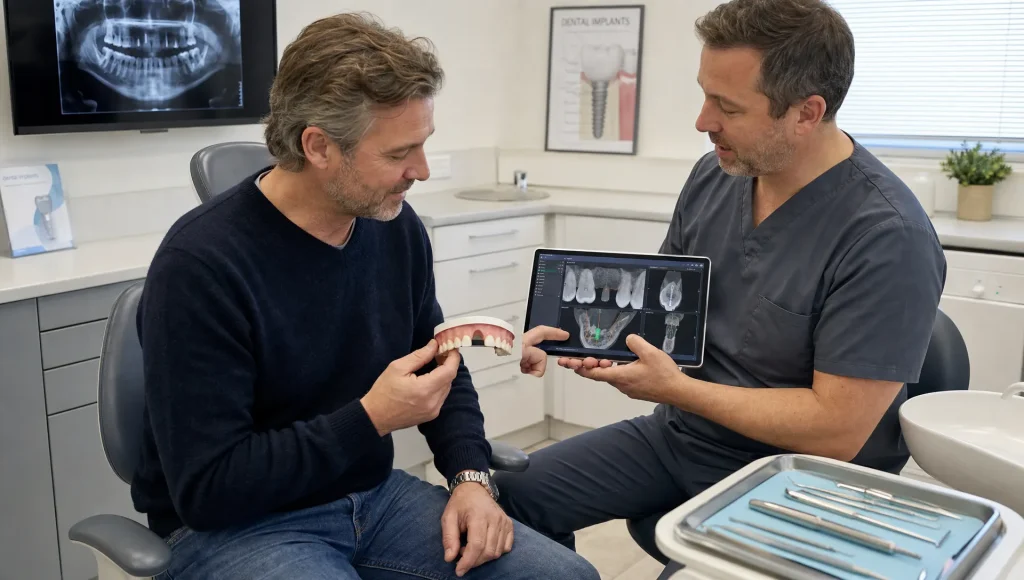
A missing tooth can affect far more than the way your smile looks. It can change how you eat, speak, laugh in photographs and feel in everyday conversations. Cosmetic dental implants are designed for people who want to replace a missing or failing tooth with something fixed, secure and natural-looking.
Unlike a removable denture, a dental implant is placed in the jawbone and supports a crown, bridge or denture above the gum. The Oral Health Foundation explains that implants can replace one or more missing teeth, depending on your needs and clinical suitability.
At West Malling Dental & Implant Centre, implant treatment is planned with a strong focus on precision, aesthetics and long-term function. The practice uses high-quality implant technology to help achieve the best possible results, from careful assessment and treatment planning to the final restoration that completes your smile.
What makes a dental implant cosmetic?
Every dental implant needs to be strong, stable and comfortable. A cosmetic dental implant also needs to look as though it has always belonged in your smile.
That means your dentist is not only thinking about replacing the tooth. They are also considering the shade, shape, gumline, bite and position of the final crown. In visible areas, especially the upper front teeth, very small details can affect the final appearance.
A natural-looking implant restoration should usually match:
- The colour and brightness of neighbouring teeth
- The length and width of surrounding teeth
- The curve and height of the gumline
- The way light reflects from the crown
- The bite, so the implant is not placed under avoidable stress
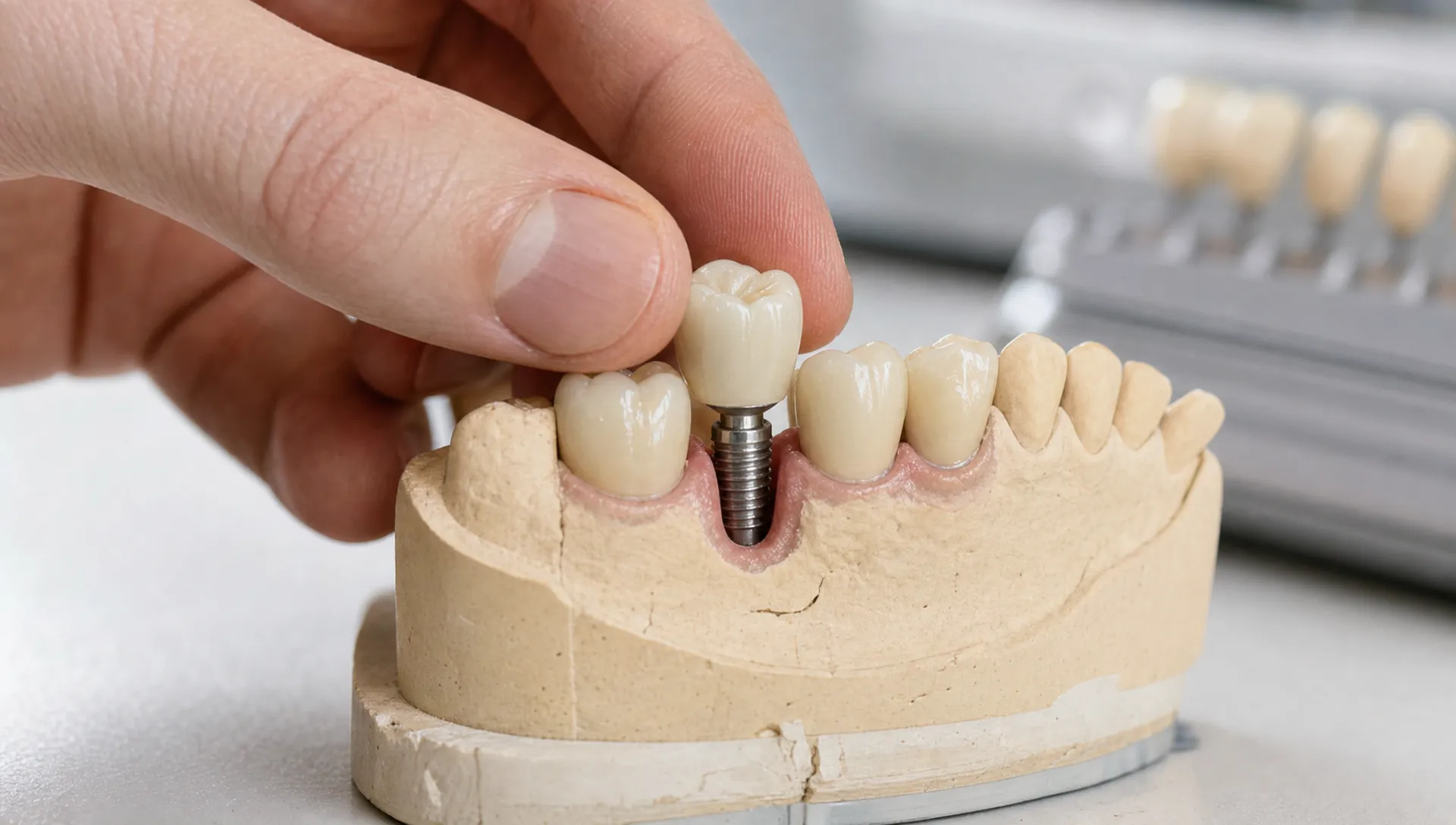
This is where high-quality implant technology matters. Precise planning helps the implant sit in the right position, so the final crown can be shaped beautifully rather than forced to disguise poor placement.
When cosmetic dental implants can transform your smile
You have a missing front tooth
A missing front tooth is one of the clearest reasons to consider cosmetic dental implants. Even one visible gap can draw attention when you speak, smile or laugh. It may also affect lip support, which can subtly change the overall shape of your smile.
For a front tooth implant, the crown must blend with the teeth beside it and the gum must frame it naturally. If the tooth has been missing for some time, the bone or gum may have changed, so careful assessment is essential before treatment begins.
A fixed implant crown can feel very different from a removable denture. Many patients value the added security, especially when eating socially or smiling for photographs.
You are struggling with a loose denture
Dentures can be helpful, but they do not work well for everyone. If your denture moves when you eat, affects your speech or makes you self-conscious, implants may provide a more stable alternative.
Depending on how many teeth are missing, implants may support a single crown, bridge or implant-retained denture. The cosmetic benefit often comes from confidence as much as appearance. When replacement teeth feel secure, it becomes easier to smile, talk and enjoy meals without worrying about movement.
A tooth is failing and cannot be saved predictably
Sometimes the best cosmetic result comes from planning ahead. A badly cracked, infected, heavily restored or loose tooth may not have a reliable long-term outlook. If it sits in the smile line, waiting until it breaks can make treatment more stressful.
Planning an implant before the tooth is removed allows your dentist to consider the sequence carefully. In some cases, this may help preserve the appearance of the gum and reduce the time spent with a visible gap. Suitability depends on the tooth, bone, gum health and bite.
You want to avoid cutting down healthy teeth
A traditional bridge can be a good option, especially if the teeth beside the gap already need crowns. If those neighbouring teeth are healthy, an implant may allow the missing tooth to be replaced without preparing them.
From a cosmetic point of view, this can be helpful when the surrounding teeth already look good. The aim is to replace what is missing while preserving healthy natural tooth structure wherever possible.
Dental implants compared with other cosmetic treatments
Implants are not the answer to every cosmetic concern. If a tooth is healthy but chipped, stained or slightly misaligned, a less invasive treatment may be more suitable. The table below shows where implants usually fit.
| Smile concern | Common treatment options | When an implant may be considered |
|---|---|---|
| Missing tooth | Implant, bridge or denture | When a fixed replacement is suitable |
| Failing tooth | Crown, onlay, extraction or implant | When the tooth cannot be restored predictably |
| Discoloured teeth | Whitening, veneers or crowns | Rarely, unless a tooth is missing or failing |
| Small chips | Composite bonding or veneers | Not usually needed if the tooth is healthy |
| Crooked teeth | Invisalign or fixed braces | Only as part of a wider plan involving missing teeth |
If you are unsure which option fits your goals, West Malling Dental has a helpful guide on which cosmetic dental treatment may be right for you.
Why implant technology and planning matter
A successful implant result starts before the implant is placed. Your dentist needs to understand your oral health, bone levels, gum condition, bite and smile goals. X-rays or scans may be recommended to assess the available bone and the position of important structures.
West Malling Dental & Implant Centre uses high-quality implant technology to support accurate planning and reliable results. This matters because implant dentistry is restorative-led. In simple terms, the desired final tooth position should guide the treatment plan. The implant should be placed to support a crown that looks natural, feels comfortable and functions well.
The cosmetic assessment includes your smile line, lip movement, tooth proportions and gum display. A front tooth implant for someone who shows a lot of gum when smiling often requires especially detailed planning. If a tooth has been missing for years, bone or gum shrinkage may also need to be considered.
The final crown is just as important as the implant beneath it. Shade, translucency, surface texture and shape all influence whether the new tooth blends in. In some aesthetic cases, dental laboratory input can help create a more precise result. West Malling Dental explains this further in its FAQ on visiting a dental implant laboratory for the best aesthetic look.
What can you realistically expect?
A well-planned implant can look very natural, but the final result depends on your starting point. Replacing a recently lost tooth with healthy surrounding bone and gum is different from restoring a gap that has been present for many years.
Your dentist should explain what is predictable, what may be possible and where compromises may be needed. For example, if gum tissue has receded, the crown may need a slightly adapted shape. If neighbouring teeth are stained, whitening may be discussed before the implant crown is made because ceramic crowns do not whiten like natural teeth.
Treatment is usually staged. Your journey may include consultation, imaging, planning, implant placement, healing and the final restoration. Temporary teeth may be possible in some cases, particularly when the gap is visible. For more detail, read West Malling Dental’s guide to dental implants in Kent and what to expect.
Frequently Asked Questions
Are cosmetic dental implants only for front teeth? No. Front teeth often have the highest aesthetic demands, but implants can also improve the look and function of premolars, molars and larger gaps.
Will a dental implant look like a real tooth? A well-planned implant crown can look very natural. The result depends on implant position, gum health, bone support, crown design and shade matching.
Why does implant technology matter? High-quality implant technology supports accurate planning, stable placement and a better foundation for the final crown or bridge. This can improve both appearance and long-term function.
Can I whiten my teeth before an implant crown? Often, yes. Whitening is usually done before the final crown is made, as ceramic implant crowns do not change colour with whitening gels.
How do I know if I am suitable for dental implants? Suitability depends on oral health, bone levels, medical history, bite and expectations. A consultation with appropriate imaging is the safest way to find out.
Ready to explore cosmetic dental implants?
If a missing or failing tooth is affecting your confidence, West Malling Dental & Implant Centre can help you understand your options clearly. The team provides private dental care in Kent, including dental implants, cosmetic dentistry, Invisalign, hygienist care and new patient check-ups.
Book an assessment to find out whether cosmetic dental implants are suitable for your smile and how high-quality implant technology can help support a natural, long-lasting result.