
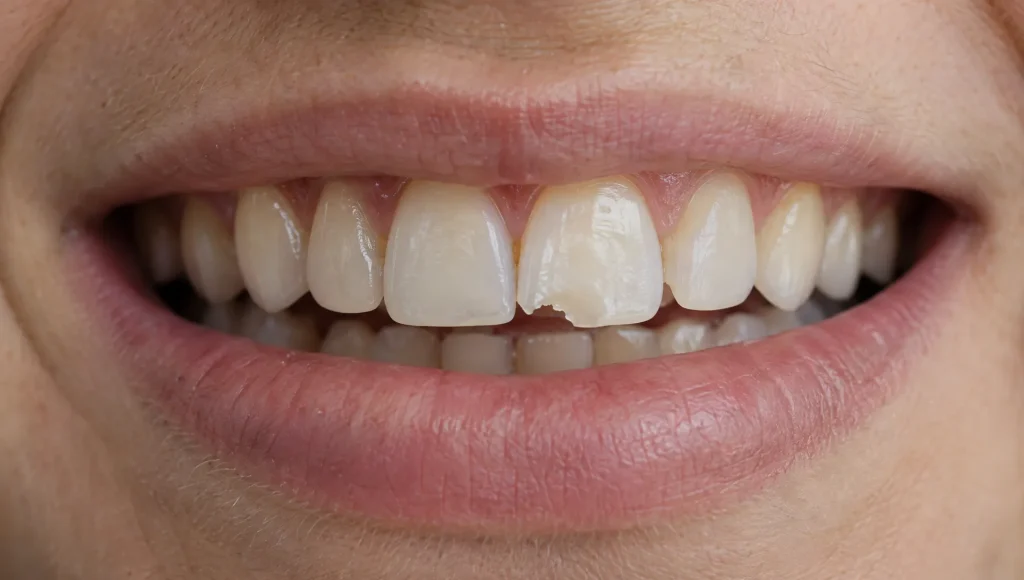
A chipped front tooth can catch your tongue, change your smile and make you cautious about biting into food. With a dental assessment, you can find out whether composite bonding could rebuild the missing edge without extensive treatment. At West Malling Dental & Implant Centre, composite bonding is one of the options available to help patients restore their smiles while preserving healthy tooth structure.
The first step is checking why the tooth chipped and whether the damage goes deeper than it looks.
Chipped tooth? Check whether it needs urgent attention
A small, painless chip is different from a fracture that exposes the sensitive inner layers of a tooth. Even minor damage deserves a dental assessment, but some symptoms need more prompt attention.
Contact a dentist urgently if you have significant pain, persistent sensitivity, swelling or a tooth that feels loose after an injury. Serious facial injuries or heavy bleeding that will not stop require urgent medical help.
If you find the broken fragment, keep it in milk or saliva and take it to your appointment. The NHS guidance on chipped, broken or cracked teeth explains that a dentist may sometimes be able to reattach it.
Until you are seen, avoid biting hard foods with the damaged tooth. Do not attempt to file the edge or glue the fragment back yourself. West Malling Dental offers same-day emergency care, so contact the practice to ask about availability if the damage is painful or recent.
Why do you need a dental assessment?
Bonding works best when the remaining tooth is sound and the repair can withstand everyday biting forces. Your dentist needs to examine more than the visible gap.
They will check for decay, deeper cracks and signs of damage to the tooth’s nerve. They will also assess how your upper and lower teeth meet. A chipped edge caused by an accident may need a different approach from one that repeatedly breaks because of grinding or an uneven bite.
An X-ray may be recommended where clinically appropriate. If there is underlying disease or a significant fracture, that needs addressing before cosmetic treatment.
Your preferences matter too. You may want the original shape restored rather than a wider smile makeover. Discussing the length, shade and contours of the repair helps keep treatment focused on what bothers you, without changing healthy teeth unnecessarily.
How composite bonding rebuilds a chipped edge
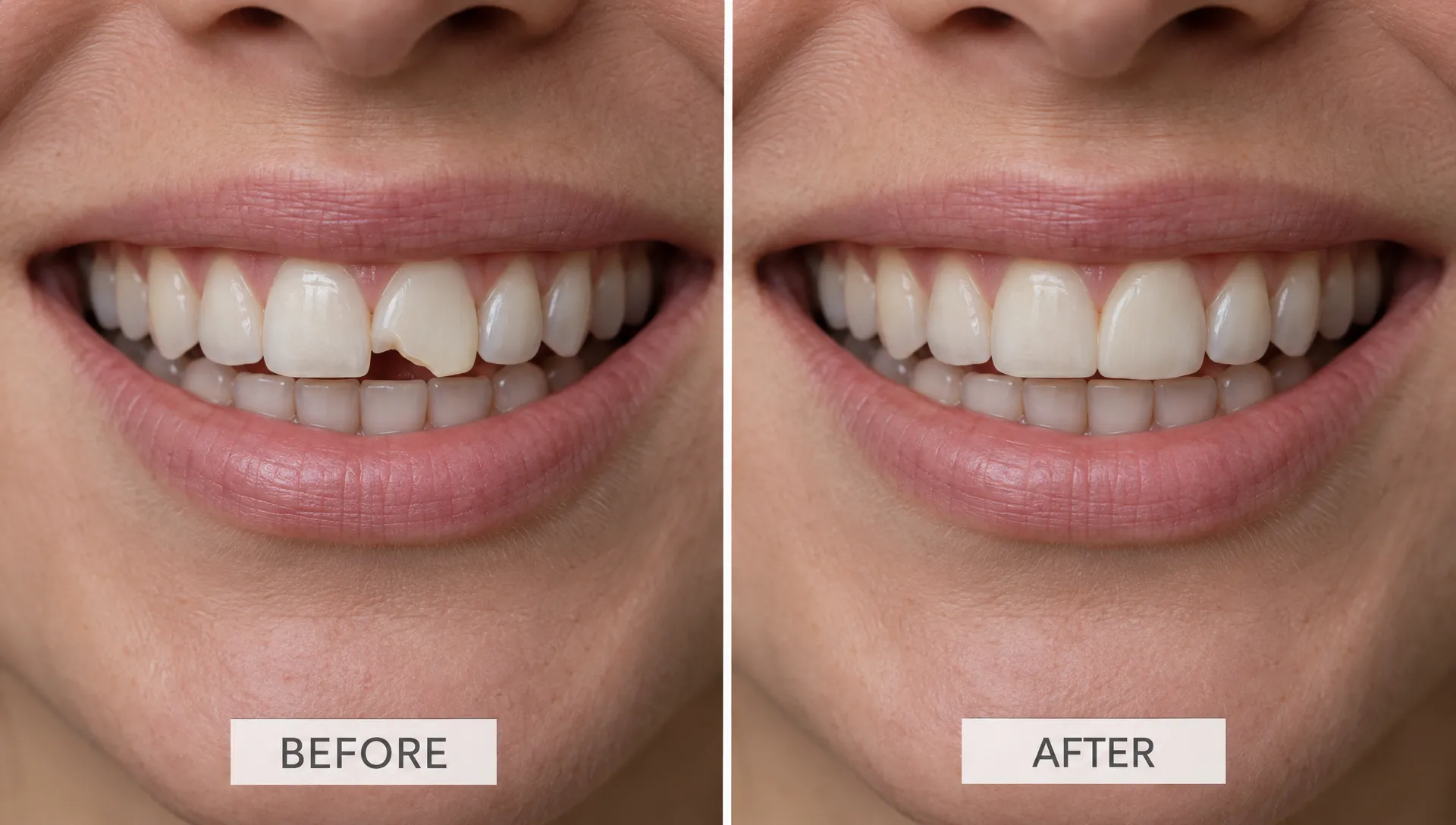
Composite bonding uses a tooth-coloured resin that adheres to the tooth. For a suitable chip, the dentist can add material to replace the missing section, shape it carefully and harden it with a curing light.
Shade matching is particularly important on front teeth. Natural teeth have variations in colour and translucency, so the repair needs to blend with the surrounding enamel rather than simply look white.
During your appointment, the dentist can explain how much preparation your particular tooth needs. Small repairs often require little or no removal of healthy enamel, although the technique depends on the damage.
Once the material has hardened, it is finished and polished. The dentist also checks your bite so that the repaired edge is not taking excessive pressure. Many straightforward repairs can be completed in one visit, but suitability and appointment length must be confirmed individually.
For a broader overview, the practice’s guide to composite bonding benefits, costs and what to expect explains the treatment beyond chipped-tooth repairs.
Protecting the repair from another chip
Bonding restores the missing shape, but it does not make the tooth unbreakable. Looking after the repair means controlling the forces that caused the damage as well as maintaining good oral hygiene.
Avoid using your teeth to open packaging, bite fingernails or hold objects. Hard foods can also put pressure on a repaired front edge, so cut them into smaller pieces rather than biting directly into them.
Brush twice daily with fluoride toothpaste and clean between your teeth. Regular check-ups allow the dentist to check the repair’s surface, edges and bite. Composite can stain or lose its polish over time, and professional maintenance may help improve its appearance.
Use your one to one dental review to discuss grinding, clenching or contact sports. Your dentist may recommend a protective appliance if appropriate. Addressing those risks is more useful than repeatedly repairing the same edge without considering why it breaks.
When another treatment may be more suitable
Composite bonding is not the answer to every broken tooth. A larger fracture, substantial existing fillings or a weakened tooth may require a different restoration. If the nerve is affected, additional treatment may be necessary before the tooth can be rebuilt.
Porcelain veneers can be considered for certain appearance concerns, while crowns may be appropriate when more extensive protection is needed. Neither should be assumed necessary for a small chip.
If you are weighing cosmetic options, the practice’s comparison of composite bonding and veneers explains their differences. The right choice depends on the tooth’s condition, not just the appearance you want.
Frequently asked questions
Does composite bonding hurt? Small enamel repairs often need no local anaesthetic. Deeper damage or sensitivity may require it. Your dentist will explain what is appropriate before treatment begins.
Can bonding be repaired if it chips again? Composite can often be repaired, depending on the damage and the remaining tooth. A repeat fracture also needs a check for bite problems or grinding.
Will whitening change the colour of my bonding? Whitening does not lighten composite resin like natural teeth. Discuss any whitening plans before shade matching your repair.
Arrange your chipped-tooth assessment in West Malling
West Malling Dental & Implant Centre provides private preventive, cosmetic and emergency dental care for patients in West Malling, Kings Hill and the surrounding Kent area.
Contact West Malling Dental & Implant Centre to arrange an appointment and request a treatment quotation and ask about any current composite bonding offers (including £150 per tooth). So start with a clear diagnosis and a repair plan suited to your teeth.