
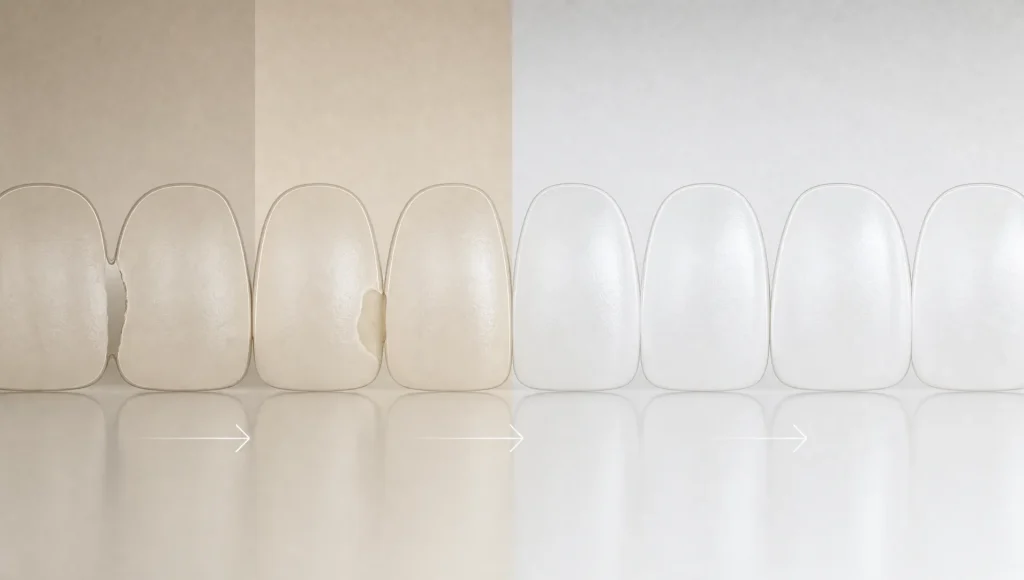
Composite bonding and veneers can both make a smile look brighter, more even and more balanced. They can close small gaps, improve chipped edges, mask staining and create a more confident overall appearance. The best choice, however, depends on how much you want to change, how healthy your teeth are, your bite, your budget and how much tooth preparation you are comfortable with.
The short answer is simple: composite bonding is often best for smaller, more conservative improvements, while veneers are usually better for a longer-lasting, more comprehensive transformation. The right answer for your mouth should always come from a clinical assessment, not just a before-and-after photo online.
What composite bonding does well
Composite bonding uses a tooth-coloured resin material that is applied directly to the tooth, shaped by the dentist and hardened in place. It is popular because it can often be completed quickly and usually involves little or no removal of natural tooth structure.
It works particularly well when the aim is to refine rather than redesign. For example, a dentist may use bonding to repair a small chip, even out slightly worn edges, soften the shape of pointed teeth or close a narrow space between front teeth. It can also be used after whitening to enhance symmetry without making the smile look overdone.
A key advantage is that composite bonding is highly repairable. If a small area chips or stains, it can often be polished, repaired or refreshed. This is one reason many patients see it as a good first cosmetic step, especially if they want a natural result without committing to a more permanent treatment.
There are limitations. Composite resin is not as stain resistant as porcelain and it can wear over time, particularly in people who grind their teeth, bite their nails or use their front teeth heavily. If you want to understand the treatment in more detail, West Malling Dental has a helpful guide to composite bonding benefits, costs and what to expect.
What veneers do well
Veneers are thin shells, usually made from porcelain, that are fitted to the front surface of teeth. They are designed to improve colour, shape, size and proportion. Compared with bonding, veneers tend to be chosen when the cosmetic change is more significant or when the patient wants a result that is more resistant to staining.
Porcelain veneers can create a very polished finish. They are often used for teeth with deeper discolouration, uneven proportions, larger chips or old cosmetic work that no longer looks its best. Because veneers are made outside the mouth by a dental laboratory, there is a high level of control over texture, translucency and shade.
The trade-off is that veneers often involve some reshaping of the natural tooth surface. This preparation can make the treatment less reversible than bonding. Veneers also usually need more planning and more than one appointment. Book a consultation today at West Malling Dental to discuss your option.
Composite bonding vs veneers at a glance
| Factor | Composite bonding | Porcelain veneers |
|---|---|---|
| Tooth preparation | Usually little to none | Often involves some enamel reshaping |
| Treatment time | Often suitable for a quicker appointment | Usually planned across more than one visit |
| Best for | Small chips, edge repair, minor gaps and subtle reshaping | Broader changes to colour, shape, size and symmetry |
| Appearance | Natural when carefully layered and polished | Highly refined, with excellent colour stability |
| Stain resistance | Can stain over time, especially with tea, coffee, red wine or smoking | More stain resistant than composite resin |
| Repairability | Often straightforward to repair or refresh | May need replacement if damaged, depending on the issue |
| Longevity | Can last well with maintenance but may need periodic polishing or repair | Generally longer-lasting with good care, but less reversible |
| Initial cost | Usually lower than porcelain veneers | Usually higher due to laboratory work and planning |
Which is best for different smile goals?
If you want to fix small chips or worn edges
Composite bonding is often the more conservative choice. It allows the dentist to add material only where it is needed, which can restore a chipped corner or smooth an uneven edge without changing the whole tooth. This is especially useful when the rest of the tooth is healthy and the colour is already acceptable.
Veneers may be considered if the chips are larger, if several teeth are affected or if previous bonding has failed repeatedly because of bite pressure. In those situations, your dentist may need to look beyond appearance and assess how the teeth meet when you bite and move your jaw.
If you want a whiter smile
If the main concern is colour, professional whitening is often discussed before bonding or veneers. Natural teeth can be whitened, but composite and porcelain restorations do not whiten in the same way. This means the order of treatment matters.
For many patients, the ideal sequence is whitening first, then bonding to match the new tooth shade. Veneers may be better if the teeth have deep intrinsic staining, mottling or old restorations that whitening cannot improve enough. A good cosmetic plan considers the whole smile, not just the individual tooth.
If you want to change tooth shape or size
Both treatments can improve tooth proportions. Bonding is useful for gentle reshaping, such as making small teeth look more even or improving the outline of the smile. Veneers may be better if teeth are significantly misshapen, heavily restored or uneven in several ways at once.
The most natural results usually come from restraint. Teeth that are too white, too square or too identical can look artificial. A skilled cosmetic dentist will consider your face shape, lip line, gum levels and the character of the neighbouring teeth before recommending either treatment.
If budget and timing matter
Composite bonding usually has a lower initial cost and can often be completed more quickly, which makes it appealing if you want a visible improvement without a larger treatment plan. Veneers involve more planning, laboratory work and clinical time, so they usually represent a bigger investment.
Cost should not be judged only by the first appointment. Bonding may need more maintenance over the years, while veneers may cost more at the start but stay colour stable for longer. Your dentist should explain both the initial cost and the likely maintenance involved.
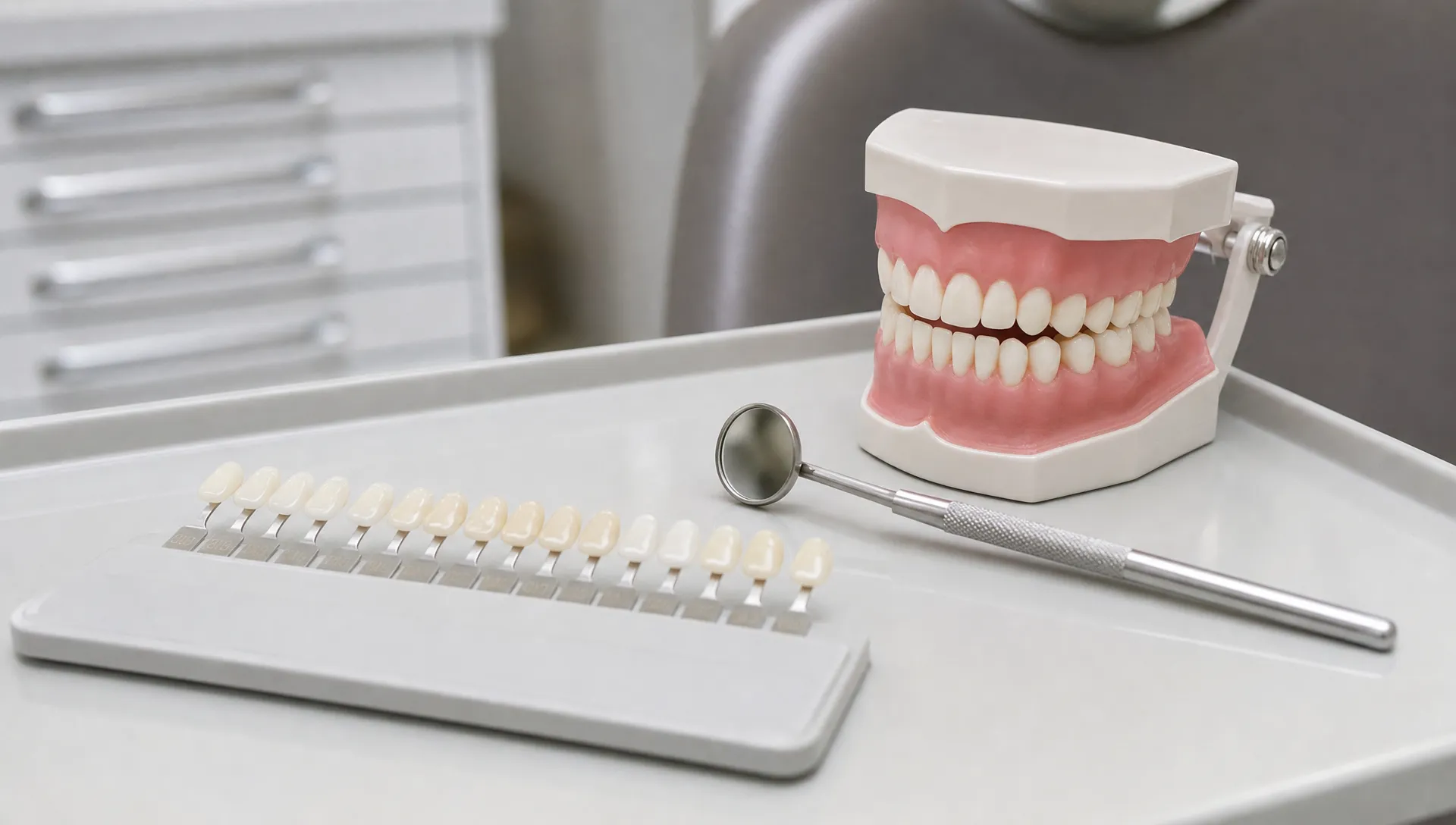
Natural-looking results depend on planning
The question is not only whether bonding or veneers are better. It is whether the chosen treatment fits the teeth underneath.
A natural smile is built around proportion, shade, texture and symmetry. Composite bonding relies heavily on the dentist's ability to layer, sculpt and polish resin directly in the mouth. Veneers rely on careful preparation, shade selection and communication with the dental laboratory. Both can look excellent when they are planned properly.
This is also where oral health matters. Gum inflammation, decay, unstable fillings, grinding habits or untreated bite problems can compromise cosmetic dentistry. A responsible dentist will not rush into bonding or veneers if the foundations are not healthy.
If you have searched for the best composite bonding near me, it is worth looking beyond convenience. Ask how the dentist assesses your bite, whether whitening should come first, what maintenance is needed and whether the treatment can be repaired or adjusted in future.
How long do composite bonding and veneers last?
There is no single lifespan that applies to every patient. Longevity depends on the material, the dentist's technique, the condition of the teeth, your bite and how well you look after your smile.
Composite bonding can serve patients well for years, but it may need polishing, small repairs or replacement in areas that stain or chip. Porcelain veneers are more stain resistant and generally more durable, but they are not indestructible. A veneer can chip, debond or need replacement if the tooth underneath changes or if it is exposed to heavy forces.
Good maintenance helps both options last longer. Avoid biting hard objects, do not use teeth to open packaging, keep up with hygiene appointments and wear a night guard if your dentist recommends one. If you drink lots of tea, coffee or red wine, regular polishing may help keep bonded teeth looking fresher.
When bonding and veneers can be combined
Some smile makeovers use both treatments. For example, veneers may be placed on the most visible front teeth while bonding is used on neighbouring teeth to refine small imperfections. This can reduce the amount of tooth preparation needed while still improving the overall smile.
A combination plan can also help when only one or two teeth need a more substantial change. The goal is to use the least invasive option that can still deliver a stable, attractive result. In cosmetic dentistry, more treatment is not automatically better treatment.
How to decide with your dentist
A proper consultation should include a discussion of your goals, an examination of your teeth and gums and an assessment of how your teeth meet. Photographs, shade selection and sometimes digital scans can help you see what may be possible.
Before choosing, ask your dentist:
- Is bonding enough for the result I want, or would it look bulky?
- Would whitening improve the result before bonding or veneers?
- How much natural tooth would need to be prepared?
- What maintenance should I expect in the next few years?
- What happens if the bonding or veneer chips?
If you are comparing several cosmetic options, this overview of which cosmetic dental treatment is right for you can help you think through colour, shape, alignment and tooth replacement before making a decision.
So, which is best?
Composite bonding is usually best if you want a conservative, repairable and relatively quick improvement for small chips, minor gaps or subtle reshaping. It is also a good option if you want to preserve as much natural tooth as possible.
Veneers are usually best if you want a more comprehensive and longer-lasting change to colour, shape and symmetry, especially when several visible teeth are involved. They may also be more suitable when composite would not be strong enough or would need to cover too much of the tooth.
The best treatment is the one that achieves your goal with the least unnecessary intervention. For some patients that will be bonding. For others it will be veneers, Invisalign, whitening or a carefully planned combination.
Frequently Asked Questions
Is composite bonding cheaper than veneers? Composite bonding usually has a lower initial cost than porcelain veneers because it is applied directly to the tooth and does not normally involve laboratory-made porcelain. Exact costs depend on the number of teeth, complexity and any preparation needed.
Do veneers damage your teeth? Veneers often require some enamel reshaping, which can make the treatment less reversible. When carefully planned and carried out on suitable teeth, veneers can be a safe cosmetic option, but your dentist should explain how much preparation is needed before you decide.
Can I whiten composite bonding or veneers? Whitening works on natural tooth enamel, not on composite resin or porcelain in the same way. If you want a brighter smile, whitening is often completed before bonding or veneers so the new material can be matched to your preferred shade.
Can I have composite bonding first and veneers later? In many cases, yes. Bonding can be a conservative first step and veneers may still be possible later if your goals change or the bonding needs replacing. Your dentist will need to check the condition of the teeth and any existing bonding first.
Are veneers better than bonding for gaps? It depends on the size and cause of the gap. Small spaces can often be closed with bonding. Larger spaces, uneven tooth sizes or bite issues may need veneers, orthodontic treatment or a combination approach.
Is composite bonding painful? Composite bonding is usually comfortable and often does not need anaesthetic when no drilling is required. If old fillings, decay or deeper reshaping are involved, your dentist will explain whether anaesthetic is recommended.
Ready to compare your options in West Malling?
If you are considering composite bonding or veneers, a personalised assessment is the safest way to decide. West Malling Dental & Implant Centre can examine your teeth, discuss your cosmetic goals and explain suitable options clearly, including bonding, veneers, whitening and Invisalign where appropriate.
Patients in West Malling, Kings Hill and the surrounding Kent area can contact https://www.westmallingdental.co.uk/enquiries/ to arrange a consultation and take the next step towards a confident, natural-looking smile.