
Yes, many older adults can get dental implants, and age alone is rarely the deciding factor. If your dentures feel loose, a tooth has failed or chewing has become difficult, you need to ask whether your mouth, bone and general health are ready for implant treatment.
There is no fixed upper age limit for dental implants. Patients in their 60s, 70s, 80s and beyond may be suitable if they are healthy enough for minor oral surgery and can keep the implant area clean afterwards.
At West Malling Dental & Implant Centre, patients in West Malling, Kings Hill and across Kent can discuss dental implants with Gerry – our experienced implantologist – in a relaxed private setting, with a current 30 minute consultation offer of £45.
Is there an upper age limit for dental implants?
Chronological age matters less than biological health. A fit 78-year-old with stable gums, good bone support and well-managed medical conditions may be a better candidate than a much younger patient with active gum disease or heavy smoking habits.
Dental implants are placed into the jawbone to support replacement teeth. For older adults, the key is careful assessment before treatment begins, not an arbitrary age cut-off.
What a does a dentist check before recommending implants
Gerry will look at several factors before advising whether implants are suitable. The aim is to reduce risk, plan the right type of implant restoration and make sure the result is comfortable for daily life.
Important checks include:
- Gum health, including signs of gum disease or infection
- Bone volume and quality in the jaw
- Medical history, including diabetes, heart conditions and immune health
- Medication, especially blood thinners, bisphosphonates or osteoporosis injections
- Smoking status and alcohol intake
- Ability to maintain daily cleaning around the implant
- Bite force, tooth grinding and denture history
None of these automatically rules out treatment, but they may change the preparation needed. For example, gum treatment may come first, medication advice may be required from a GP or specialist and some patients may need bone grafting before an implant can be placed.
Types of dental implants older adults may be offered
The right implant option depends on how many teeth are missing, where they are in the mouth and whether the patient wants a fixed tooth, a bridge or extra support for dentures. If you are unsure whether implants are the right choice, this guide on when a dentist may recommend dental implants gives useful examples.
| Implant option | What it replaces | When it may be suitable |
|---|---|---|
| Single dental implant | One missing tooth | When one tooth is missing and the neighbouring teeth are healthy |
| Implant-supported bridge | Several missing teeth in a row | When multiple teeth are missing and a fixed option is preferred |
| Implant-retained denture | A loose full or partial denture | When dentures move during eating or speaking |
| Full arch implant restoration | Most or all teeth in one jaw | When many teeth are failing or already missing |
An implant specialist like Gerry will explain the advantages and limitations of each option, including healing time, maintenance, cost and how the final teeth are made to match your smile. For cost conscious patients, a bridge may be the answer, so compare dental implants and bridges before making a decision.
Health factors that matter more than age
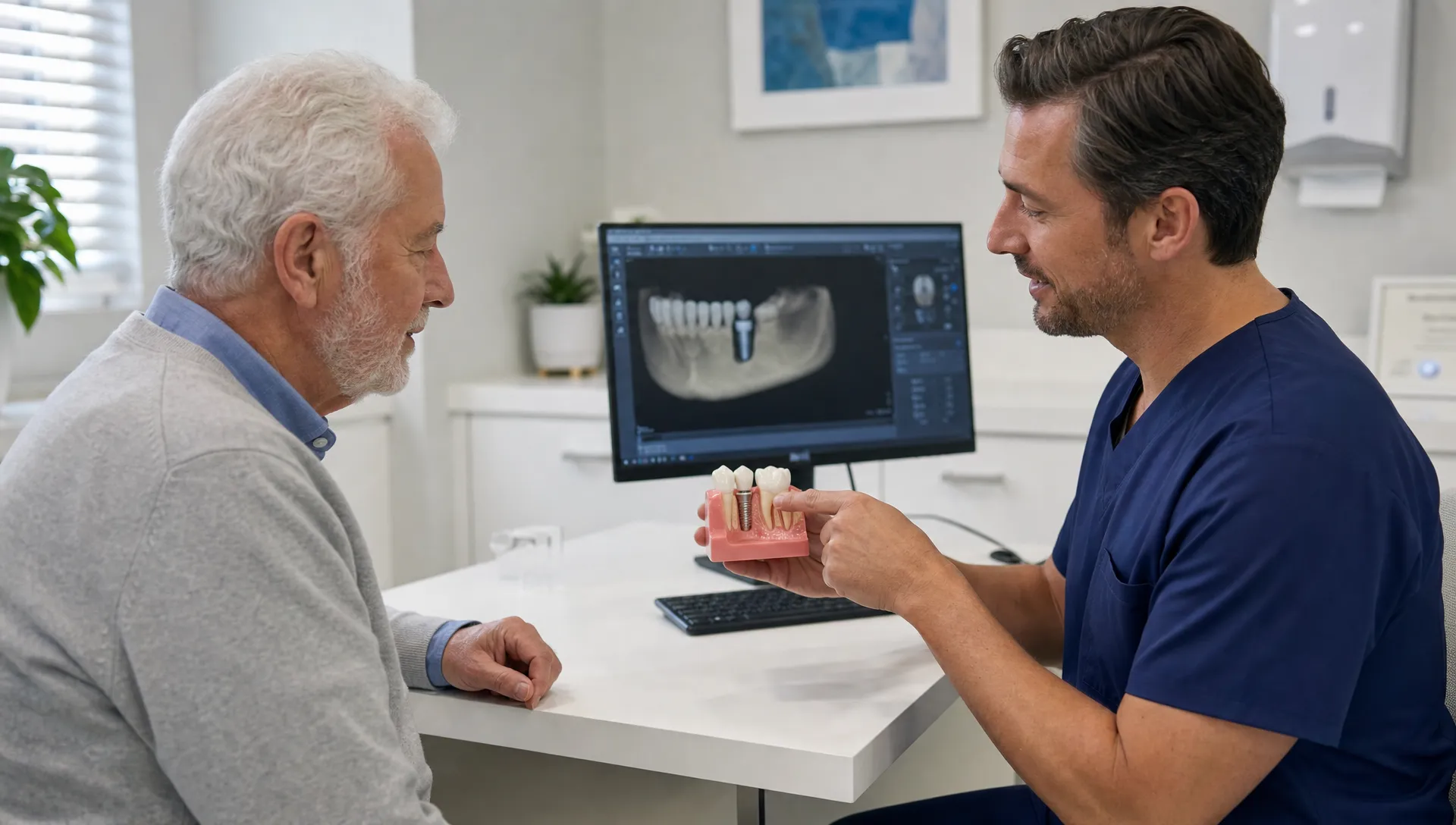
The most important health factors are gum stability, bone support and general medical control. Dental implants rely on osseointegration, which is the process where the implant fuses with the surrounding bone. Anything that affects healing can affect success.
Diabetes is a good example. Well-controlled diabetes may still allow implant treatment, but uncontrolled blood sugar can increase infection risk and slow healing. Smoking is another major factor because it reduces blood flow to the gums and can increase the risk of implant failure.
Older adults should also tell the dentist about all medicines and supplements. Blood thinners do not necessarily prevent implant treatment, but they need to be managed safely. Drugs used for osteoporosis, such as bisphosphonates or denosumab, need careful discussion because they can affect jawbone healing in some cases.
Preparation needed for successful implant placement
For older adults, the best smile clinic dentist will not rush straight to surgery. Preparation is often what makes implant treatment predictable, comfortable and long-lasting.
First comes a detailed consultation. This usually includes checking the mouth, reviewing medical history and taking appropriate imaging. At West Malling Dental & Implant Centre, the current £65 new patient check-up including an X-ray can be a practical first step for patients who want to understand their oral health before discussing implant options in more detail.
Next, any active dental problems need attention. Gum disease, decay, failing teeth or infection should be treated before implant placement. A hygienist visit may be recommended, and West Malling Dental also offers hygienist care with Airflow for patients who would benefit from thorough cleaning and stain removal.
In some cases, extra preparation is needed. This may include removing a failing tooth, allowing the socket to heal, building up bone with grafting or adjusting a denture so the gums are healthier before surgery.
What recovery is like for older patients
Most implant surgery is carried out under local anaesthetic. After placement, the implant needs time to heal before the final crown, bridge or denture attachment is fitted. Healing times vary because bone quality, the number of implants and whether grafting was needed all make a difference.
You will usually be given aftercare instructions about cleaning, eating, discomfort control and when to return for review. Long-term maintenance matters as much as the surgery itself. Regular dental check-ups, hygienist appointments and careful home cleaning help protect the gum and bone around the implant.
If you want to understand longevity in more detail, West Malling Dental has a dedicated guide explaining how long dental implants last and what patients can do to protect them.
Why choose West Malling Dental & Implant Centre?
West Malling Dental & Implant Centre provides private dental care for patients in West Malling, Kings Hill and the surrounding Kent area. The practice offers dental implants alongside family dentistry, emergency same-day care, cosmetic dentistry, teeth whitening, composite bonding, veneers, crowns and Invisalign clear braces.
For older adults, continuity of care is especially valuable. You can have your general dental health, gum care, implant planning and smile goals considered together, rather than treating implants as a stand-alone procedure.
Frequently Asked Questions
Am I too old for dental implants? Not usually. Age alone is not a barrier. Suitability depends on your gum health, bone levels, medical history and ability to care for the implant properly.
Can I have implants if I already wear dentures? Yes, many denture wearers consider implant-retained dentures because implants can help improve stability when eating and speaking. A full assessment is needed to check bone support.
Do older adults heal more slowly after implant surgery? Some do, especially if they have medical conditions or take certain medicines. A smile clinic dentist will factor this into the treatment plan and review schedule.
Will I need a bone graft? Not everyone needs grafting. It may be recommended if the jawbone has shrunk after tooth loss or if there is not enough bone to support an implant securely.
How do I start? Book a new patient check-up at West Malling Dental & Implant Centre. The current offer is £65 including an X-ray, giving you a clear starting point before discussing implant suitability.
Take the next step towards a steadier smile
If missing teeth or loose dentures are affecting what you eat, how you speak or how confident you feel, dental implants may be worth exploring no matter what your age. West Malling Dental & Implant Centre can assess your oral health, explain your options clearly and help you decide whether implants are right for you.
To begin, contact West Malling Dental & Implant Centre and ask about the £45 consultation.