
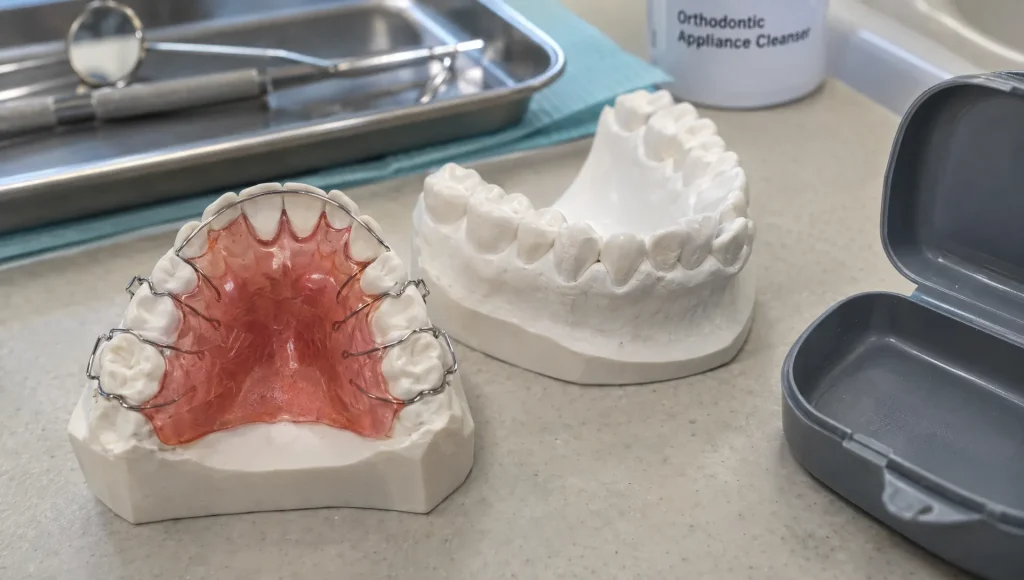
If your teeth have shifted after braces, a local dentist taking new patients can help you work out whether you need a replacement retainer, Invisalign or a more detailed orthodontic assessment. This movement, known as orthodontic relapse, does not automatically mean repeating your original treatment.
For patients in West Malling, Kings Hill and nearby parts of Maidstone and Kent, West Malling Dental & Implant Centre provides private dental care and Invisalign. The starting point is understanding why your teeth have moved, and to find the fastest way to make your smile attractive again.
Why teeth move after orthodontic treatment
Teeth can change position after braces or aligners, particularly when retainers are not worn as prescribed. A lost removable retainer or a detached fixed retainer can allow movement that becomes noticeable before your next routine appointment.
Longer-term changes can also occur as you age. Gum disease may contribute to tooth movement, so new spacing or crowding should not automatically be treated as a cosmetic problem.
The NHS guidance on orthodontics explains that retainers help prevent teeth returning towards their original positions. Retention is part of treatment, rather than an optional extra once your teeth look straight.
Do not force an old retainer into place if it no longer seats properly or causes pain. Arrange an assessment instead, and avoid restarting old aligner trays without professional advice.
Could Invisalign correct orthodontic relapse?
Invisalign may be suitable for some relapse cases, but the amount of movement and your bite matter.
| Possible approach | When it may be considered | Important limitation |
|---|---|---|
| Replacement retainer | You are happy with the current tooth positions and want to maintain them | A passive retainer generally holds teeth rather than actively straightening them |
| Invisalign clear aligners | Assessment shows the required movements are suitable for aligner treatment | Success depends on prescribed wear and clinical monitoring |
| Fixed braces or specialist assessment | More complex movements or bite correction are needed | The appropriate approach may require referral |
West Malling Dental & Implant Centre offers Invisalign and traditional orthodontic treatment, giving suitable patients both option. However, a small visible change does not always mean a simple correction: moving one tooth can affect how others meet.
For a broader comparison, the practice’s guide to Invisalign and traditional braces explains differences in daily wear and care. Your examination should determine which approach fits your needs.
Prepare for your assessment and discuss future treatment
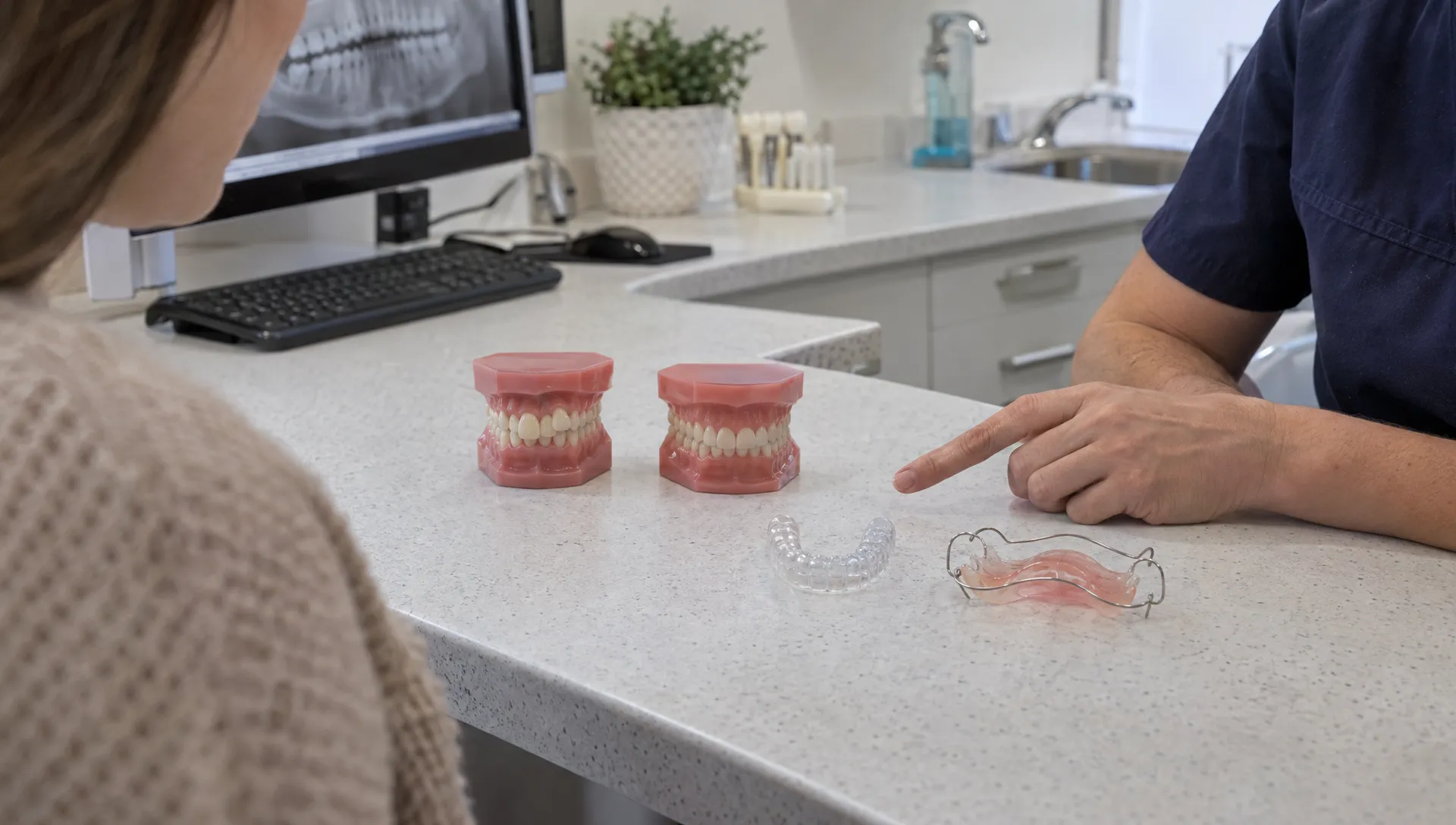
Bring your current retainers, even if they are broken or no longer fit. Note when you first noticed movement, whether your bite feels different and how often you have been wearing your retainers. Share previous orthodontic records if you have them, but do not delay booking because they are unavailable.
A dentist should also explain how your results would be maintained after any correction. Ask which retainer is recommended, how often to wear it and what to do if it breaks or becomes loose.
Fixed retainers need cleaning and regular checks; removable retainers need consistent wear according to your clinician’s instructions. Neither removes the need for routine dental care. Long-term retention should be discussed before you commit to retreatment, including any replacement or review costs.
New patient offers and orthodontic treatment costs
West Malling Dental & Implant Centre advertises a £65 new patient check-up including an X-ray. Confirm the current offer terms when booking, including whether your orthodontic concern needs a separate assessment. X-rays should be taken when clinically justified.
The new patient offer is not an Invisalign treatment price. Ask the team about any current Invisalign promotions and request a written estimate covering the proposed treatment, reviews, retainers and any additional stages that may be needed. Compare the complete plan rather than an advertised starting price alone.
Frequently asked questions
Can I see a different dentist after my teeth relapse? Yes. You can seek an assessment at another practice. Explain your previous treatment and bring any records or appliances you have. The new clinician will need to assess your current dental health before recommending treatment.
Will I need a full course of Invisalign again? Not necessarily. Some cases need limited correction, while others require more extensive treatment. The number of aligners and treatment duration cannot be established reliably from appearance alone.
Is orthodontic relapse an emergency? Gradual movement without pain usually needs a routine assessment. Seek prompt dental advice for sudden tooth movement, loose teeth, swelling or a broken retainer causing injury. These symptoms may need attention before cosmetic treatment is considered.
Arrange your assessment in West Malling
If you have noticed crowding, gaps or a change in your bite after orthodontic treatment, contact West Malling Dental & Implant Centre to discuss the right appointment. Mention your previous braces or Invisalign and ask about the £65 new patient offer and any current orthodontic promotions.
The practice’s guidance on booking a new patient appointment can help you prepare the details the team needs.