
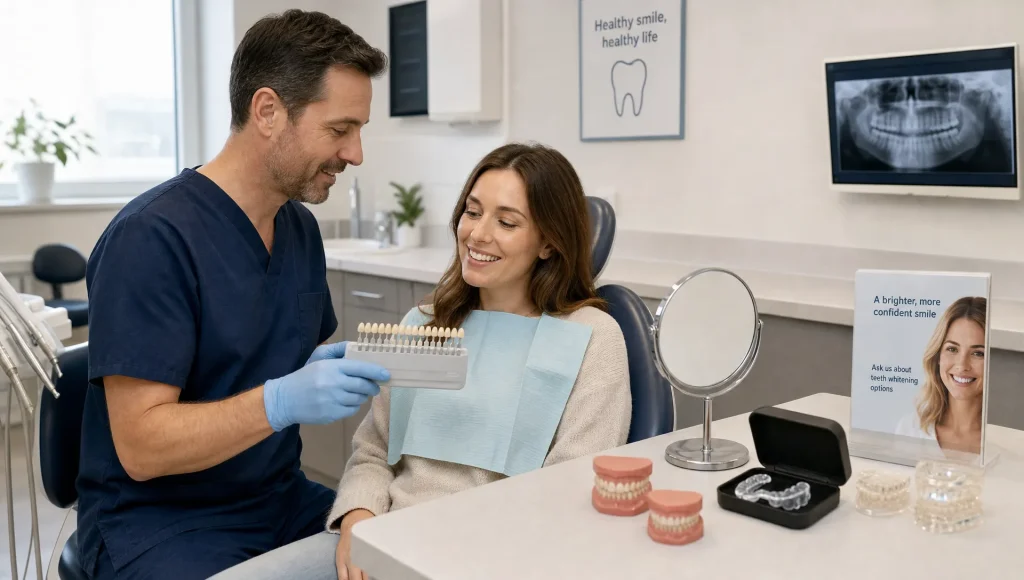
A natural-looking smile rarely comes from one dramatic change. It usually comes from careful planning: improving tooth colour without making it look artificial, reshaping small imperfections without flattening character and choosing materials that suit your face rather than copying someone else's smile.
That is where aesthetic dentistry differs from a quick cosmetic fix. The aim is not simply to make teeth brighter or straighter. It is to make the smile look healthier, balanced and believable in everyday life, whether you are speaking, laughing, eating or being photographed.
If you are considering treatment in West Malling, Kings Hill or the surrounding Kent area, this guide explains the main options for a natural-looking smile, how they can be combined and what to ask before you commit.
What makes aesthetic dentistry look natural?
Natural-looking aesthetic dentistry respects the details that make real teeth look real. Teeth are not perfectly flat white blocks. They have subtle translucency at the edges, gentle texture on the surface and small variations in shape from one tooth to the next. Even very attractive smiles usually contain slight asymmetry.
A good result should also suit your age, facial features and gum line. Teeth that are too white, too bulky or too identical can draw attention for the wrong reason. In contrast, a well-planned aesthetic result often looks as if you have simply always had healthy, attractive teeth.
Dentists typically assess several features before recommending treatment:
- Tooth shade and how it relates to your skin tone
- Tooth shape, length and width
- Gum position and gum health
- The way your upper and lower teeth meet
- Facial proportions and lip movement when smiling
- Existing fillings, crowns, veneers or missing teeth
This is why two people with the same concern, such as chipped front teeth, may need different treatment plans. One may do well with composite bonding. Another may need alignment first, or a combination of whitening and bonding to achieve a balanced result.
Start with oral health before appearance
The most natural-looking smile is also a healthy one. Before whitening, bonding, veneers or implants, your dentist should check for tooth decay, gum inflammation, cracks, failing fillings and bite problems. Treating the visible issue without stabilising the underlying health can lead to disappointing or short-lived results.
For example, swollen gums can make even well-shaped teeth look uneven. Heavy staining may be easier to manage after a hygienist appointment. Old restorations may affect how whitening or bonding blends with the rest of your teeth.
This health-first approach matters even more if you are planning several aesthetic changes. A phased plan can help you prioritise urgent dental needs, improve gum health, then move on to cosmetic improvements when the foundation is stable.
Teeth whitening for a fresher smile
Professional teeth whitening is often the simplest way to improve a smile while keeping it natural. It works best for teeth that are healthy but stained by food, drink, age-related darkening or habits such as smoking.
The key to a natural result is controlled whitening. Most people do not need an extremely white shade. They need a fresher shade that still suits their face and matches the rest of their mouth. If you have visible fillings, crowns, veneers or bonding, your dentist will also explain that these materials do not whiten in the same way as natural enamel.
In the UK, tooth whitening should be carried out by a dental professional or under their prescription. NHS guidance on teeth whitening explains that unqualified whitening treatments can carry risks, including burns, sensitivity and damage to the mouth.
Whitening is often used before other aesthetic treatments. If you plan to have bonding, veneers or a crown on a visible tooth, it usually makes sense to whiten first, then match the new material to your improved natural shade.
Composite bonding for chips, edges and small gaps
Composite bonding is a popular aesthetic dentistry option because it can make targeted changes without removing much, if any, natural tooth structure. A tooth-coloured resin is shaped directly onto the tooth, then polished to blend with the surrounding enamel.
It can be particularly useful for:
- Small chips or worn edges
- Minor gaps between teeth
- Slightly uneven tooth shapes
- Localised discolouration
- Improving the symmetry of front teeth
Bonding can look very natural when the shade, translucency and surface polish are matched carefully. The result depends heavily on case selection and technique. If a tooth is badly positioned, under heavy bite pressure or extensively damaged, another option may be more suitable.
If you are weighing this up against veneers, whitening or orthodontics, West Malling Dental has a more detailed guide to composite bonding benefits, costs and what to expect.
Invisalign for discreet alignment changes
Sometimes the most natural aesthetic improvement is not changing the tooth surface at all. It is moving the teeth into a better position. Invisalign clear aligners can help with crowding, spacing, mild rotations and certain bite concerns, depending on the case.
Alignment can improve a smile in several subtle ways. It can make teeth easier to clean, reduce uneven shadows, improve the smile arc and create a more balanced frame before any whitening or bonding. For patients who want a conservative approach, orthodontic alignment may reduce the amount of reshaping or restorative treatment needed later.
A natural-looking outcome comes from realistic planning. Clear aligners are not suitable for every orthodontic issue and some cases require more complex treatment. Your dentist should assess your bite, gum health and tooth movement goals before advising whether Invisalign is appropriate.
Veneers for more significant shape, colour and proportion changes
Veneers are thin restorations placed on the front surface of teeth. They can improve colour, shape, length and proportion, which makes them useful for more visible aesthetic changes. Modern veneers can look highly natural when they are designed with the right thickness, shade layering and edge translucency.
They may be considered when teeth are heavily stained, worn, uneven or already restored in a way that bonding cannot predictably improve. However, veneers are a bigger commitment than whitening or bonding. In many cases, a small amount of enamel needs to be prepared and the restoration will need maintenance or replacement over time.
A natural veneer result should not look like a row of identical tiles. Your dentist may recommend treating only the teeth that show when you smile, or combining veneers with whitening so that the final shade blends with untreated teeth.
Crowns for damaged or heavily restored teeth
Crowns cover more of the tooth than veneers and are usually recommended when a tooth needs strength as well as improved appearance. They may be suitable for teeth that are cracked, heavily filled, root-filled or structurally weakened.
For aesthetic front teeth, the choice of material and shade matching are essential. A crown should blend with neighbouring teeth in different lighting conditions, not just under the surgery light. This is especially important when only one front tooth is being crowned, as even a small mismatch can be noticeable.
Your dentist will also consider the gum line, tooth shape and bite. A crown that looks good on day one but is too bulky, too long or poorly contoured can trap plaque or irritate the gums, which undermines both appearance and health.
Dental implants for natural-looking tooth replacement
When a tooth is missing, a dental implant can replace the tooth root and support a crown, bridge or denture. From an aesthetic point of view, the challenge is not only making the visible tooth look real. It is also creating the right gum shape, emergence profile and shade match.
Implant aesthetics are influenced by bone volume, gum thickness, implant position, crown design and the skill of the dental laboratory. In some cases, additional planning or preparatory treatment may be needed to create the best foundation.
For patients replacing a visible tooth, West Malling Dental's FAQ on why visiting a dental implant laboratory can improve the aesthetic outcome explains how shade, texture and shape can be refined for a more realistic result.
| Main concern | Often considered | Why it can look natural |
|---|---|---|
| Yellow or dull teeth | Professional whitening | Improves shade while keeping your own tooth shape |
| Small chips or uneven edges | Composite bonding | Adds subtle shape and symmetry with tooth-coloured resin |
| Crowding or spacing | Invisalign | Moves your own teeth into a better position |
| Heavily stained or misshapen teeth | Veneers | Changes shape and colour with carefully designed restorations |
| Weak or heavily filled teeth | Crowns | Restores strength while improving appearance |
| Missing teeth | Dental implants | Replaces teeth with fixed restorations designed to blend in |

How treatments can be combined for a subtle smile makeover
Many natural-looking smile improvements use more than one treatment, but not necessarily in a dramatic way. A dentist may recommend a sequence that improves the whole smile while keeping treatment conservative.
A common example is hygiene treatment followed by whitening, then small areas of composite bonding on worn or chipped edges. This can refresh the smile without covering healthy teeth. Another example is Invisalign to align crowded front teeth, followed by whitening once the teeth are in a better position. In some cases, a single crown or implant crown may be matched to teeth that have already been whitened.
The order matters. Whitening after bonding or crowns can leave restorations looking darker than surrounding teeth. Bonding before alignment may create shapes that no longer fit once teeth have moved. Placing a veneer before gum inflammation is controlled can lead to an uneven margin later.
This is why a treatment plan should feel joined-up rather than a menu of separate procedures. If you are unsure where to begin, a comparison such as which cosmetic dental treatment is right for you can help you think about your main concern before your consultation.
Choosing a dentist for natural aesthetic dentistry
The right dentist will not rush you into the most visible or expensive option. They should ask what you dislike about your smile, examine your oral health and explain the benefits, limits and maintenance needs of each approach. For aesthetic dentistry, communication is as important as technical skill because small differences in shape and shade can change the whole result.
Ask whether you can see examples of similar cases, whether photographs will be taken for planning and whether a trial or mock-up is possible for more complex work. You should also feel comfortable discussing your budget and timeline. A natural result can often be achieved in stages, particularly when the priority is to keep healthy tooth tissue.
Online research can help you shortlist clinics, but search visibility is not the same as clinical suitability. Some practices improve their online presence through content, reviews and services such as a specialist dental SEO agency, so use search results as a starting point, then judge the consultation, diagnostics, communication and treatment planning.
A practice that offers several options under one roof can also be helpful. If you are only offered one type of treatment, every problem can start to look like it needs that treatment. Access to preventive care, hygienist support, whitening, bonding, Invisalign, crowns, veneers and implants allows the plan to be shaped around your mouth rather than around a single procedure.
What to expect at an aesthetic dentistry consultation
A consultation for a natural-looking smile should be thorough. It may include a discussion of your concerns, a dental examination, gum assessment, photographs, X-rays where clinically needed and a review of your bite. Your dentist may also ask about previous dental work, sensitivity, grinding, medical history and your expectations.
You should leave with a clear understanding of the recommended options and why some may not be right for you. For example, bonding may be a poor choice if your bite is likely to chip it. Whitening may need to be managed carefully if you already have sensitivity. Veneers may not be the first step if alignment would solve most of the visible issue.
A good plan should cover:
- The health issues that need treating first
- The aesthetic changes that are realistically achievable
- The treatment sequence and likely timescale
- How much natural tooth structure is involved
- Maintenance, repairs and replacement over time
- Any risks, alternatives and expected limitations
This level of planning helps protect both your smile and your confidence. The goal is not just to look good immediately after treatment, but to have a result that remains healthy, comfortable and easy to maintain.
Maintaining a natural-looking result
Aesthetic dental work still needs everyday care. Whitening can fade gradually, bonding can stain or chip, aligner results need retainers and restorations such as veneers, crowns and implant crowns need regular monitoring. None of this means the treatment has failed. It simply means your new smile becomes part of your long-term oral health routine.
Daily brushing, interdental cleaning, routine check-ups and hygienist visits all help preserve the finish and health of your teeth. If you grind your teeth, your dentist may recommend a night guard to protect bonding, veneers or crowns. If you drink a lot of coffee, tea or red wine, polishing or whitening top-ups may be discussed when appropriate.
The most natural aesthetic dentistry is designed with maintenance in mind. A slightly more conservative choice that you can look after comfortably may serve you better than a dramatic result that needs frequent repairs.
Frequently Asked Questions
Is aesthetic dentistry the same as cosmetic dentistry? The terms are often used together, but aesthetic dentistry places particular emphasis on creating a result that looks balanced and natural. It still improves appearance, but it also considers tooth health, gum health, bite and facial harmony.
What is the most natural-looking cosmetic dental treatment? It depends on the concern. Whitening can look very natural for dull but healthy teeth, bonding can subtly repair chips and Invisalign can improve the position of your own teeth. For more significant changes, veneers, crowns or implants may be appropriate when carefully planned.
Should I whiten my teeth before bonding or veneers? In many cases, yes. Whitening first allows your dentist to match bonding, veneers or crowns to your preferred tooth shade. Existing restorations will not whiten like natural enamel, so your dentist will advise on the best sequence.
Will veneers look fake? Veneers can look natural when they are designed with the right shade, shape, surface texture and proportions. They are more likely to look artificial if they are too white, too bulky or too identical for your face.
Can aesthetic dentistry be done in stages? Yes. Many patients start with health checks, hygiene treatment and whitening, then consider bonding, alignment or restorations later. A staged plan can make treatment more manageable and often supports a more conservative result.
How do I know which option is right for me? The best option depends on your tooth health, gum health, bite, budget, timescale and the changes you want to see. A consultation with a dentist who offers a range of treatments is the safest way to compare realistic choices.
Ready to explore a natural-looking smile?
If you want your smile to look healthier without looking overdone, start with a careful assessment. West Malling Dental & Implant Centre provides private family, preventive, cosmetic and emergency dental care in a relaxed setting, with options including hygienist care, teeth whitening, composite bonding, Invisalign, crowns, veneers and dental implants.
Book a consultation with West Malling Dental & Implant Centre to discuss the most natural aesthetic dentistry options for your smile, your oral health and your long-term confidence.