A first dentist check-up can feel like a big step, especially if you are joining a new practice, have not seen a dentist for a while, or feel nervous about what might be found. The good news is that your first appointment is mainly about understanding your mouth, your health, your concerns, and your goals. It should feel calm, informative, and respectful, not rushed or judgemental.
At a typical first dentist check-up, your dentist will ask about your medical history, examine your teeth and gums, check the soft tissues in your mouth, take X-rays if clinically needed, and talk you through any findings. You should leave knowing what is healthy, what needs monitoring, and whether any treatment or hygiene support is recommended.
The purpose of a first dentist check-up
A dental check-up is not just a quick look for cavities. It is a preventive health appointment designed to spot small problems before they become painful, complex, or more expensive to treat. The NHS explains that regular dental checks help your dentist see whether you have any dental problems and help you keep your mouth healthy.
For a new patient, the appointment is also a baseline assessment. Your dentist is building a clear picture of your oral health today, so future changes can be tracked more accurately. This is particularly helpful if you have existing fillings, crowns, implants, gum concerns, tooth wear, sensitivity, or cosmetic goals such as whitening, straightening, or replacing missing teeth.
A good first check-up also gives you space to explain what matters to you. Some patients want reassurance that everything is stable. Others want help with bleeding gums, bad breath, dental anxiety, a chipped tooth, or improving confidence in their smile. Your priorities help guide the conversation.
Before the examination: questions about your health and dental history
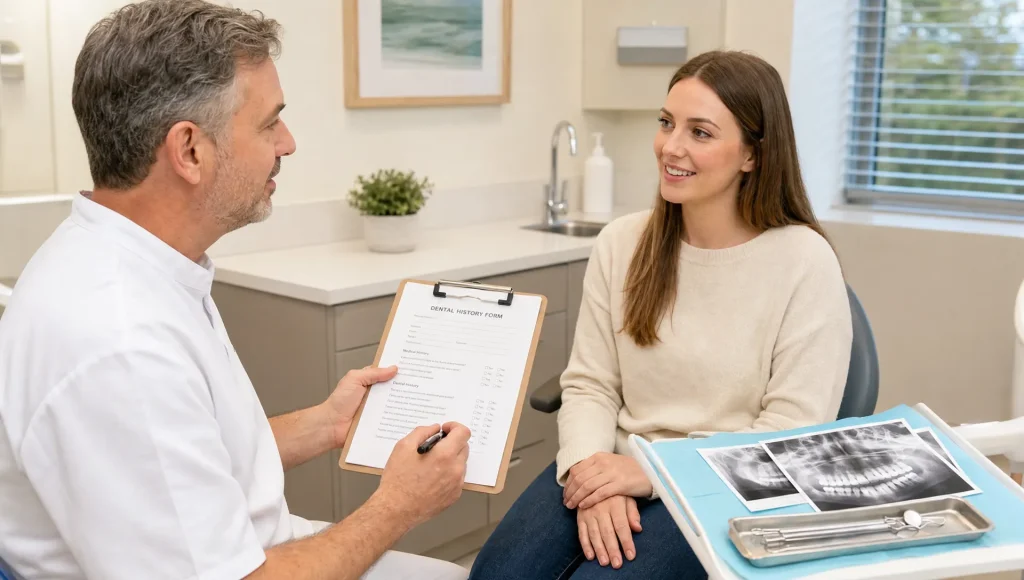
Your appointment will usually begin with a discussion and some paperwork. This may feel routine, but it is an important part of safe dental care. Your dentist needs to know about your general health because many medical conditions and medicines can affect your mouth, your gums, bleeding risk, healing, and the type of treatment that is most suitable.
You may be asked about:
- Current medicines, allergies, and any recent operations or hospital treatment
- Medical conditions such as diabetes, heart conditions, asthma, osteoporosis, or immune system problems
- Pregnancy, if relevant
- Smoking, vaping, alcohol intake, and diet habits that may affect gum health or decay risk
- Past dental treatment, including crowns, bridges, implants, root canal treatment, orthodontics, or dentures
- Dental anxiety, sensitive teeth, jaw pain, grinding, or previous difficult dental experiences
This is also the right time to mention anything that worries you, even if it feels minor. Occasional bleeding when brushing, a tooth that twinges with cold drinks, a rough edge, a persistent ulcer, or a change in your bite can all give your dentist useful clues.
What your dentist checks during the appointment
Once you are comfortable in the dental chair, your dentist will carry out a detailed examination. They may use a small mirror, a dental probe, good lighting, and sometimes magnification. The process is usually gentle and should not be painful.
Teeth and existing dental work
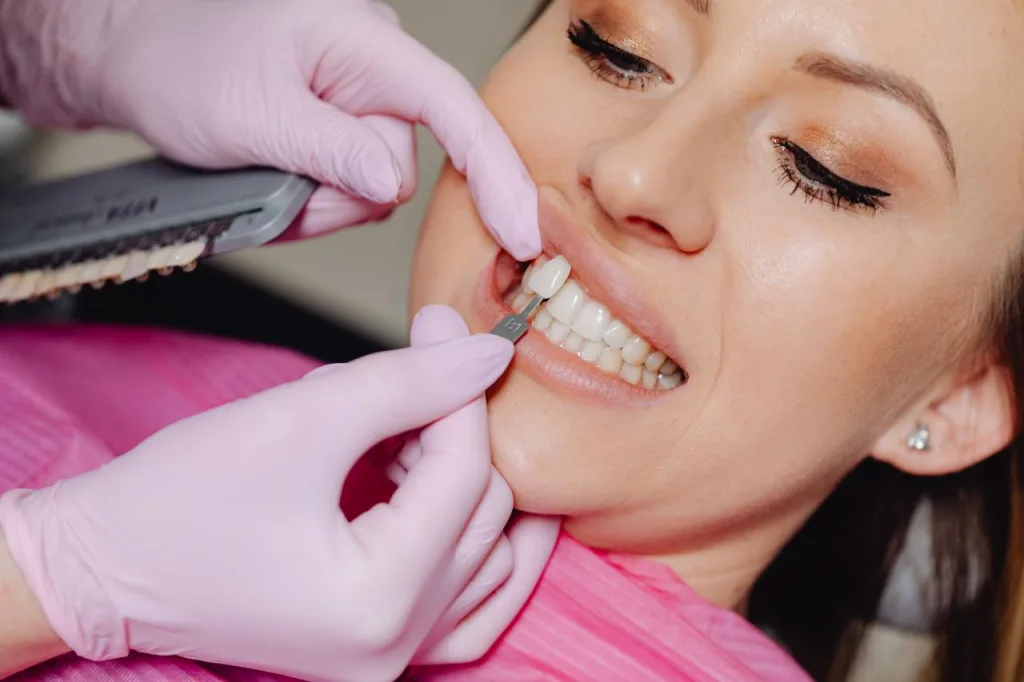
Your dentist will check each tooth for signs of decay, cracks, chips, wear, erosion, and old restorations that may be leaking, fractured, or wearing down. If you have crowns, veneers, bridges, implants, or fillings, these will be assessed for fit, stability, and signs of problems around the edges.
This part of the examination helps identify whether anything needs urgent attention, whether a tooth can simply be monitored, or whether preventive changes could reduce future risk. For example, early enamel changes may not need a filling if they can be stabilised with better cleaning, fluoride, and diet changes.
Gum health
Gum assessment is a key part of your dentist check-up. Your dentist may gently measure or screen around the gums to look for bleeding, inflammation, plaque build-up, tartar, gum recession, and signs of gum disease.
Healthy gums are important because they support the teeth. Gum disease can often progress quietly, sometimes without pain, so bleeding when brushing or persistent bad breath should not be ignored. If your gums need extra attention, your dentist may recommend a hygienist appointment. At West Malling Dental & Implant Centre, hygienist care is available, including Airflow where suitable for stain and biofilm removal.
Soft tissues and oral cancer screening
Your dentist will also look at the soft tissues of your mouth, including your tongue, cheeks, lips, palate, and the floor of the mouth. They may also check around your jaw, glands, and neck. This screening helps identify ulcers, lumps, patches, or other changes that may need review.
Most changes in the mouth are harmless, but anything unusual that does not heal should be assessed. As a general rule, if you have an ulcer or mouth change that lasts longer than three weeks, book a dental or medical appointment rather than waiting for your next routine visit.
Bite, jaw joints, and tooth wear
Your dentist may ask whether you clench or grind your teeth, wake with jaw tension, get headaches, or notice chips on the edges of your teeth. Tooth wear can be linked to grinding, acid erosion, diet, reflux, or habits such as chewing pens or using teeth as tools.
Checking your bite and jaw joints helps your dentist spot patterns early. In some cases, simple advice or a protective night guard may be discussed, depending on your symptoms and the clinical findings.
Will you need X-rays at your first check-up?
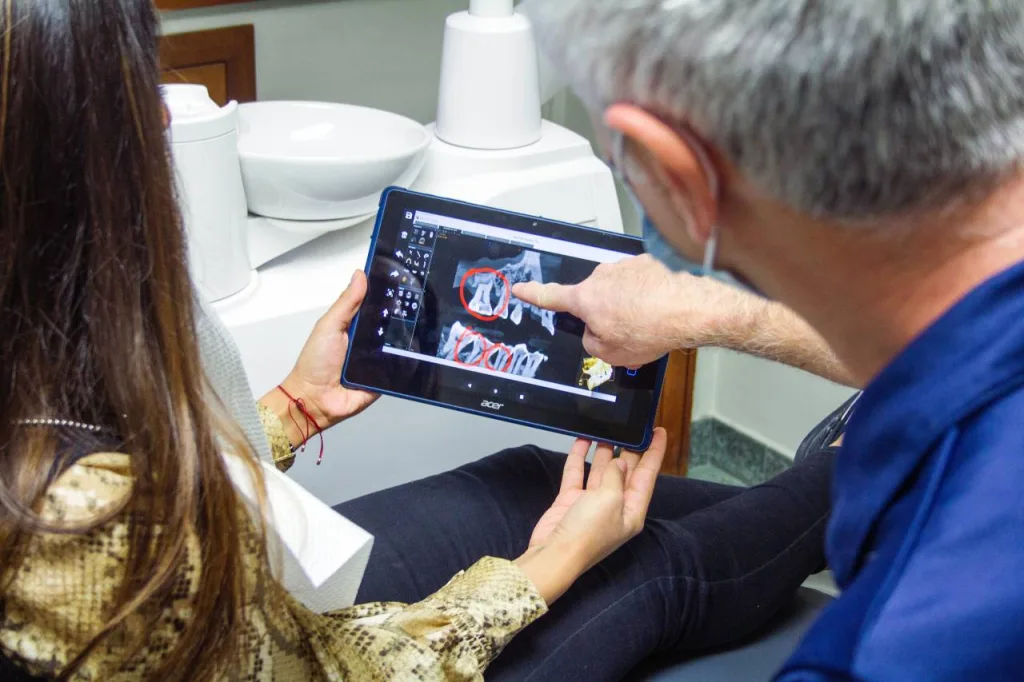
X-rays are commonly recommended for new patients because they show areas that cannot be seen clearly during a visual examination, such as between the teeth, under old fillings, around roots, and bone levels supporting the teeth. They can help detect decay, infection, bone loss, impacted teeth, and other hidden problems.
That said, X-rays are not taken without a reason. Your dentist will consider your symptoms, dental history, risk factors, and when your last X-rays were taken. If you are pregnant, think you might be pregnant, or have concerns about radiation, tell your dentist before any X-ray is taken.
West Malling Dental & Implant Centre’s new patient offer includes an X-ray where clinically appropriate, which can be particularly useful when establishing a clear picture of your oral health from the start.
| Part of the check-up | What the dentist is looking for | Why it matters |
|---|---|---|
| Teeth | Decay, cracks, wear, failing fillings, sensitivity triggers | Helps prevent small issues becoming painful or complex |
| Gums | Bleeding, inflammation, tartar, recession, pocketing | Gum health is essential for keeping teeth stable |
| Soft tissues | Ulcers, patches, lumps, changes in colour or texture | Supports early detection of problems in the mouth |
| Bite and jaw | Grinding, clenching, tooth wear, jaw discomfort | Helps protect teeth from stress and damage |
| X-rays, if needed | Hidden decay, infection, bone levels, root issues | Reveals problems not visible during the clinical exam |
Does a first check-up include a clean?
A dentist check-up and a hygiene appointment are related, but they are not always the same thing. The check-up is the examination and diagnosis. A hygiene visit focuses on professionally cleaning the teeth, removing tartar and staining, improving gum health, and helping you clean more effectively at home.
If your dentist notices plaque build-up, tartar, bleeding gums, or staining, they may recommend a separate hygienist appointment. Some patients need occasional hygiene maintenance, while others benefit from more frequent visits, especially if they have gum disease, implants, fixed retainers, crowns, or areas that are difficult to clean.
This distinction is helpful because it means your care can be tailored. Rather than giving everyone the same clean, your dental team can recommend the type and frequency of hygiene care that suits your mouth.
What happens after the examination?
At the end of the appointment, your dentist should explain their findings clearly. If everything looks healthy, you may simply receive prevention advice and a recommended recall interval for your next check-up. If something needs monitoring or treatment, your dentist should explain what they have found, why it matters, and what your options are.
You might discuss preventive care, fillings, gum treatment, crowns, tooth whitening, composite bonding, Invisalign, implants, or referral for further assessment, depending on your needs. Not every finding means treatment must happen immediately. Some early changes can be monitored, while others are best treated sooner to prevent pain or tooth loss.
This is where private dental care can feel especially helpful, because there is time to talk through priorities, costs, and sequencing. If you are still comparing options, it is worth reading this guide on how to choose a private dentist in Kent so you know what to look for in a practice.
How often should you have a dental check-up?
Not everyone needs the same recall interval. Some people with very stable oral health may be advised to return less often, while others with gum disease, high decay risk, dry mouth, complex dentistry, or ongoing symptoms may need more frequent reviews.
NICE guidance on dental recall intervals recommends that the time between routine dental checks should be based on individual risk. For adults, this can range from 3 months to 24 months. For children and young people under 18, the maximum recommended interval is usually 12 months.
Your dentist will recommend an interval after assessing your mouth, your risk factors, and your history. The aim is not to over-treat or under-monitor, but to see you at the right time for your health. This preventive approach is one of the most reliable ways of keeping your teeth for life.
What if you feel nervous or embarrassed?
Many people feel anxious before a first appointment, particularly if they have avoided the dentist for years. Dentists see this every day. A caring dental team will not judge you for the condition of your teeth or how long it has been since your last visit.
If you are nervous, say so when booking and again when you arrive. You can agree a stop signal, ask the dentist to explain each stage, or request short pauses. You can also ask to focus only on the check-up first, then decide on any treatment once you have had time to think.
Embarrassment is also common, especially if you have broken teeth, bad breath, gum bleeding, or missing teeth. Try to remember that the purpose of the visit is to help, not criticise. The sooner your dentist understands what is happening, the easier it is to create a realistic plan.
When not to wait for a routine check-up
A routine dentist check-up is ideal for prevention and monitoring, but some symptoms should be seen sooner. Contact a dentist promptly if you have facial swelling, severe toothache, a broken tooth causing pain, bleeding that will not stop, trauma to the mouth, a loose adult tooth, or signs of infection such as fever, pus, or a bad taste with swelling.
You should also book sooner if you notice a mouth ulcer that lasts more than three weeks, a new lump, red or white patches, or unexplained changes in your mouth. West Malling Dental & Implant Centre offers emergency same-day care, subject to availability, for patients who need urgent attention.
How to get the most from your first appointment
A first check-up is your opportunity to ask questions and understand your mouth properly. Before you arrive, think about what you want from the appointment. Are you mainly looking for reassurance? Do you want to prevent future problems? Are you considering cosmetic treatment? Are you worried about costs or discomfort?
Useful questions include: What is my gum health like? Do I have any early signs of decay or tooth wear? Are my old fillings or crowns still sound? Would I benefit from seeing the hygienist? How often should I come back? What should I change at home to reduce my risk?
You may also want to bring a list of medicines, details of any previous dental treatment, retainers or dentures if you wear them, and any X-rays or records you already have access to. Do not worry if you do not have these. Your dentist can still carry out a thorough assessment.
Frequently Asked Questions
How long does a first dentist check-up take? A first check-up is often longer than a routine review because your dentist needs to take your history, examine your mouth carefully, discuss findings, and answer questions. The practice can confirm the expected appointment length when you book.
Will the dentist do treatment at my first appointment? Usually, the first appointment focuses on examination, diagnosis, advice, and planning. If you have pain or an urgent problem, your dentist will advise what can be done straight away and what may need a follow-up visit.
Will a dentist check-up hurt? A routine check-up should not hurt. You may feel gentle pressure during gum checks or sensitivity if a tooth is already inflamed. Tell your dentist if anything feels uncomfortable so they can adjust what they are doing.
Do I need X-rays at every check-up? No. X-rays are taken when clinically justified, not automatically at every visit. Your dentist will consider your risk of decay, gum health, symptoms, dental history, and previous X-rays.
Can I book a check-up if I know I need a lot of treatment? Yes. A first check-up is the right place to start. Your dentist can assess your mouth, identify priorities, explain options, and help you plan treatment in stages if needed.
Ready for your first check-up in West Malling?
Your first dentist check-up should give you clarity, confidence, and a practical plan for your oral health. Whether you are due for a routine review, returning after a long gap, or looking for a private dentist near Kings Hill and West Malling, the first step is simply to book an assessment.
West Malling Dental & Implant Centre welcomes new patients in a relaxed setting and offers a new patient check-up for £65, including an X-ray where clinically appropriate. To take the next step, visit West Malling Dental & Implant Centre and arrange your appointment with the team.