

If you are considering straighter teeth and want the end result to look natural, balanced and healthy, a cosmetic orthodontic consultation is the right place to begin. The first appointment should not feel like a quick sales conversation about aligners. It should be a careful assessment of your teeth, gums, bite, smile proportions and expectations.
At West Malling Dental & Implant Centre, an initial consultation with George Angelidakis gives you the opportunity to explain what you would like to change, understand whether orthodontic treatment is suitable and find out what a realistic result could look like. For many adults, the answer may be Invisalign clear aligners. For others, the best plan may involve fixed braces, whitening, bonding or another cosmetic treatment after alignment is complete.
What does a cosmetic orthodontist do?
A cosmetic orthodontist focuses on tooth movement with the final smile in mind. In everyday language, the term is often used for a clinician who provides orthodontic treatment with a strong aesthetic focus. In the UK, specialist orthodontists are dentists who appear on the General Dental Council specialist list in orthodontics. General dentists may also provide treatments such as Invisalign when they have appropriate training and work within their competence.
The cosmetic part should never come at the expense of oral health. Before recommending tooth movement, a responsible clinician will look at whether your gums are stable, whether your bite can cope with the proposed changes and whether your teeth can be moved safely.
Cosmetic orthodontic planning may consider:
- How much tooth shows when you smile
- Tooth position, symmetry and midline alignment
- Crowding, spacing and rotated teeth
- Bite issues that could affect wear or stability
- Tooth colour, chips, worn edges or old restorations
Small details matter. In cosmetic orthodontics, a millimetre of tooth movement can change how wide a smile looks, how even the front teeth appear and how naturally the lips frame the teeth.
Your initial consultation with George Angelidakis
The initial consultation is one of the most important parts of the process. It is where George Angelidakis can listen to your concerns, assess your dental health and explain what may be possible before any treatment begins.
You can expect the conversation to start with your goals. You may want one tooth straightened, gaps closed, crowded front teeth improved or a smile that feels more balanced in photographs. Some patients know they want Invisalign. Others simply know they do not like the position of their teeth and want expert advice.
George will usually want to understand what bothers you most, how long it has been an issue, whether you have had orthodontic treatment before and whether your teeth have moved over time. This matters because relapse after braces, missing retainers, gum changes and bite forces can all influence the treatment plan.
This appointment should give you clarity, not pressure. You should leave with a better understanding of whether cosmetic orthodontics is suitable, what the main challenges are and what the next steps could be.
Why the assessment comes before the aligners
Many patients are excited to see a straighter smile, but teeth should only be moved through healthy gums and bone. If there is active gum inflammation, untreated decay, loose teeth or an unstable bite, these issues may need attention first.
George Angelidakis may also discuss whether a hygienist appointment would be helpful before treatment starts. A clean, healthy mouth makes orthodontic treatment safer and easier to manage. If plaque and inflammation are already present, aligners or braces can make cleaning more difficult unless those problems are controlled first.
The assessment also helps avoid the wrong treatment. A tooth may look crooked because of crowding across the whole arch, not because that single tooth is the only issue. A gap may be caused by tooth size, the way the teeth meet or previous tooth movement. A deep bite may affect both appearance and long-term tooth wear.
| Smile concern | What George may assess | Possible next step |
|---|---|---|
| Crowded front teeth | Space, gum health and bite pressure | Invisalign, fixed braces or reshaping |
| Gaps between teeth | Tooth size, bite and stability | Aligners, bonding or a combined plan |
| Teeth moved after braces | Retainer history and relapse pattern | Realignment and long-term retention |
| Uneven smile line | Tooth position, gum levels and wear | Orthodontics with cosmetic finishing |
| Protruding teeth | Overjet, lip support and bite | Orthodontics, sometimes with specialist input |
If you are unsure whether straightening, bonding or veneers are most suitable, this guide to which cosmetic dental treatment is right for you is a useful starting point.
Treatment options you may discuss
Clear aligners are popular with adults because they are discreet, removable and designed to fit into everyday life. Invisalign is available at West Malling Dental & Implant Centre and may be suitable for mild to moderate alignment concerns, depending on your bite and oral health.
With Invisalign, a series of custom-made aligners gradually guides the teeth into planned positions. You normally wear the aligners for most of the day, removing them for eating, drinking anything other than water and cleaning your teeth. Compliance is a major part of success. If aligners are not worn as instructed, teeth may not move as planned.
Fixed braces may still be recommended in some cases, especially where more detailed control is needed. Some patients may also need specialist orthodontic input if the bite is complex or if the movement carries higher risk.
| Option | What to expect | Usually suits |
|---|---|---|
| Invisalign clear aligners | Removable trays changed in stages | Suitable adults wanting discreet treatment |
| Fixed braces | Brackets and wires adjusted over time | More complex movements or bite correction |
| Cosmetic alignment | Focused movement of visible teeth | Mild crowding or spacing with a stable bite |
| Combined smile plan | Orthodontics followed by whitening or bonding | Patients wanting alignment plus cosmetic refinement |
The right option depends on diagnosis. A good consultation should explain not only what can be done, but why one option is safer, more predictable or more appropriate than another.
What your treatment plan should include
After the consultation and assessment, you should receive a clear explanation before deciding whether to proceed. This should include the main findings, the recommended treatment, alternative options, likely timescales, fees, risks and aftercare.
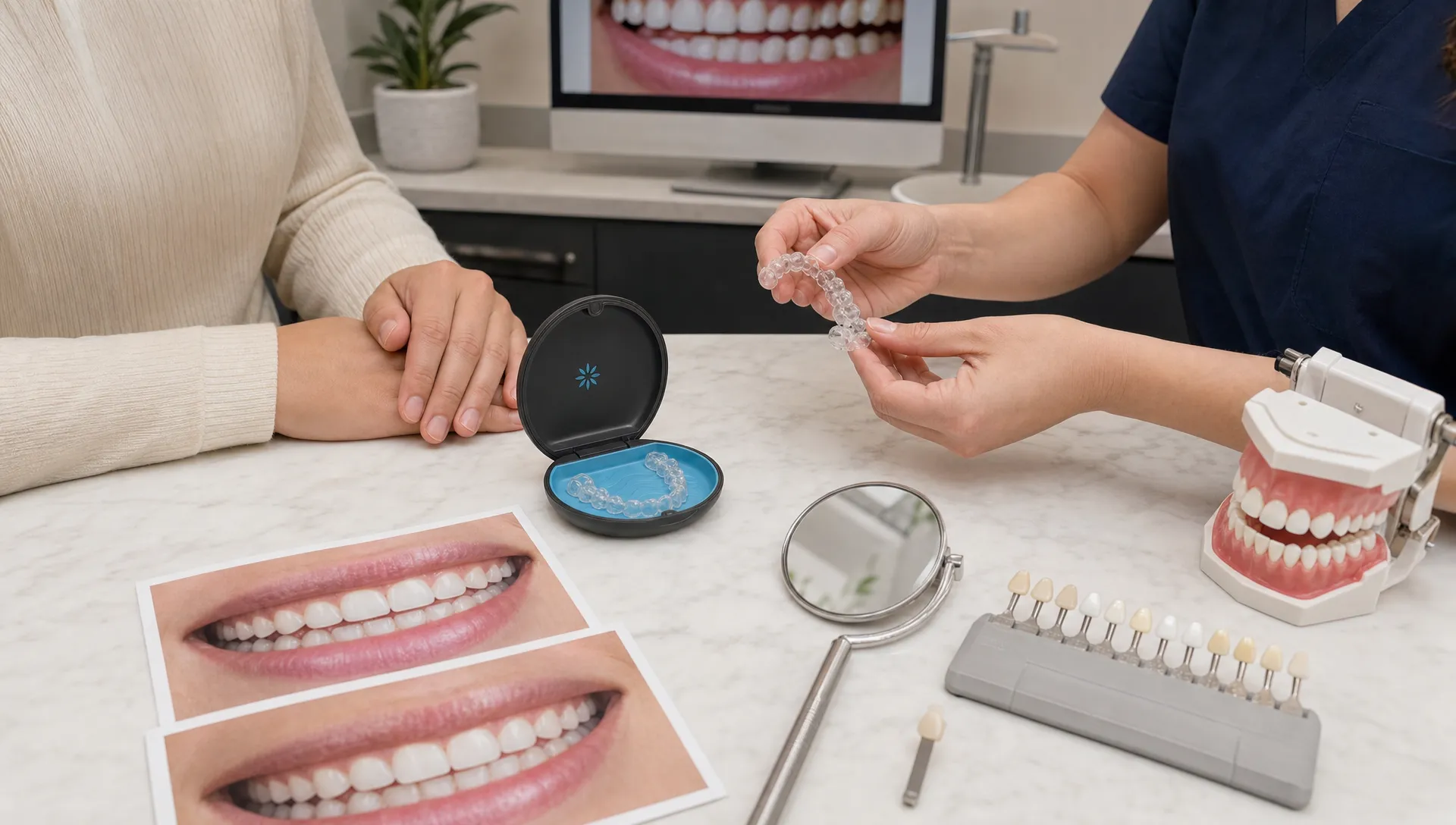
If Invisalign is being considered, you may be shown a digital plan or preview of the proposed tooth movement. This can be helpful, but it should be understood as a planning tool rather than a guaranteed final result. Teeth do not always move exactly as software predicts, which is why clinical monitoring matters.
Your plan may mention attachments. These are small tooth-coloured shapes placed on selected teeth to help aligners grip and move them more effectively. It may also mention interproximal reduction, often called IPR, which involves carefully creating tiny amounts of space between teeth. Not every patient needs these steps, but if they are part of your plan, George should explain why.
You should also understand the likely finishing stage. Some patients are happy once their teeth are straight. Others choose whitening, composite bonding or replacement of old restorations after orthodontics to improve colour, shape or symmetry.
What happens during treatment?
Once treatment begins, you will attend reviews so progress can be checked. If you are wearing aligners, George and the team will want to see that the teeth are tracking as planned and that your gums remain healthy. If an attachment comes off, an aligner feels wrong or a tooth is not moving as expected, the plan may need adjustment.
Some pressure or tenderness is normal when teeth start moving or when you change to a new aligner. This usually settles. Severe pain, persistent rubbing or anything that feels unusual should be reported to the practice.
Oral hygiene becomes especially important. Aligners can trap plaque if teeth are not cleaned before they are put back in. Fixed braces can make brushing around brackets more difficult. You should expect practical advice on brushing, interdental cleaning and protecting enamel throughout treatment.
Refinements may be needed near the end. This can involve extra aligners or minor adjustments to improve the final fit and symmetry. Refinement is common and does not necessarily mean anything has gone wrong.
Retainers protect the result
Orthodontic treatment does not end when the teeth look straight. Retainers are essential because teeth can move throughout life. The British Orthodontic Society has consistently emphasised the importance of long-term retention after orthodontic treatment.
George Angelidakis should explain what type of retainer is recommended, how often to wear it, how to clean it and what to do if it breaks or feels loose. Retainers may be removable, fixed behind the teeth or a combination of both.
This is especially important if you previously had braces and your teeth drifted back. In those cases, retention needs to be planned carefully from the start.
How to prepare for your consultation
You do not need to know exactly which treatment you want before you attend. It is enough to know what concerns you. Bringing photos of your smile, details of previous orthodontic treatment and a list of questions can help you make the most of the appointment.
Useful questions to ask George include:
- Is my mouth healthy enough for orthodontic treatment?
- Would Invisalign be suitable for my case?
- Are there any bite issues that affect my options?
- Will I need attachments, IPR or refinements?
- Could whitening or bonding improve the final result?
- What retainers will I need after treatment?
A good consultation should feel open and informative. You should be able to ask direct questions and receive clear answers about benefits, limitations and risks.
Frequently Asked Questions
Is a cosmetic orthodontist the same as a regular orthodontist? Not always. The term cosmetic orthodontist is often used for a clinician with an aesthetic focus in tooth straightening. In the UK, specialist orthodontists are dentists on the GDC specialist list, while trained general dentists may also provide treatments such as Invisalign within their competence.
What should I expect from my first consultation with George Angelidakis? You can expect a discussion about your smile goals, an assessment of your teeth, gums and bite, and an explanation of suitable options. The aim is to understand whether cosmetic orthodontics is appropriate before recommending treatment.
Will Invisalign work for every case? No. Invisalign can be effective for suitable cases, but some tooth movements or bite problems may be better treated with fixed braces or specialist orthodontic care.
How long does cosmetic orthodontic treatment take? It depends on the complexity of movement, your oral health and how well you follow instructions. Mild cases may take several months, while more involved treatment can take a year or longer.
Do I need retainers after treatment? Yes. Retainers are essential if you want to maintain your result. Your retention plan should be discussed before treatment starts.
Ready to discuss your smile?
If you are thinking about straighter teeth, start with a consultation that looks at both appearance and oral health. At West Malling Dental & Implant Centre, George Angelidakis can help you understand whether Invisalign or another cosmetic option is the right next step for your smile. New patient check-ups are available for £65 with an X-ray included, giving you a clear starting point before making any treatment decisions.