Finding a good dentist for your family is not simply about choosing the closest practice with an available appointment. You are trusting someone with your children’s first dental experiences, your own long-term oral health, and sometimes urgent decisions when pain or injury appears without warning.
A good family dentist should combine clinical skill with calm communication, practical prevention advice, clear fees, and a setting where every generation feels respected. For many families, the right practice is one that can look after routine check-ups, children’s teeth, hygiene visits, cosmetic concerns, and emergencies without making dental care feel stressful or confusing.
Here is a practical way to assess your options and choose with confidence.
Start with your family’s real dental needs
Before comparing practices, take a few minutes to define what your household actually needs. A young family with toddlers will have different priorities from a family with teenagers considering orthodontic treatment, or adults who want to replace missing teeth or improve their smile.
Think about questions such as:
- Do you need appointments for both adults and children at the same practice?
- Is anyone nervous about dental treatment or returning after a long gap?
- Do you need early morning, evening, or emergency appointments?
- Are you looking for preventive care only, or also treatments such as whitening, bonding, Invisalign, crowns, veneers, or implants?
- Do you want a private dentist who can explain fees clearly before treatment begins?
This helps you avoid choosing based only on convenience. Location matters, especially for school runs and work schedules, but a dentist’s approach to prevention, comfort and continuity of care is often what makes the biggest difference over time.
Check qualifications, registration and safety standards
In the UK, dentists must be registered with the General Dental Council. You can check a dentist’s registration through the GDC register, which confirms whether a dental professional is legally registered to practise.
It is also worth looking at the wider team. Dental nurses, hygienists, therapists, and specialists may all be involved in your family’s care. A well-run practice will be open about who is treating you, what their role is, and what qualifications or additional training they have.
Safety standards matter too. A good dentist should have clear processes for infection control, medical history updates, consent, X-rays, referrals, and safeguarding. You do not need to inspect every policy yourself, but you should feel that the practice is organised, professional, and willing to answer questions.
If a practice seems rushed, vague about who will be treating you, or dismissive when you ask about treatment options, that is a sign to look elsewhere.
Look for a prevention-first approach
The best dental care is not just about fixing problems. It is about helping your family avoid avoidable treatment in the first place.
A prevention-focused dentist will talk to you about brushing technique, fluoride toothpaste, diet, gum health, and early signs of decay or erosion. They will also explain why routine check-ups and hygienist appointments matter, even when nothing hurts.
This is especially important for children. Early dental visits help children become familiar with the sights, sounds and routine of the practice before they ever need treatment. They also give parents guidance on brushing, snacks, drinks, and habits that can affect developing teeth. If you want more practical advice for younger patients, West Malling Dental has a helpful guide to looking after children’s teeth.
A good dentist should also personalise prevention. For example, someone with a history of gum disease may need more frequent hygiene visits, while a teenager wearing aligners may need extra cleaning advice. The goal is not the same plan for everyone, but the right plan for each person.
Assess how the practice handles children and nervous patients
A family dentist needs more than technical ability. They need patience, empathy and the ability to explain care in age-appropriate language.
When you contact a practice, pay attention to how they talk about children. Do they welcome questions? Do they encourage early visits? Do they understand that a child’s first experience can shape how they feel about dentistry for years?
For nervous adults, the same principle applies. Many people delay dental care because of a previous bad experience, embarrassment, or fear of pain. A good dentist will not shame you. They will explain what they see, offer choices where appropriate, and give you time to understand the next step.
You can learn a lot from the first phone call. A calm, helpful receptionist who explains appointment options clearly is often a sign of a practice culture that values patient comfort.
Compare communication, costs and convenience
A good dentist should make decisions easier, not more confusing. You should leave appointments understanding what was found, whether treatment is needed, what the options are, and what each option may cost.
Clear communication includes:
- Explaining findings in plain English rather than dental jargon
- Showing you images or X-rays where useful
- Providing written treatment plans for more complex care
- Discussing benefits, risks, alternatives and likely timescales
- Being upfront about fees before treatment begins
Cost transparency is particularly important for families. Private dentistry can offer flexibility and a wider range of treatment options, but families still need to budget. If you are unsure what is normally included in an examination, this guide to private dental check-up costs explains what patients can expect and why fees can vary.
Here is a simple comparison table you can use when reviewing local dentists:
| What to check | Why it matters for families | What to ask |
|---|---|---|
| Registration and regulation | Confirms the team is appropriately registered and accountable | “Who will be treating us, and are they GDC registered?” |
| Children’s care | Helps children build confidence early | “Do you regularly see young children and teens?” |
| Emergency access | Reduces stress when pain, swelling or trauma happens | “Do you offer same-day emergency appointments?” |
| Hygienist services | Supports gum health and prevention | “How often might we need hygiene appointments?” |
| Treatment range | Helps families stay with one trusted practice where possible | “Which treatments are available here, and when would you refer?” |
| Fee transparency | Helps you plan and avoid surprises | “Will I receive a written estimate before treatment?” |
Use the first visit as your best test
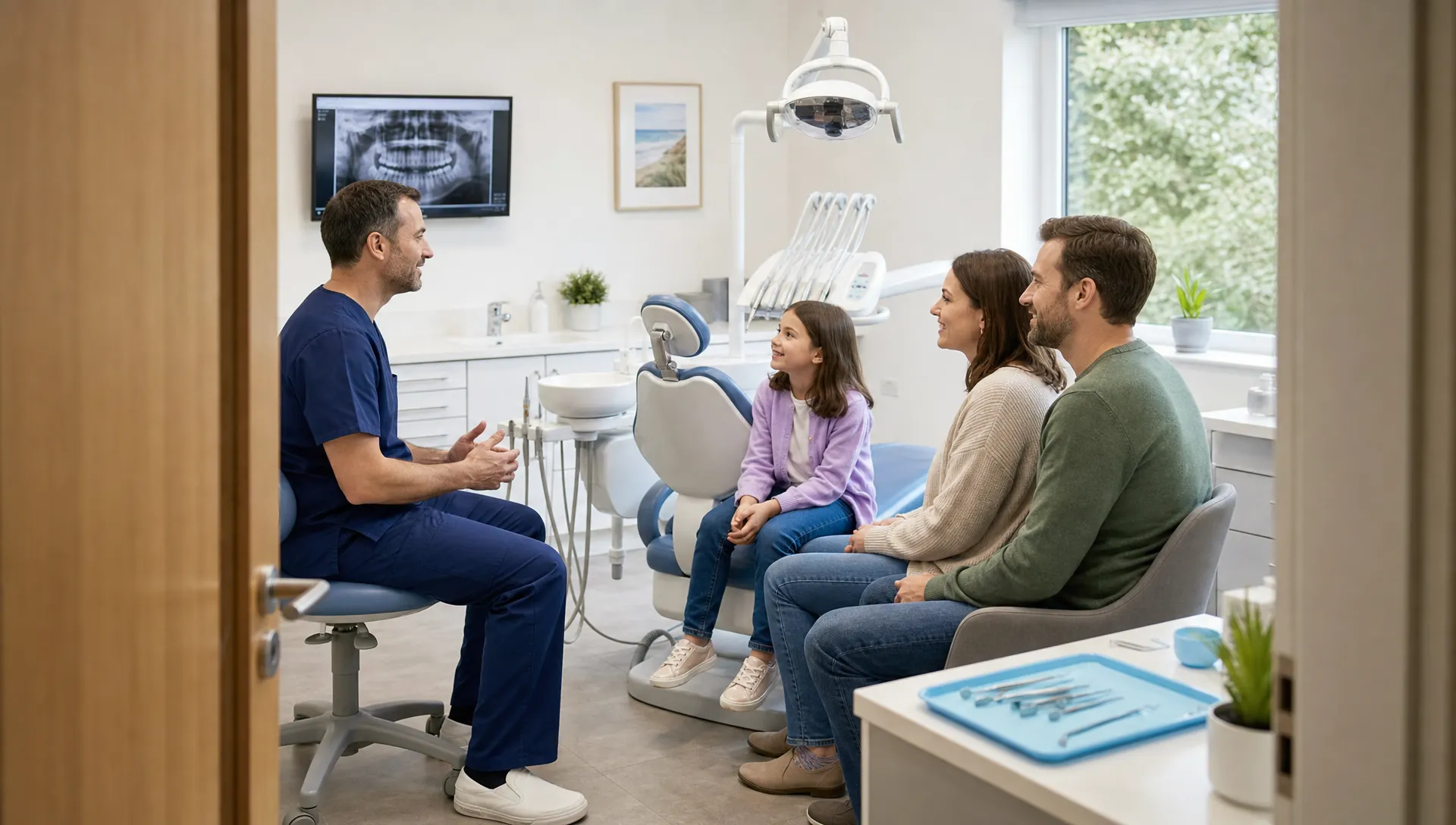
The first appointment is often the clearest way to judge whether you have found the right dentist. A good new patient check-up should feel thorough, not rushed.
You can expect the dentist to ask about your medical history, medications, dental concerns, past experiences, and goals. They should examine your teeth, gums, bite, soft tissues, and any areas causing discomfort. X-rays may be recommended if they are clinically useful, for example to check between teeth or assess areas that cannot be seen directly.
For children, the first visit may be very simple. The dentist may count teeth, check development, offer brushing and diet advice, and help the child feel comfortable in the chair. The aim is to build trust.
If you would like to know what happens step by step, this explanation of what happens at your first dentist check-up is a useful read before booking.
Read reviews carefully, not emotionally
Online reviews can be helpful, but they should be interpreted with care. A five-star rating is encouraging, but the wording of reviews often tells you more than the number.
Look for repeated comments about kindness, clear explanations, gentle treatment, punctuality, cleanliness and how the practice handles nervous patients or children. If several families mention feeling listened to, that is a positive sign.
At the same time, no practice can satisfy everyone all the time. One poor review does not automatically mean a dentist is unsuitable. Instead, look for patterns. Repeated complaints about unclear fees, poor communication or feeling rushed are more concerning than a single isolated issue.
If the practice responds to reviews professionally and calmly, that can also indicate a patient-centred culture.
Consider whether the practice can grow with your family
Your family’s dental needs will change over time. Young children may need fluoride advice and fissure sealants. Teenagers may need orthodontic guidance or help maintaining oral hygiene around aligners. Adults may later consider whitening, composite bonding, crowns, veneers, implants, or treatment for gum problems.
A good dentist does not need to provide every possible service under one roof, but it is helpful if the practice can manage a broad range of care and make appropriate referrals when needed.
This matters because continuity builds trust. When your dentist knows your history, your children’s development, your risk factors and your preferences, they can spot changes earlier and advise more personally.
For families in areas such as West Malling, Kings Hill, Leybourne, Larkfield and surrounding parts of Kent, choosing a practice with routine, preventive, cosmetic and emergency care can make life simpler. You may not need every service now, but it is reassuring to know support is available if your needs change.
Ask the right questions before you register
You do not need to interrogate a practice, but a few well-chosen questions can reveal a lot about their approach.
Useful questions include:
- “How do you help children feel comfortable during appointments?”
- “What happens if one of us has toothache or a dental emergency?”
- “How do you decide how often we need check-ups?”
- “Will you explain all suitable treatment options before we decide?”
- “Do you provide written treatment plans and fee estimates?”
- “Can appointments for family members be coordinated where possible?”
The way these questions are answered matters as much as the answers themselves. You are looking for clarity, warmth and professionalism. If you feel brushed off before becoming a patient, it may not improve once you are registered.
Watch for red flags
Most dental practices work hard to provide safe, ethical care, but it is still sensible to know what should make you pause.
Be cautious if a practice pressures you into cosmetic treatment before discussing health needs, refuses to explain fees, guarantees unrealistic results, or makes you feel embarrassed about your teeth. Dentistry should be honest and supportive, not sales-driven or judgemental.
You should also be wary if treatment recommendations are unclear. It is reasonable for a dentist to recommend urgent treatment when there is pain, infection or a significant risk to oral health. However, you should still understand why it is needed and what your options are.
A good dentist will welcome informed patients. They will not be offended by sensible questions.
Balance practical convenience with long-term trust
Families are busy. Parking, appointment times, school schedules and travel distance all matter. A practice that is difficult to attend regularly may not be the best fit, even if it looks excellent on paper.
However, convenience should not be the only deciding factor. A slightly longer journey may be worthwhile if the dentist communicates well, treats children kindly, offers emergency support, and helps you prevent future problems.
The best choice is usually the practice you can see yourself returning to regularly, not just when something hurts. Dentistry works best as an ongoing relationship. The more comfortable your family feels, the more likely everyone is to keep up with check-ups, hygiene visits and early treatment when needed.
Frequently Asked Questions
How do I know if I have found a good dentist? A good dentist is registered, communicates clearly, explains options and fees, focuses on prevention, and makes you feel respected. For families, they should also be patient with children and supportive of nervous patients.
How often should my family see the dentist? It depends on each person’s oral health, risk of decay or gum disease, age, and treatment history. Some people need check-ups every six months, while others may be advised to attend more or less often. Your dentist should recommend a recall interval based on clinical need.
Should children see the same dentist as their parents? Often, yes. Seeing the same family dentist can make appointments easier to manage and helps build continuity. It also allows the dentist to understand family habits, risks and concerns more fully.
Is a private dentist better for families? Not automatically. The right choice depends on access, communication, treatment options, fees and your family’s needs. Private dentistry may offer appointment flexibility and a wider range of treatments, but the key is choosing a dentist you trust.
What should I do if my child is scared of the dentist? Start with a calm check-up rather than waiting for pain. Talk positively about the visit, avoid using words that may worry them, and choose a practice experienced in helping children feel comfortable. Regular gentle visits can build confidence over time.
Looking for a family dentist in West Malling or Kings Hill?
If you are searching for a good dentist for your family, West Malling Dental & Implant Centre offers private dental care in a relaxed setting for adults and children, including new patient check-ups, family dentistry, hygienist care with Airflow, same-day emergency care, Invisalign, implants and cosmetic treatments.
The practice lists a new patient offer of £65 including an X-ray, helping you take the first step with clear expectations. If you are ready to find a dentist your family can feel confident visiting regularly, get in touch with the team to arrange your first appointment.