
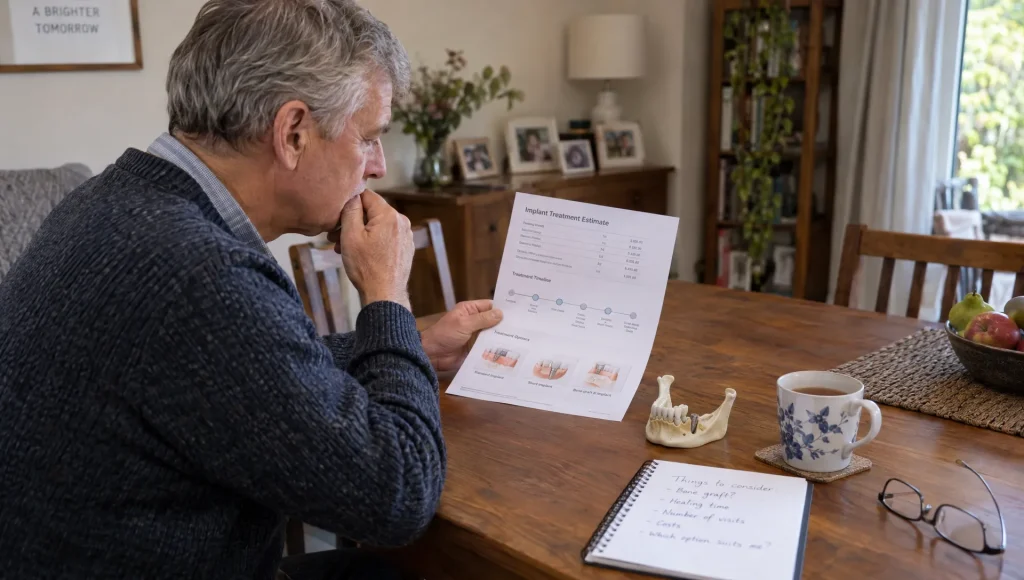
“When my dentist plans an implant, what happens if my jawbone is too thin?” Thin bone does not automatically rule out treatment. It does mean that implant size, position and any bone-building procedure need careful consideration. The aim is not simply to fit an implant into the available space, but to support a replacement tooth that functions well and can be kept clean.
At West Malling Dental & Implant Centre in Kent, you can discuss dental implants alongside your wider oral health needs. Here is what planning for limited jawbone involves.
What does a thin jawbone mean?
After a tooth is lost, the surrounding jawbone gradually changes shape because it no longer receives the same stimulation from the tooth root. Gum disease, previous infection or injury can also reduce the available bone.
However, “thin” can describe different problems:
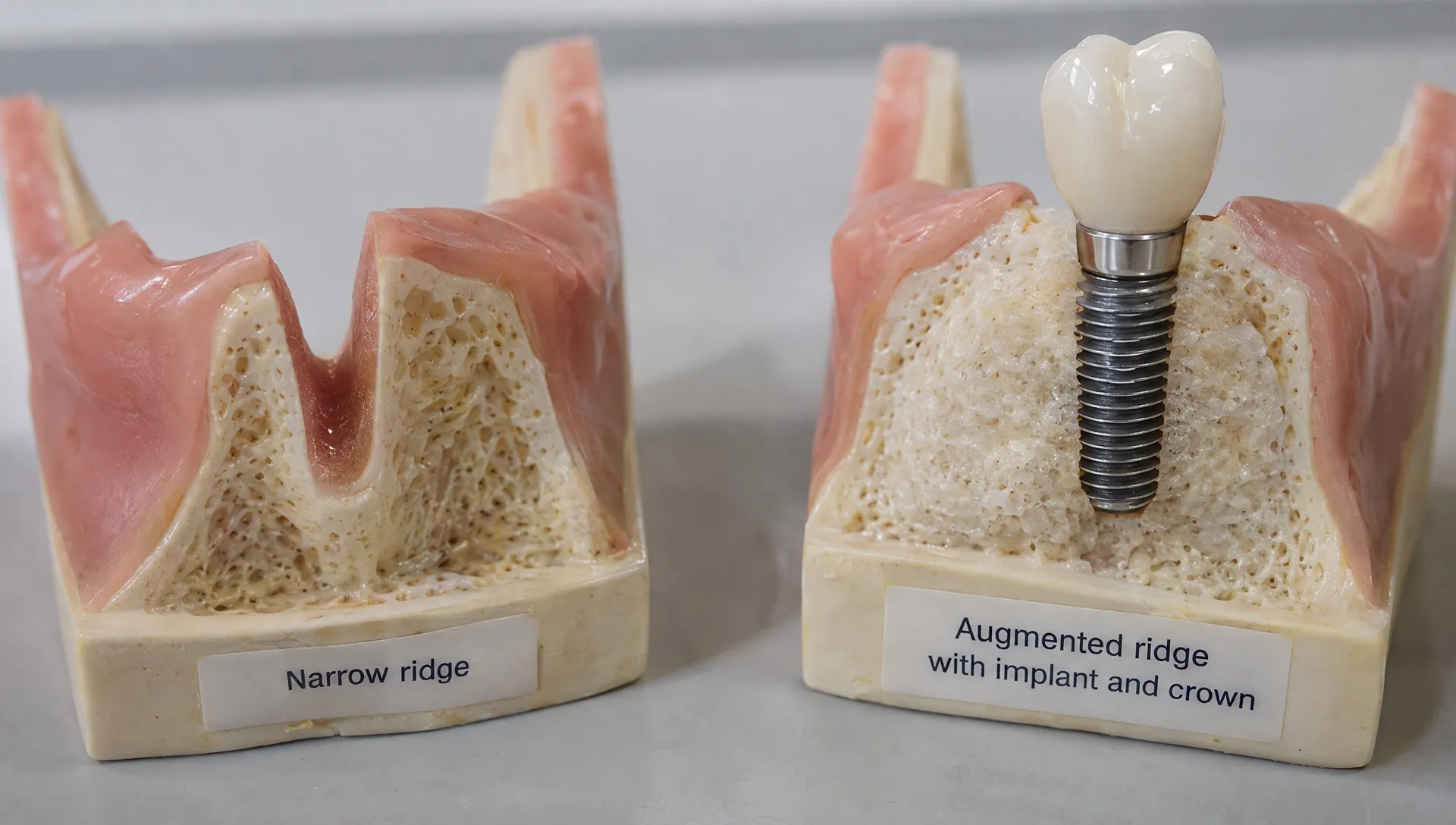
- Insufficient width: The ridge may be too narrow to surround an implant adequately.
- Insufficient height: There may be limited space above a lower-jaw nerve or below an upper-jaw sinus.
- A combined defect: Both dimensions may need attention, sometimes alongside gum tissue loss.
These differences matter because a shorter implant might address limited height, but it cannot automatically solve inadequate width.
How my dentist plans around bone limitations
Planning starts with the tooth you need, not just the bone that remains. Your dentist assesses the proposed crown position, your bite and the space available, then considers whether an implant can support that restoration safely.
An examination checks gum health, neighbouring teeth and any active infection. Your medical history also matters, including diabetes control, smoking and medicines that affect bone healing.
A cone beam CT scan, or CBCT, may be recommended when three-dimensional information is clinically justified. It helps assess the ridge and nearby structures, although imaging alone cannot guarantee implant stability. Here explains why a jaw CT scan may be needed before dental implants.
The decision is whether there is enough suitable bone in the right position, not simply whether an implant can physically fit.
When bone grafting becomes part of the plan
Bone augmentation adds material to an area where more bone support is needed. Depending on the defect, this may involve your own bone, processed donor material, animal-derived material or a synthetic substitute. Your clinician should explain the proposed material and alternatives before consent.
For a narrow ridge, guided bone regeneration may use graft material and a protective membrane. Limited height beneath the sinus in the upper back jaw may call for a sinus lift instead. These procedures address different problems.
A useful question is: “If my dentist plans a graft, can the implant go in at the same time?” Sometimes it can, provided the implant can achieve sufficient initial stability. Larger defects may need grafting first, followed by several months of healing before reassessment.
Which implant types might suit limited bone?
Most dental implants sit within the jawbone. Their dimensions and position can vary, but smaller is not necessarily better.
| Implant approach | Where it may help | Important limitation |
|---|---|---|
| Standard-diameter implant | Sites with adequate bone, sometimes after grafting | Requires suitable surrounding bone and restorative space |
| Narrow-diameter implant | Selected narrow spaces or ridges | Not appropriate for every tooth position or biting load |
| Short implant | Selected sites with limited bone height | Still needs adequate width and careful bite planning |
| Zygomatic implant | Certain cases of severe upper-jaw bone loss | A complex specialist option, not a routine substitute for grafting |
Preparing your mouth before surgery
Active gum disease and infection need addressing before implant treatment proceeds. Your dentist may recommend hygiene care, improvements to daily cleaning or treatment for other teeth first.
Tell the team about all medicines, particularly antiresorptive medicines and blood thinners. Do not stop prescribed medication yourself. Smoking increases healing risks, so discuss practical support for stopping, while diabetes may require coordination with your medical team.
If you clench or grind your teeth, mention it during planning because this can affect restoration design and protective measures. The practice’s guidance on avoiding common dental implant pitfalls explains why preparation and aftercare deserve attention alongside surgery.
Timelines and costs should reflect your bone needs
A straightforward implant and a staged grafting case should not be assumed to have the same timetable or cost. Healing can take several months, and treatment may need adjusting after reassessment.
Request a written estimate covering imaging, grafting if required, implant placement, the final crown and follow-up. Ask what temporary tooth replacement is possible during healing, since pressure over a graft or healing implant may need limiting.
Frequently asked questions
Can I have an implant without a bone graft? Possibly. Suitable existing bone or a carefully selected implant approach may make grafting unnecessary. The answer depends on the site, the planned tooth and your individual risks.
What if my dentist plans grafting but I would prefer another option? Ask about a bridge, removable denture or, where appropriate, leaving the space. Each has different implications for neighbouring teeth, comfort and maintenance. You can also request a second opinion.
Does thin jawbone mean the implant will fail? Not necessarily. It makes assessment and case selection especially important. Neither grafting nor a particular implant design guarantees success, and ongoing cleaning and reviews remain essential.
Discuss your options at West Malling Dental
West Malling Dental & Implant Centre offers private implant care alongside preventive and restorative dentistry. There is currently a 10% discount on full arch porcelain implant bridges to replace dentures and a consultation with our specialist Gerry cost only £45. A single implant can cost as little as £60pcm over 24 months with a 50% deposit.
Contact West Malling Dental to discuss an assessment and understand what your bone levels could mean for treatment.