Choosing dental implants is a practical decision as much as a clinical one. You are replacing a missing tooth, but you are also committing to appointments, healing time, maintenance and a result that should feel stable in everyday life. If you are searching for dental implants in Kent, the first question is usually simple: what actually happens from the first consultation to the final tooth?
This guide walks through the typical process in a UK private dental setting, with a focus on what patients in West Malling, Kings Hill and the wider Kent area should expect. It is not a substitute for a personal assessment, because implant treatment depends on your bone, gum health, bite and medical history. It will, however, help you attend your first appointment with clearer expectations and better questions.
What a dental implant actually replaces
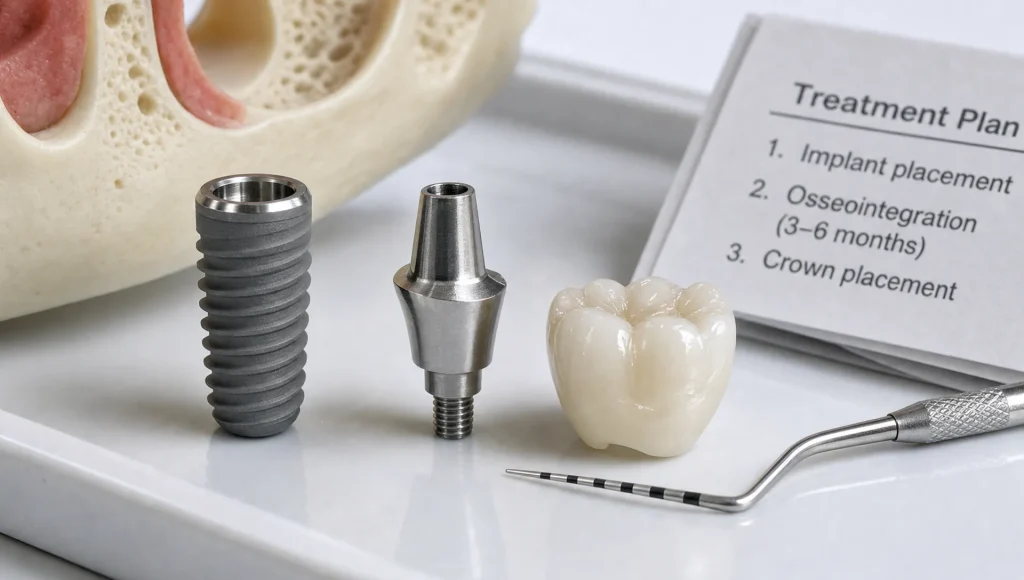
A dental implant is a small titanium or ceramic fixture placed into the jawbone to act as an artificial tooth root. Once it has healed, it can support a crown, bridge or denture, depending on how many teeth are missing.
Many people think of the implant as the visible tooth, but the treatment has several parts. The implant fixture sits in the bone. An abutment connects the fixture to the replacement tooth. The crown, bridge or denture is the part you see when you smile.
This distinction matters because each part has a different role and lifespan. The fixture is designed to be a long-term foundation, while the crown or bridge may need repair or replacement over time due to normal wear, bite forces or aesthetic changes.
Who may be suitable for dental implants?
Most healthy adults with one or more missing teeth can be assessed for dental implants, but suitability is not based on age alone. A dentist will usually look at your oral health, general health and whether there is enough jawbone to support an implant.
You may be a good candidate if:
- Your gums are healthy or can be stabilised before treatment
- You have enough bone volume, or you are suitable for bone grafting
- You do not smoke, or you are willing to reduce or stop smoking before and after surgery
- Your diabetes or other medical conditions are well controlled
- You can commit to regular hygiene appointments and home care
Implants are not usually placed into an unhealthy mouth. If there is active gum disease, decay, infection or bite instability, those issues often need to be managed first. This is one reason a careful local assessment is valuable. The better the planning, the lower the risk of avoidable complications later.
Your first implant consultation in Kent
Your first appointment is about gathering information. The dentist will ask about your missing tooth or teeth, your dental history, your medical history and what you want the treatment to achieve. Some patients mainly want to chew comfortably again. Others are more concerned about a gap showing when they smile. Most want both function and appearance.
You can expect an examination of your teeth, gums and bite. X-rays are commonly used and a 3D scan may be recommended where more detail is needed for implant planning. The dentist will also check the space available for the replacement tooth, because a good result depends on the implant, the gum shape and the final crown all working together.
A proper consultation should also cover alternatives. These may include a bridge, denture, orthodontic treatment or doing nothing for the time being. Dental implants are often an excellent option, but they are not the only option and they should not be presented as a one-size-fits-all solution.
The typical dental implant journey
The exact sequence depends on your mouth and the number of teeth being replaced. Some people can move through treatment relatively simply. Others need extra steps, such as tooth extraction, bone grafting or gum treatment before implant placement.
| Stage | What usually happens | Typical patient experience |
|---|---|---|
| Assessment | Examination, X-rays and discussion of options | You understand whether implants are suitable and what extra steps may be needed |
| Planning | Treatment plan, consent and timing | You receive a clearer idea of appointments, fees and healing periods |
| Preparation | Hygiene care, extractions or grafting if required | The mouth is made healthier before implant placement |
| Implant placement | Implant fixture is placed under local anaesthetic | Pressure and vibration are more common than pain |
| Healing | Bone heals around the implant | You follow aftercare instructions and attend reviews |
| Restoration | Crown, bridge or denture is fitted | The implant begins functioning as a replacement tooth |
| Maintenance | Regular check-ups and hygiene appointments | The implant is monitored alongside your natural teeth |
For a straightforward single implant, treatment can take several months from consultation to final crown. This is because the bone needs time to integrate with the implant before it is restored. Some cases take longer, especially if grafting or staged treatment is required.
What does dental implant treatment cost?
Fees vary because implant treatment is customised. A single implant with a crown is different from replacing several teeth or stabilising a denture. Costs can also be affected by scans, bone grafting, temporary teeth and the type of final restoration.
Rather than focusing only on the headline price, ask what is included. A clear plan should explain the assessment, surgical stage, restoration, review appointments and any likely additional procedures. If you want a more detailed breakdown, West Malling Dental has a guide to dental implant costs in Kent that explains common price ranges and what can influence the final fee.
Very low quotes should be approached carefully. They may not include the final crown, aftercare, temporary teeth or management of complications. A higher fee is not automatically better, but transparent pricing is a sign that the clinic is planning beyond the day of surgery.
What the implant appointment feels like
Dental implant placement is usually carried out under local anaesthetic. You should not feel sharp pain during the procedure, although you may feel pressure, vibration or movement. Many patients find the appointment more manageable than they expected, especially when they have been told what will happen in advance.
If anxiety is a concern, raise it early. A calm setting, clear explanations and enough time for questions can make a significant difference. Some patients worry most about pain, so it can help to read a dedicated explanation of how painful dental implants are before the appointment.
After the implant is placed, you will usually leave with written aftercare instructions. You may have stitches and a temporary solution may be provided depending on the tooth being replaced and the treatment plan.
Recovery after dental implant surgery
Recovery is usually measured in days for the soft tissues and months for the bone. Mild swelling, bruising and tenderness can happen after surgery, particularly in the first few days. Your dentist will advise on pain relief, cleaning around the area and what to avoid while the tissues settle.
Most patients are advised to avoid disturbing the surgical site, smoking, heavy exercise and hard foods in the early healing phase. You may be asked to rinse gently with a recommended mouthwash or salt water, depending on the clinician’s advice. If you are given antibiotics, take them exactly as prescribed.
Call the clinic if pain gets worse after a few days, swelling increases, bleeding does not settle or something feels loose. Problems are easier to manage when they are reported early.
The implant then needs time to integrate with the jawbone. This process is called osseointegration. You may not feel much happening during this phase, but it is one of the most important parts of treatment. Once the dentist is satisfied that the implant is stable, impressions or digital scans can be taken for the final restoration.
What to expect from the final tooth
A well-planned implant crown should feel stable, comfortable and natural when chewing. It should also be shaped so you can clean around it. In visible areas, shade matching and gum shape are especially important, because the eye notices small differences at the front of the mouth.
It is normal for the final crown to feel slightly different from a natural tooth at first. An implant does not have the same ligament around it as a natural tooth, so the sensation when biting may not be identical. Most patients adapt quickly, particularly when the bite has been carefully adjusted.
If the implant replaces a front tooth, aesthetics may involve more planning. The dentist may need to consider gum levels, neighbouring tooth colour, tooth shape and how your smile moves. In some cases, whitening or cosmetic dentistry on nearby teeth may be discussed so the final result looks balanced rather than isolated.
Looking after dental implants long term
Dental implants cannot decay, but the gums and bone around them can become inflamed if plaque is not controlled. This condition is often called peri-implant disease. It can threaten the stability of the implant if ignored.
Long-term care is straightforward but important. Brush thoroughly, clean between the teeth or implants as advised and attend routine dental and hygiene appointments. A hygienist can help you use the right brushes, floss or water flosser around your restoration.
If you grind your teeth at night, your dentist may recommend a night guard to reduce excess force on the implant crown. If you smoke, stopping is one of the best things you can do for implant health and general oral health.
Choosing a dental implant clinic in Kent
The right clinic should make you feel informed rather than pressured. In the UK, dentists must be registered with the General Dental Council and should explain risks, benefits, alternatives and likely maintenance before you consent to treatment.
Look for a clinic that takes time over assessment, provides a written treatment plan and has a clear approach to aftercare. Ask who will place the implant, who will restore it and what happens if you need help during healing. Local access can be a practical advantage, because implant treatment is a process rather than a single appointment.
West Malling Dental & Implant Centre provides private dental care in Kent, including dental implants, family dentistry, hygienist care, Invisalign and cosmetic treatments. For patients near West Malling and Kings Hill, having these services in one practice can make it easier to coordinate oral health, smile aesthetics and ongoing maintenance.
Frequently Asked Questions
How long does dental implant treatment take? A straightforward single implant often takes several months from consultation to final crown because the bone needs time to heal around the implant. More complex cases, including bone grafting or multiple implants, can take longer.
Can I have an implant straight after a tooth extraction? Sometimes an implant can be placed soon after extraction, but it depends on infection, bone condition, gum health and the position of the tooth. Your dentist will recommend the safest timing after assessment.
Will I be without a tooth during treatment? Not necessarily. Temporary options may be available, especially for visible teeth. The right temporary solution depends on the location of the gap, the stability needed and the overall treatment plan.
Are dental implants better than dentures? Implants are usually more stable than removable dentures and can feel more like natural teeth. Dentures may still be suitable for some patients, especially where surgery is not appropriate or budget is a key factor.
Do implants need special cleaning? They need careful cleaning, but not complicated cleaning. You will need to brush well and clean around the implant with the tools recommended by your dentist or hygienist.
Is travelling abroad for dental implants a good idea? Some patients are attracted by lower initial prices, but implant treatment requires assessment, staged care and aftercare. If complications occur after returning home, it can be difficult to access the original clinician quickly.
Ready to discuss dental implants in Kent?
If you have a missing tooth, loose denture or failing tooth and want to understand your options, a personal assessment is the best next step. You will get clearer answers about suitability, timing, costs and whether an implant is the right solution for your mouth.
To explore treatment locally, contact West Malling Dental & Implant Centre and arrange a consultation. A calm, well-planned approach can help you replace missing teeth with confidence and protect your oral health for the future.